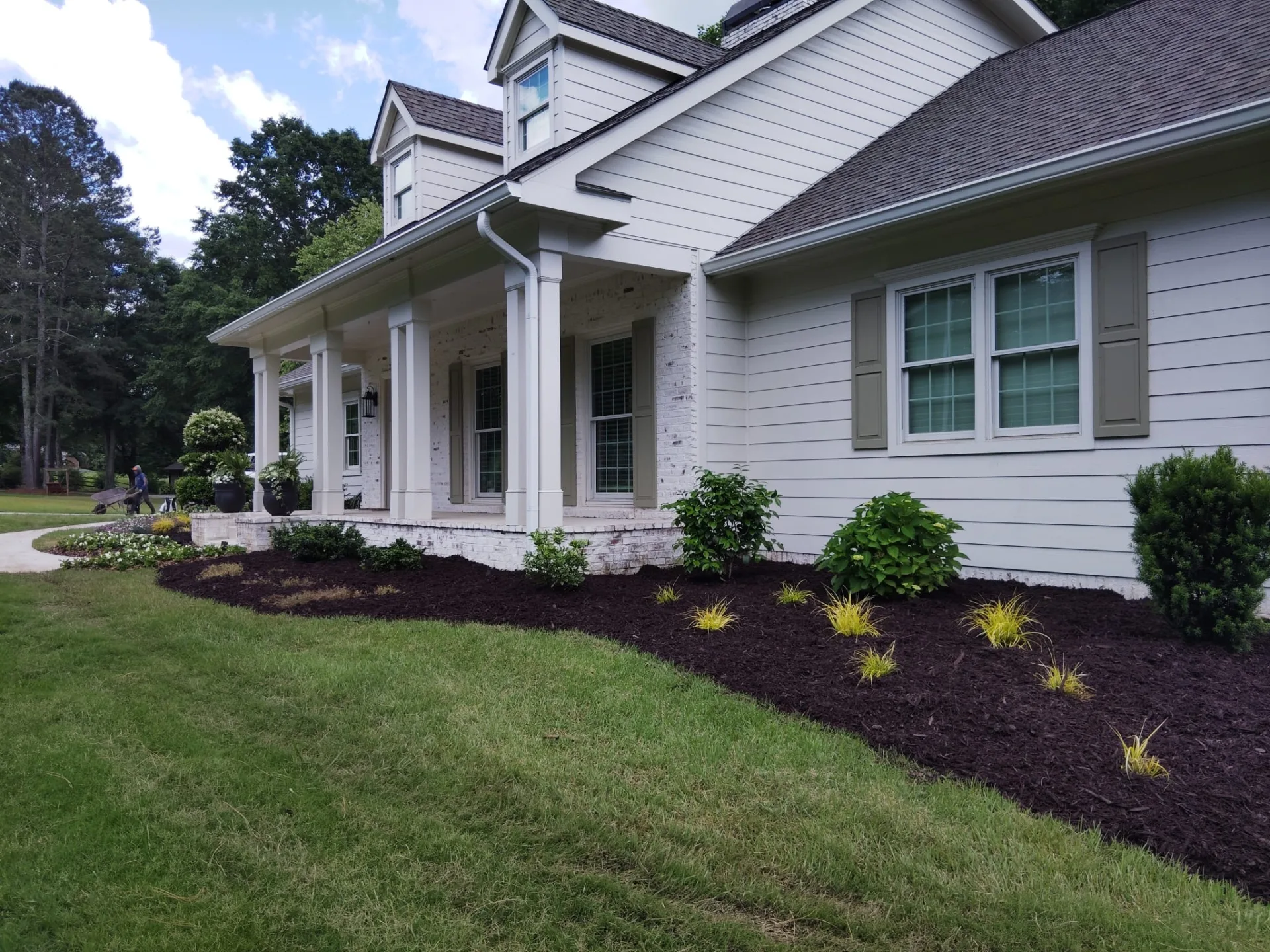
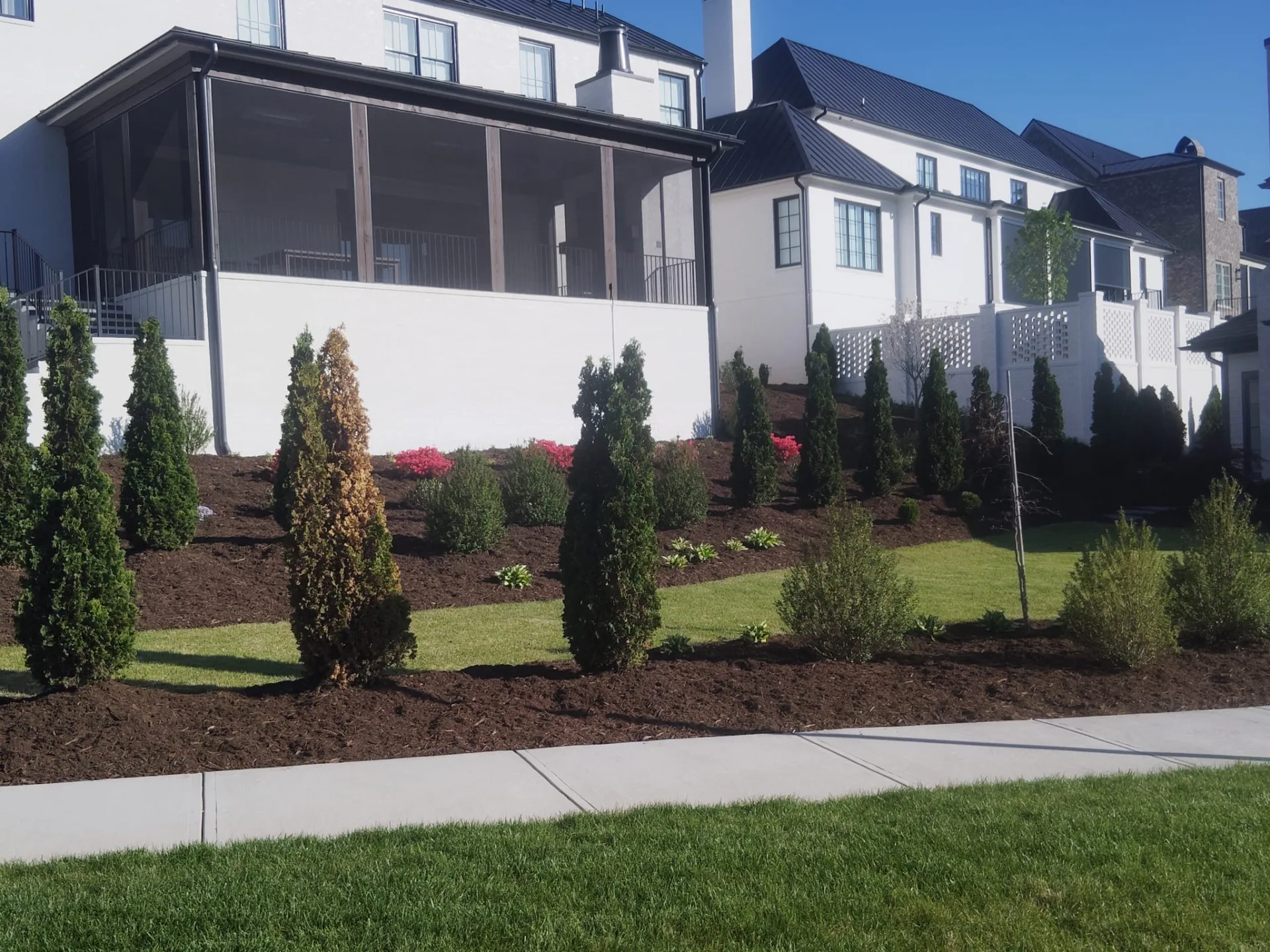
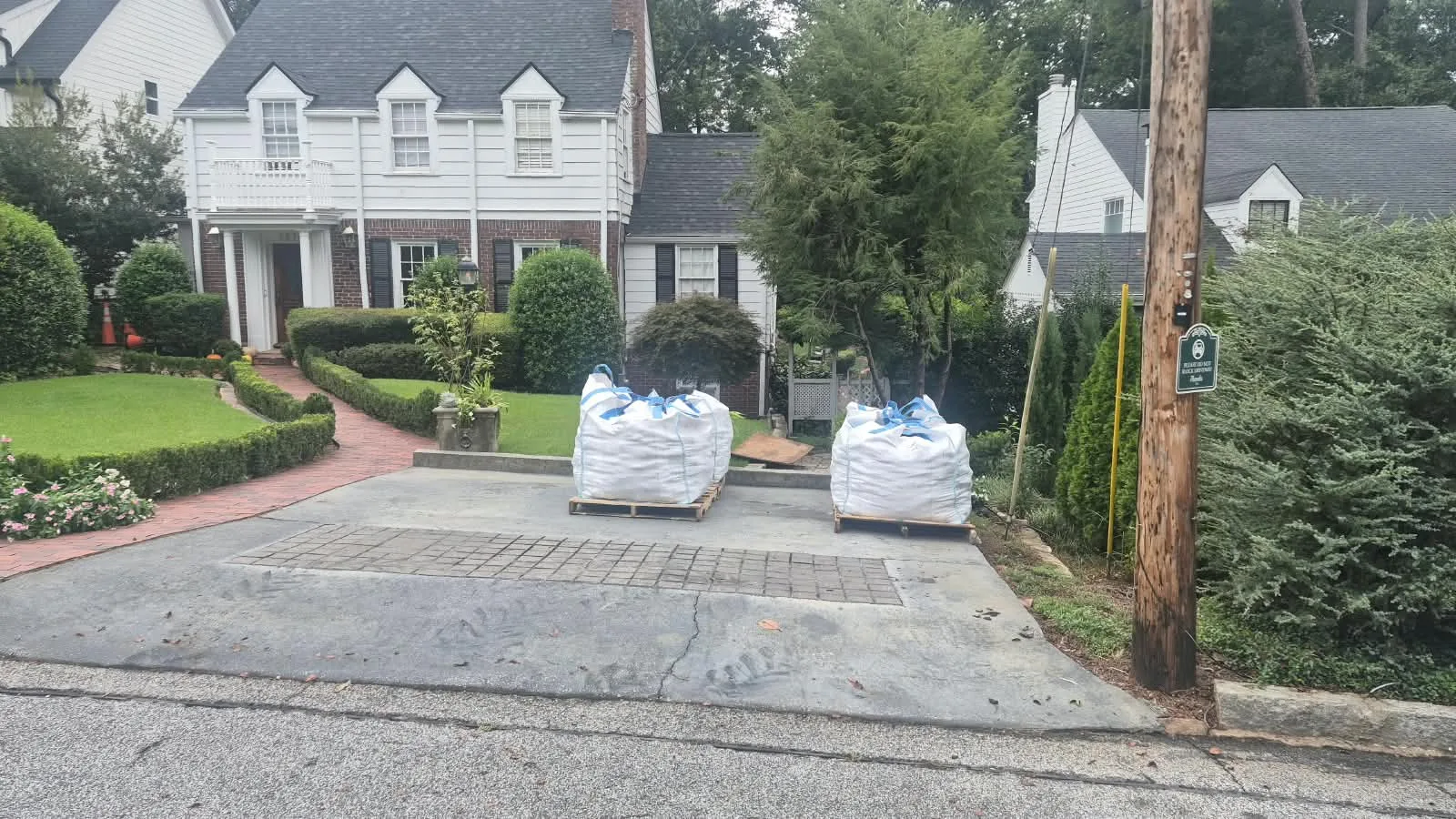
Not all landscape supplies are created equal, and that misconception costs Atlanta homeowners and contractors real money every season. The wrong mulch breaks down too fast in Georgia’s heat. The wrong topsoil compacts into a brick after one summer rain. Metro Atlanta’s specific climate, soil composition, and drainage patterns mean that material selection is not just a preference but a necessity. This guide walks you through the essential supply types, quality selection strategies, money-saving tactics, and local sourcing insights so your next outdoor project delivers lasting results rather than a frustrating redo.
| Point | Details |
|---|---|
| Local conditions matter | Choosing landscape supplies for Atlanta requires understanding the region’s clay soil and climate. |
| Quality equals results | Investing in premium soil, mulch, and stone pays off in healthier, longer-lasting landscapes. |
| Shop smart | Bulk buying and timing your purchases can save money and improve supply consistency. |
| Expert help counts | Local suppliers and experts provide tailored advice and quality materials that big chains often lack. |
Metro Atlanta sits in a humid subtropical climate zone, which means hot summers, moderate winters, and rainfall that can swing from drought conditions to heavy downpours within the same month. That variability puts real stress on your landscape. Soil erosion along slopes, standing water in low areas, and compacted ground in high-traffic zones are common complaints from homeowners across metro Atlanta communities like Marietta, Smyrna, and Decatur.
The biggest challenge here is the soil itself. Georgia’s Piedmont region is dominated by dense red clay, which drains poorly and becomes rock-hard when dry. Metro Atlanta’s dense clay soil requires specific amendments to support healthy plant growth and proper drainage. Without those amendments, even the most carefully planted garden will struggle.
Here are the key environmental factors that should guide your supply choices:
For landscape supply tips for Atlanta projects, understanding these conditions before you purchase a single bag or bulk load saves you from costly mistakes. A supply choice that works perfectly in a drier climate may fail quickly here.
Pro Tip: Before starting any large-scale landscaping project, invest in a basic soil test from your local extension office. It costs very little and tells you exactly what your soil needs, so you don’t waste money on amendments that won’t help.
The foundation of a successful Atlanta landscape starts below the surface. Addressing soil structure, drainage, and organic content before planting or installing hardscape gives every other material a better chance to perform.
With an understanding of local challenges, let’s break down the core supplies you’ll encounter. Each material serves a specific purpose, and using the right one for the right application is what separates a professional-looking result from one that fades within a season.
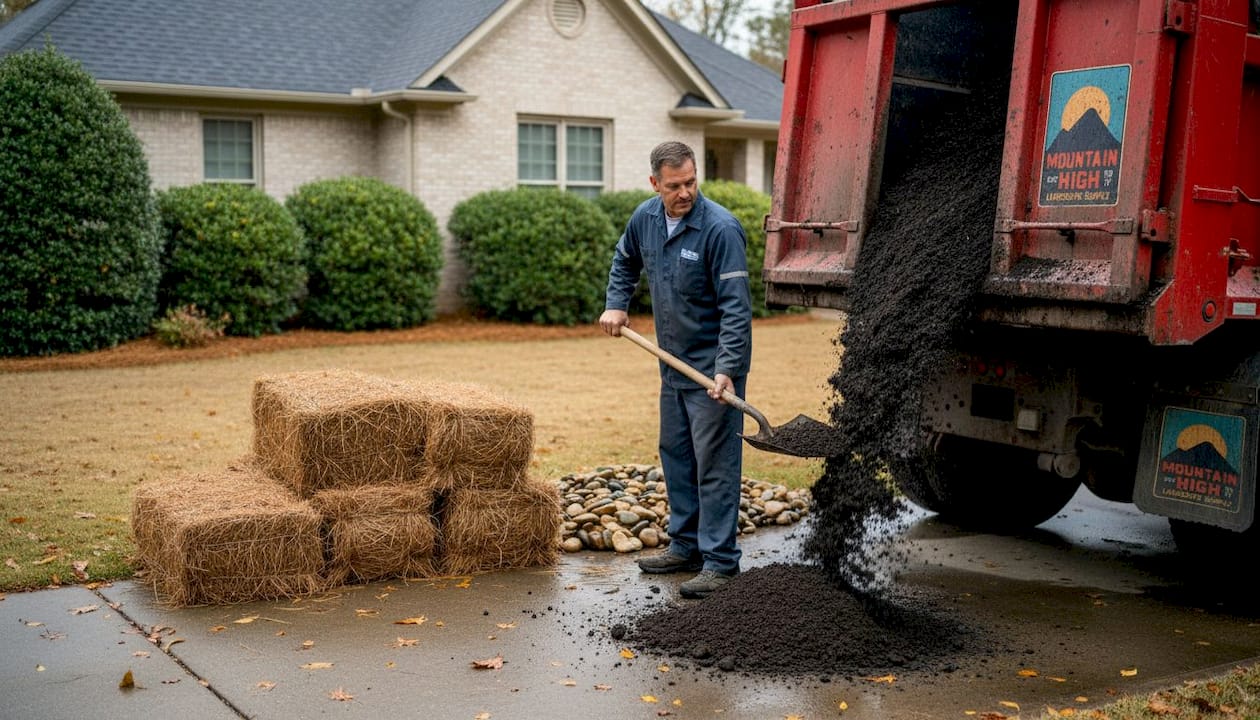
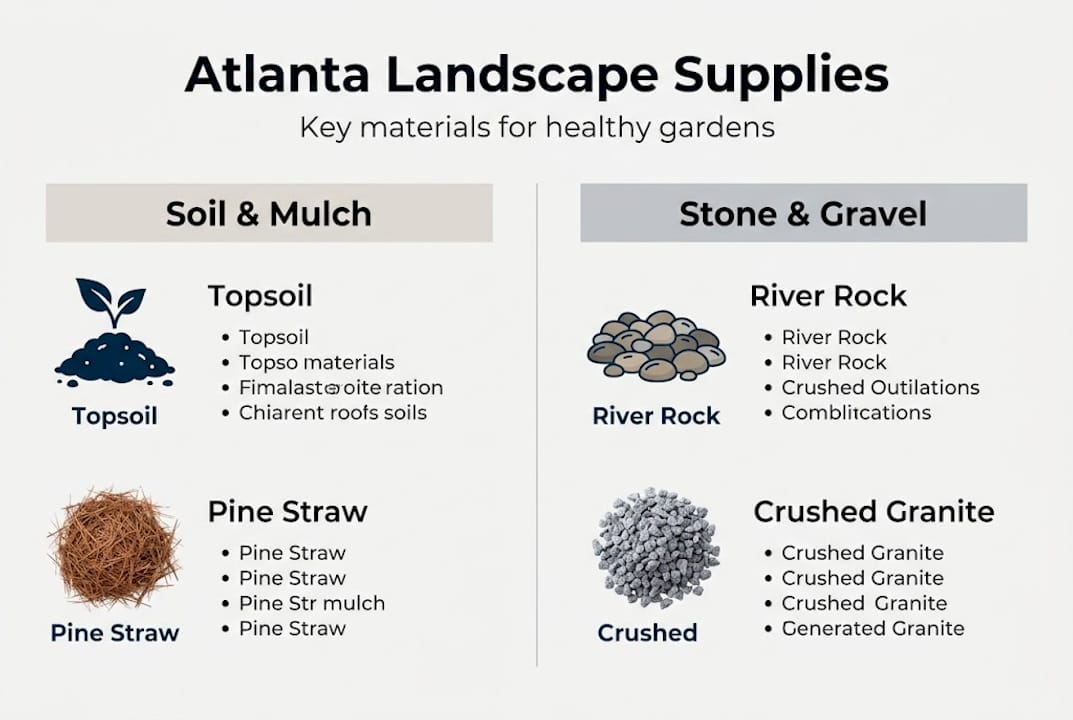
Premium organic topsoil promotes healthy growth in Georgia soils by improving structure, feeding beneficial microbes, and supporting root systems. Mulch controls weeds, regulates soil temperature, and retains moisture. Stone and gravel handle drainage, pathways, and decorative hardscape. Sand improves drainage in compacted areas or serves as a base layer for pavers. Sod delivers instant turf coverage. Pine straw is a locally popular ground cover that looks natural and breaks down slowly.
| Supply type | Main uses | Best fit projects |
|---|---|---|
| Organic topsoil | Planting beds, lawn repair | New gardens, overseeding |
| Mulch | Weed control, moisture retention | Beds, tree rings, pathways |
| Stone/gravel | Drainage, hardscape, borders | Driveways, walkways, dry creek beds |
| Sand | Base layer, drainage improvement | Paver installation, play areas |
| Sod | Instant lawn coverage | Erosion control, new lawns |
| Pine straw | Ground cover, erosion control | Slopes, naturalized areas |
For projects that incorporate using boulders in Atlanta projects, stone selection becomes especially important. Boulders and decorative rock add structure and visual weight that smaller materials cannot replicate.
Here is a simple process for evaluating which supplies your site needs:
Choosing the right essential landscape supply for each zone of your property is what professionals do before they ever place an order. Take that same approach and your results will reflect it.
Now that you know what’s available, here’s how to ensure you’re choosing materials that deliver results. Quality varies widely in the landscape supply market, and the price difference between a premium product and a low-grade one is often smaller than the cost of replacing a failed project.
High-quality mulch reduces weeds and retains soil moisture, which directly reduces your maintenance time and water bills. But not all mulch is equal. Some low-cost products contain recycled construction debris, dyed wood chips with no organic value, or inconsistent particle sizes that compact and block water penetration.
Here is a checklist for evaluating quality before you buy:
| Material | Quality signal | Red flag |
|---|---|---|
| Topsoil | Dark color, crumbly texture | Gray, sandy, or rocky |
| Mulch | Earthy smell, consistent size | Sour odor, debris mixed in |
| Gravel | Clean, uniform grade | Fines mixed in, muddy residue |
| Sand | Fine, consistent grain | Clay clumps, discoloration |
For mulch installation in Atlanta projects, applying the right depth matters as much as choosing the right product. Two to three inches is the standard recommendation. Too thin and weeds push through. Too thick and moisture gets trapped against plant stems.
Pro Tip: When ordering bulk topsoil, ask your supplier if it has been screened. Screened topsoil removes rocks, roots, and clumps, giving you a cleaner, more workable product. Unscreened material is cheaper but often requires extra labor to use effectively. Check topsoil delivery options from local suppliers who offer screened products.
Avoid suppliers who cannot tell you where their material was sourced or who offer prices that seem too good to be true. Contaminated or low-quality supplies can introduce weeds, pests, or compaction problems that take seasons to correct.
Once you’ve found the right supplies, efficient purchasing and use are key for both your wallet and lasting results. Smart buying habits can reduce your total project cost significantly without sacrificing quality.
Bulk purchases often reduce costs and improve supply consistency for large projects. A cubic yard of mulch from a supply yard typically costs far less per unit than the equivalent volume in bagged products from a home improvement store. For any project covering more than 200 square feet, bulk is almost always the better financial decision.
Here are five steps to stretch your landscape supply budget:
“The landscapers who get the best value aren’t always the ones who spend the least upfront. They’re the ones who plan accurately, buy in bulk, and build relationships with local suppliers who give them consistent product and honest advice.”
Pro Tip: Schedule your bulk delivery on a weekday morning rather than a weekend. Supply yards are typically less busy mid-week, which means faster service, more driver availability, and occasionally better flexibility on timing. Check local supply sourcing tips for seasonal buying strategies specific to the Atlanta area.
Another overlooked strategy is asking your supplier about end-of-season inventory. Supply yards sometimes offer reduced pricing on excess stock to clear space before a new season’s materials arrive.
Here is something most buying guides won’t tell you: the cheapest material source is rarely the best value source. We’ve seen this play out repeatedly across Atlanta-area projects. A homeowner orders a bargain load of topsoil from an unfamiliar vendor, and it arrives full of weed seeds and clay clumps. What looked like a $200 savings turns into a $600 correction job the following spring.
Local experts understand Atlanta’s specific conditions in ways that generic suppliers simply cannot match. They know which mulch holds up through a Georgia summer, which topsoil blends work best in Cobb County’s red clay, and which stone grades drain properly in our rainfall patterns. That knowledge is not listed on a price tag, but it shows up in your results.
We’ve watched projects get saved by a single conversation at the supply yard. A landscaper planning a dry creek bed was about to order the wrong gravel grade for his drainage slope. Our team recognized the issue immediately and recommended the correct material. That local material expertise prevented a drainage failure that would have required digging everything up and starting over.
Transparency and service matter. When a supplier is honest about what a product can and cannot do, you make better decisions. That relationship is worth more than a few dollars saved per cubic yard.
If you’re ready for expert help, top local resources can make your next project easier and more effective. At Mountain High Landscape Supply, we serve homeowners and professional contractors across metro Atlanta from our Marietta and Smyrna supply yards.

Whether you need to master landscape terminology before placing your first order or you’re ready to pick up a load of river sand supply for a paver project, we have the products and the expertise to support you. Our premium organic topsoil is screened, consistent, and ready for delivery across the metro area. Stop guessing at materials and start working with a team that knows Atlanta’s landscape inside and out.
Premium organic topsoil and quality mulches are the most effective choices for improving Atlanta’s clay-heavy soil, as they enhance drainage, add organic matter, and support healthier root systems over time.
In metro Atlanta, plan to refresh your mulch about once a year since high-quality mulch reduces weeds and retains moisture best when applied at a consistent two to three inch depth.
For projects covering more than a few hundred square feet, yes. Bulk purchases reduce costs significantly compared to bagged products and also deliver more consistent material quality across the entire project.
Supply yards in metro Atlanta like Mountain High Landscape Supply offer locally sourced pine straw and mulch available for pickup at their Marietta and Smyrna locations or delivered throughout the metro area.