Choosing the wrong mulch for your Georgia garden can mean waterlogged roots, struggling plants, and a landscape that needs constant attention. Georgia’s red clay soil, humid summers, and unpredictable rainfall create specific demands that not every mulch type can meet. Whether you’re refreshing flower beds in Marietta, protecting a vegetable garden in Smyrna, or tackling a slope on your Atlanta property, the mulch you choose directly affects how well your plants grow, how often you maintain your yard, and how your landscape looks season after season. This guide walks you through everything you need to know to make a confident, informed choice.
| Point | Details |
|---|---|
| Match mulch to plant needs | Choose organic or inorganic mulch based on your soil, climate, and the specific plants you’re growing. |
| Organic mulches enrich soil | Compost, pine straw, and shredded leaves improve soil health and moisture for thriving Georgia gardens. |
| Inorganic mulches require less maintenance | Gravel and rubber last for years with minimal upkeep but don’t help soil fertility or structure. |
| Depth and placement matter | Applying mulch too thick can cause water issues—stick to best practices for healthy beds. |
| Consider area-specific needs | Playgrounds, vegetables, and flower beds each benefit from different mulch types and strategies. |
Now that you know why mulch selection matters, let’s explore the most important factors to consider for your Georgia garden. Not all mulch performs the same way, and your specific conditions will narrow the field quickly.
Start with your soil and drainage. Georgia’s heavy clay soil drains slowly, which means the wrong mulch can trap excess moisture and lead to root rot. Sandy soils in other parts of the state drain too fast, so moisture retention becomes the priority. According to UGA Extension, proper mulch selection impacts drainage and soil moisture dynamics in ways that directly affect plant health.
Consider these key factors when choosing mulch for your Georgia garden:
These mulch selection tips apply whether you’re a first-time homeowner or a seasoned gardener. Getting the basics right saves you time, money, and replanting headaches later.
Pro Tip: Always test your soil before selecting mulch. Knowing your soil’s pH and drainage rate will immediately tell you which mulch types will work and which will work against you.
With the selection criteria in mind, let’s break down the organic mulch types that Georgia gardeners reach for most often. Organic mulches decompose over time, feeding your soil and improving its structure. This is a major advantage in Georgia, where clay soils benefit greatly from added organic matter.
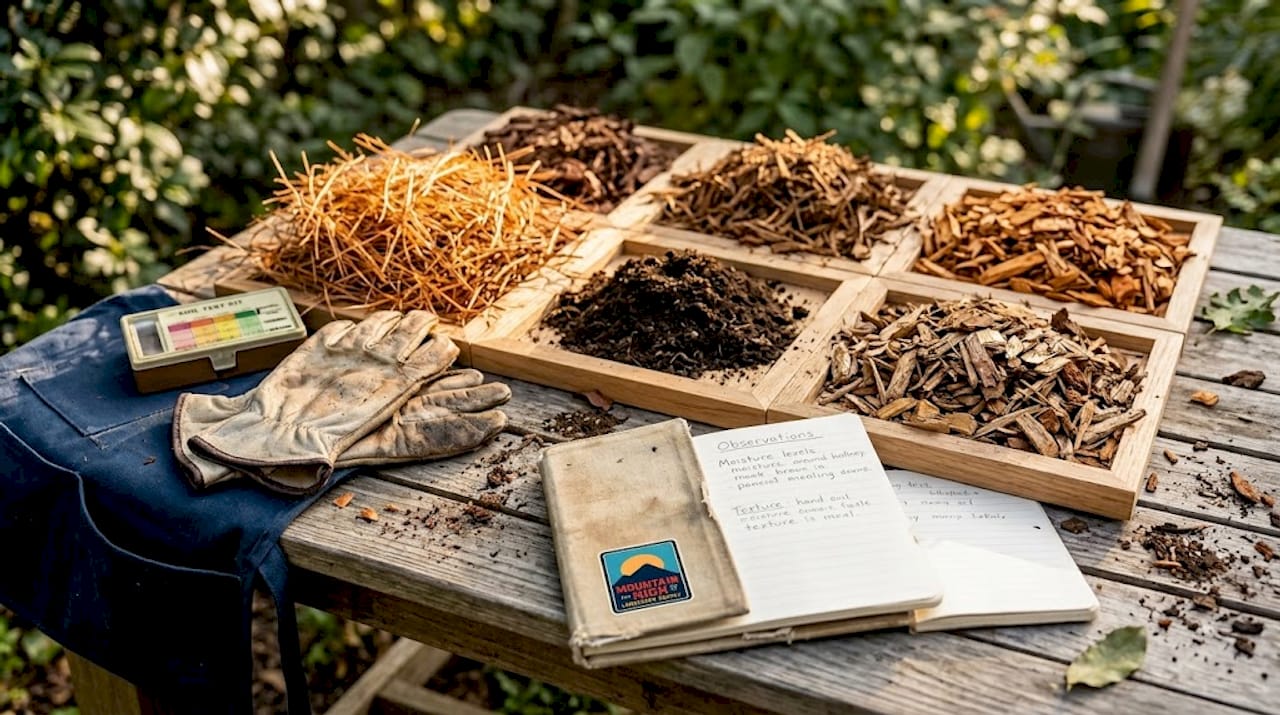
The most common organic mulch types include compost, wood and bark mulch, pine straw, and shredded leaves, each with its own strengths depending on where and how you use them.
Here’s a quick breakdown:
“The best mulch is the one that matches your plants’ needs, your soil type, and your maintenance schedule. Choosing by appearance alone is the most common mistake Georgia gardeners make.”
Pro Tip: For slopes and hillsides, pine straw and shredded bark are your best friends. They interlock and resist washing away during Georgia’s heavy afternoon thunderstorms far better than loose compost or straw.
For more help deciding between options, our guide on bark nuggets and pine straw covers the differences in detail.
Organic mulches aren’t the only option. Here’s what you need to know about inorganic choices and when you might want to use them.
Inorganic mulch options include rubber mulch, gravel and stone, and landscape fabric used under decorative coverings. They last longer than organic materials and require almost no annual refresh. However, they come with real limitations in Georgia landscapes.
For Georgia homeowners, our mulch vs. rock comparison is a helpful resource when deciding between these categories. Also consider how your choice affects mulch impacts on drainage before committing to a permanent hardscape.
“Inorganic mulch can look sharp for years, but if it’s in the wrong spot, it can quietly stress your plants every summer without giving you any obvious warning signs.”
To help you decide at a glance, compare the core benefits and drawbacks of each mulch type below.
| Feature | Organic mulch | Inorganic mulch |
|---|---|---|
| Soil improvement | Yes, improves as it decomposes | None |
| Longevity | 1 to 3 years | Decades |
| Weed suppression | Moderate | Good (with fabric) |
| Temperature regulation | Moderates soil temperature well | Can raise soil temperature |
| Cost | Low to moderate | Moderate to high |
| Best for | Plant beds, vegetable gardens, slopes | Pathways, play areas, foundations |
| Maintenance | Annual refresh needed | Minimal |
| Environmental benefit | High | Low |
As a general rule, organic mulches improve soil health as they decompose, while inorganic options last for decades without contributing anything to the soil. For most Georgia home gardeners, organic is the better default. Inorganic has a place, but it needs to be the right place.
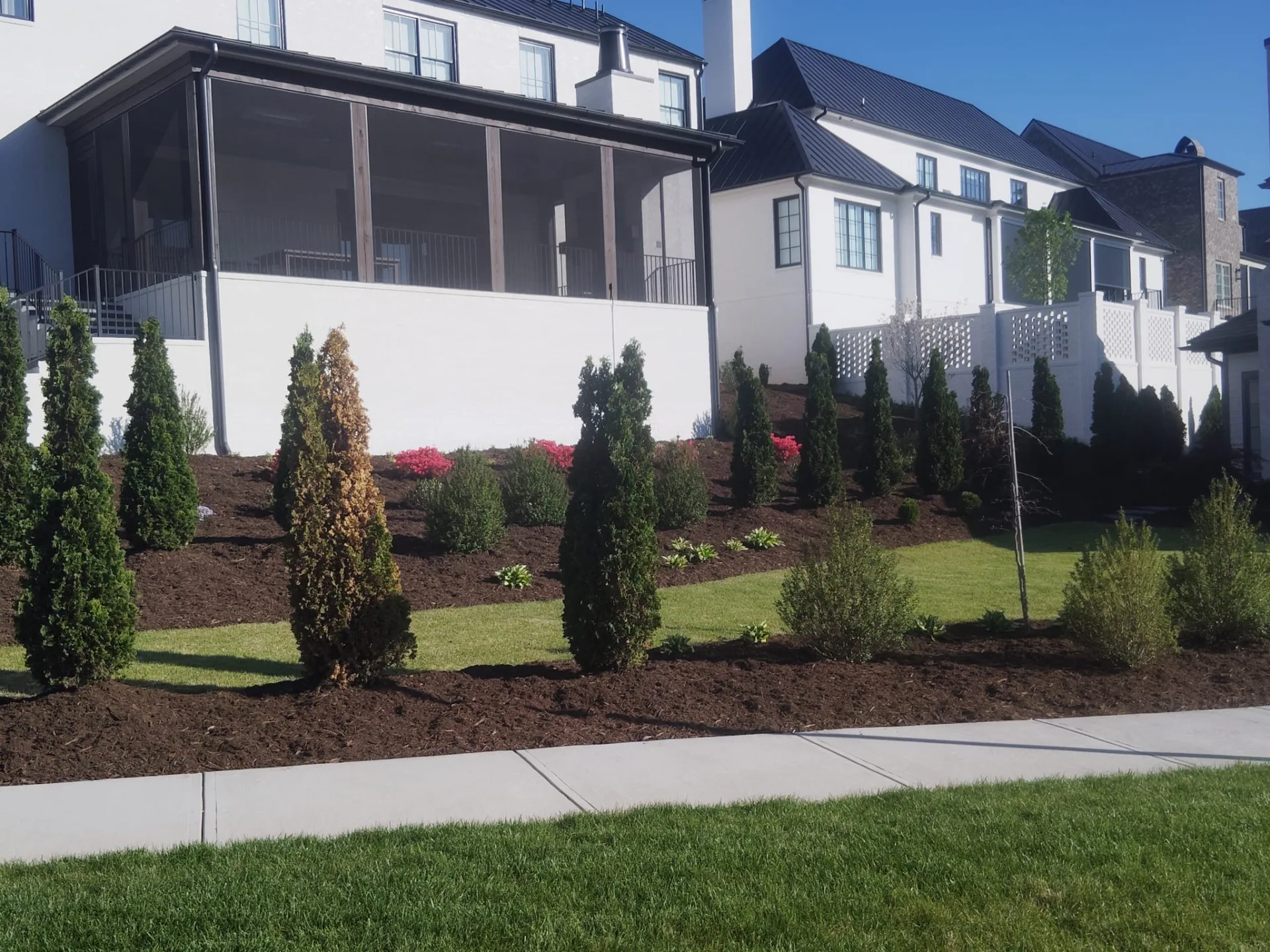
Want to see how a well-chosen mulch can transform a yard’s appearance? Take a look at our brown mulch for curb appeal project in Kennesaw for real-world results.
Once you know your options, it’s time to see which mulch fits best for each area of your Georgia garden. Context matters more than most people expect.
| Plant or area | Recommended mulch | Depth |
|---|---|---|
| Azaleas and camellias | Pine straw | 3 to 4 inches |
| Vegetable garden | Compost or straw | 2 to 3 inches |
| Trees and shrubs | Shredded hardwood bark | 3 to 4 inches |
| Slopes | Pine straw or shredded bark | 3 to 5 inches |
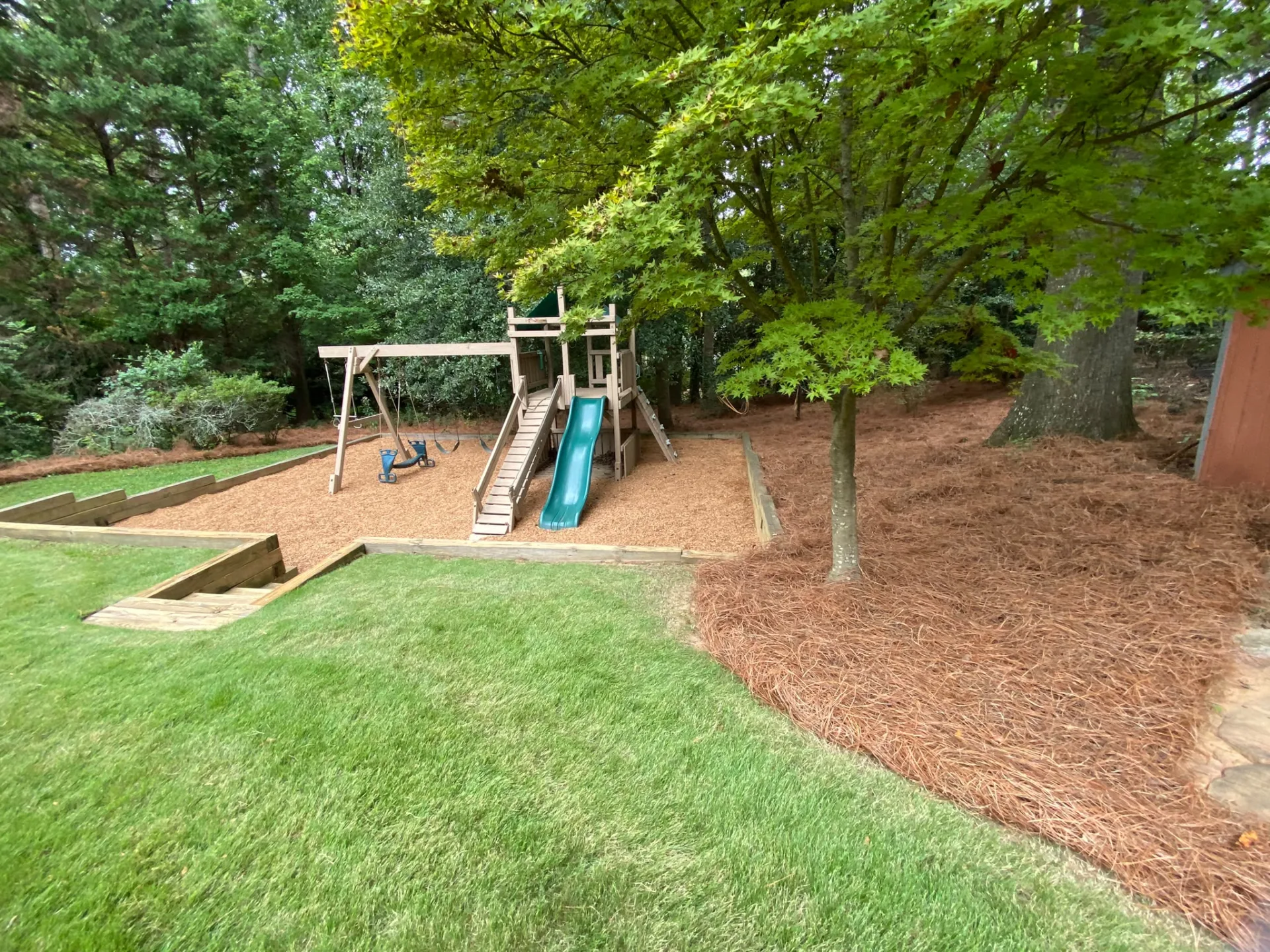
| Play areas | Rubber or double-shredded bark | 6 inches |
| Pathways | Gravel or stone | 2 to 3 inches |
Follow a proven mulch installation guide to get depth and placement right the first time. One of the most common mistakes we see is over-mulching, especially around tree trunks, which creates conditions for disease and pests.
After working with homeowners across Atlanta, Marietta, and Smyrna, we’ve noticed a consistent pattern. Most people choose mulch based on color and price, and then wonder why their plants still struggle. Visual appeal is a real consideration, but it is not the whole story.
Georgia’s clay soil is unforgiving. A thick layer of the wrong mulch can hold moisture against crowns and roots in ways that cause slow, invisible damage. We’ve seen beautiful landscapes with impeccably placed dark bark mulch suffering from poor drainage simply because no one accounted for how the mulch compacted over time.
Another overlooked reality: organic mulch refresh is not optional. Pine straw, shredded bark, and compost all break down. In Georgia’s heat, that happens faster than you’d expect. Skipping the annual refresh doesn’t just hurt your garden’s appearance. It eliminates the functional benefits you paid for: weed suppression, moisture retention, and soil insulation. Plan for it in your spring and fall maintenance schedule.
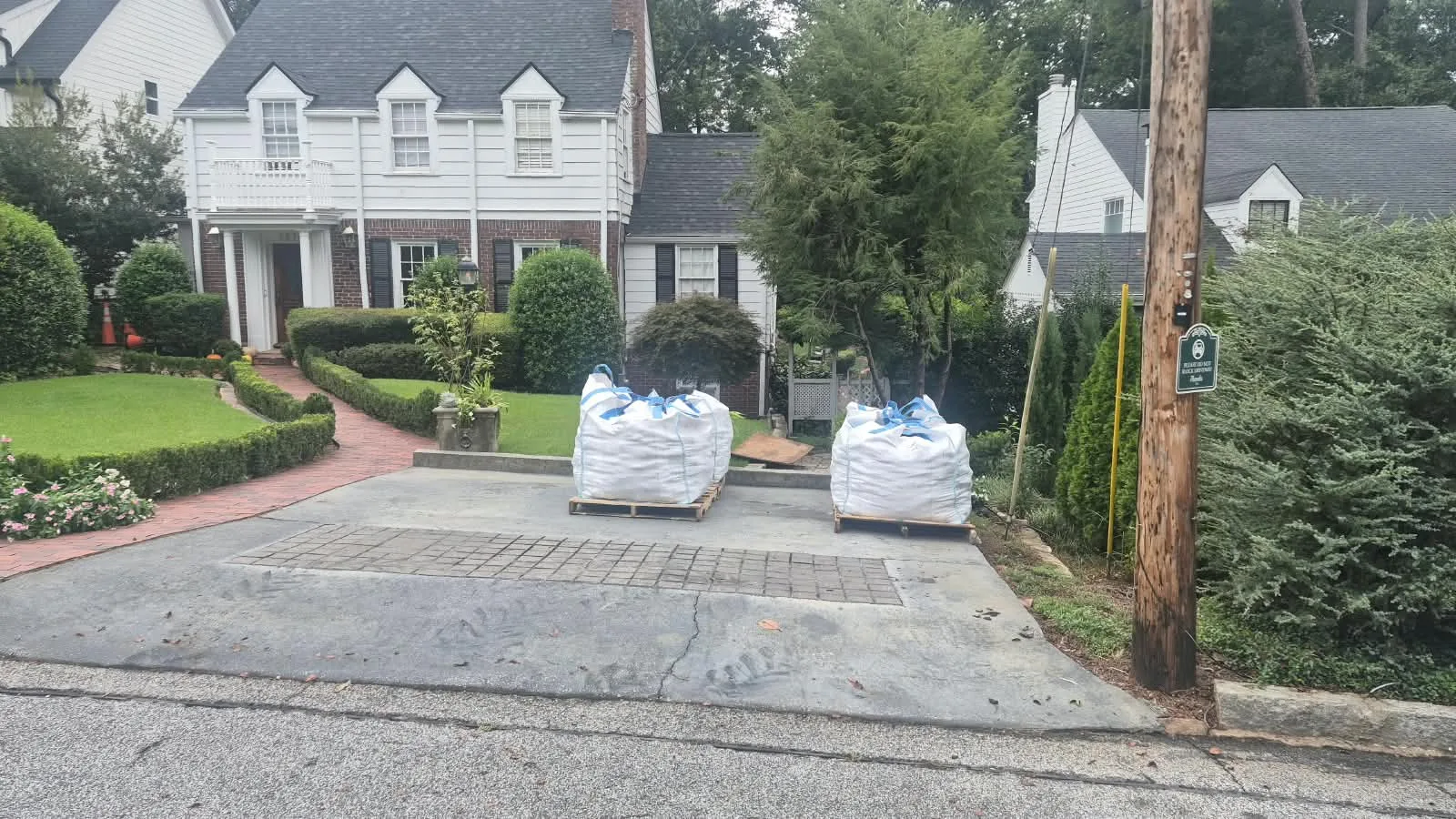
Finally, some “universal” mulch advice simply does not apply in Georgia. Recommendations designed for cooler northern climates may suggest mulch depths or types that actively harm plants here. Always filter advice through your specific soil, your plant selection, and your region. Getting familiar with mulch delivery essentials for Atlanta-area gardens helps you plan quantities and timing correctly, so you’re never under-prepared going into a new growing season.
Ready to take the next step? Here’s how to turn expert advice into a beautiful, thriving Georgia garden.
At Mountain High Landscape Supply, we’ve helped thousands of Georgia homeowners find the right mulch for their specific conditions. From pine straw to premium shredded bark, we carry 5 Star Landscape Supply materials that are sourced for quality and performance in Georgia’s climate.

Whether you need a few cubic yards for a weekend project or a full delivery for a large landscape overhaul, our team at our Marietta and Smyrna locations is ready to help. We also offer professional installation so you can skip the guesswork and get it done right. Visit us in person, order online, or call to discuss your project. Our experts will recommend the right product and get it to your door. Learn how to install mulch like a pro or let us handle the work for you.
Organic mulches like pine straw and shredded leaves help improve heavy clay soil structure while supporting plant growth by adding organic matter as they break down.
Apply mulch in a 2 to 4 inch layer, keeping it away from plant stems. UGA Extension recommends a 3 to 5 inch layer for trees, shrubs, and flowers.
No. Rubber mulch is recommended only for play spaces and should not be used in flower beds or vegetable gardens.
It can, especially in Georgia summers. Rock and stone mulch raises soil temperatures and can stress shallow-rooted plants during hot months.
Absolutely. Compost as mulch is one of the best choices for vegetable gardens because it feeds the soil and retains moisture as it decomposes.