Crushed granite is one of the most practical materials available for Atlanta landscaping and construction, yet it routinely gets confused with pea gravel, decomposed granite, and plain crushed stone. That confusion leads to costly mistakes on driveways, walkways, and drainage projects throughout Marietta, Smyrna, and the wider metro area. Understanding what crushed granite actually is, how it behaves under load, and how to install it correctly makes the difference between a surface that holds firm for years and one that shifts, ruts, and frustrates you every season. This guide covers everything you need to know, from basic definitions to pro-level installation tips.
| Point | Details |
|---|---|
| Angular design matters | Crushed granite’s angular pieces lock together, increasing surface stability when compacted. |
| Proper installation is key | A well-prepared base and consistent compaction are essential for lasting results. |
| Versatile Atlanta applications | Crushed granite is ideal for driveways, walkways, patios, and drainage projects in local landscapes. |
| Avoid shortcuts | Skipping critical steps like compaction leads to surface movement and costly repairs. |
Crushed granite starts as solid granite bedrock, which is then mechanically broken down into smaller, angular pieces. The process is straightforward: large granite slabs are fed through industrial crushers that fracture the rock along its natural grain lines. The result is a material with sharp, jagged faces rather than the smooth, rounded surfaces you see on river gravel.
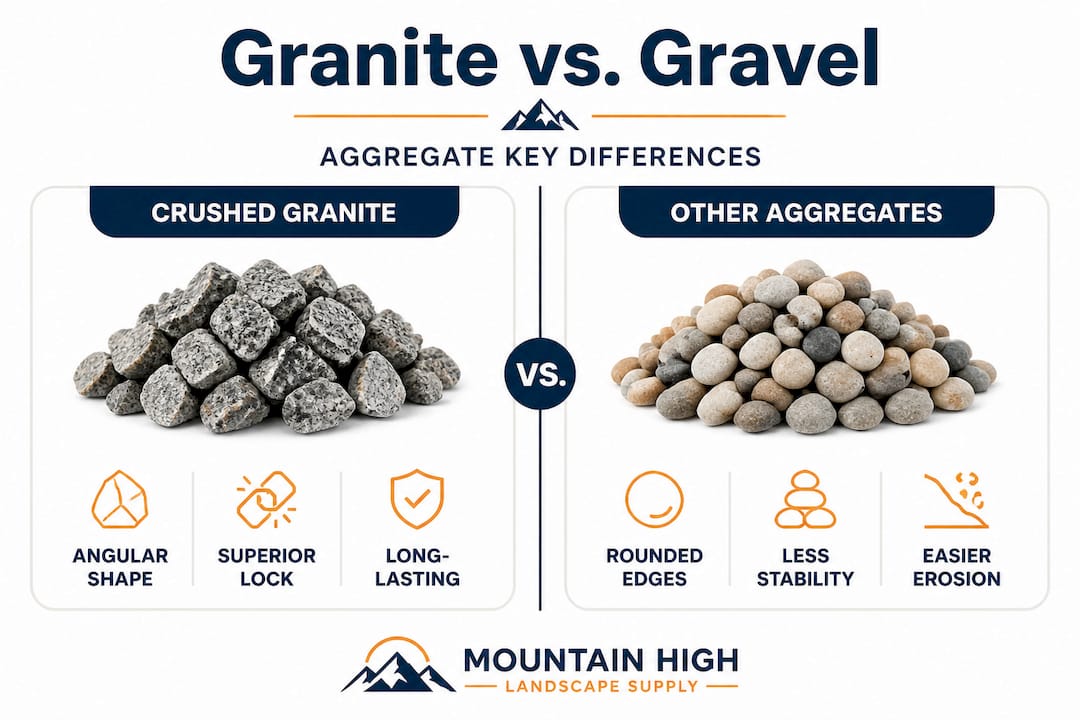
Those angular faces are what give crushed granite its signature stability. When you compact crushed granite as angular stone, the sharp edges lock together almost like puzzle pieces, creating a surface that resists movement under foot traffic and vehicle weight. Rounded gravel, by contrast, rolls and shifts because its smooth surfaces cannot grip each other.
It is also important to separate crushed granite from decomposed granite. Decomposed granite (often called DG) is granite that has weathered over time into a sand-like, crumbly material. It is much finer and behaves more like a compacted soil than a structural aggregate. Crushed granite is a processed, manufactured material with a consistent grading, while DG is a naturally occurring breakdown product.
| Material | Particle shape | Typical size | Primary uses |
|---|---|---|---|
| Crushed granite | Angular, sharp edges | 3/8" to 1.5" | Driveways, base layers, drainage |
| Decomposed granite | Fine, sand-like | Dust to 3/8" | Paths, patios, mulch replacement |
| Pea gravel | Smooth, rounded | 1/4" to 3/8" | Decorative fill, pipe bedding |
| Crushed limestone | Angular | 3/4" to 1.5" | Base compaction, road base |
Key characteristics that make crushed granite stand out include:
For a detailed breakdown of sizing options, our guide on the grading and uses of crushed granite covers every standard grade used in Atlanta projects.
Now that you understand what crushed granite is, let’s look at how it stacks up against the materials you are most likely comparing it to in Atlanta.
The core advantage of crushed granite comes down to particle shape. Angular crushed granite interlocks under compaction, which means the material resists lateral movement and stays put once properly installed. Pea gravel cannot offer this. Its smooth, rounded stones roll under pressure, making it a poor choice for driveways or any surface where stability matters. Pea gravel is excellent for decorative borders and pipe bedding, but it should not be your first call for high-traffic areas.
Decomposed granite sits somewhere in the middle. It compacts well and creates a firm surface, but it is vulnerable to erosion during Atlanta’s heavy summer storms. A properly graded crushed granite layer sheds water more efficiently and holds its structure better when rain hits hard.
Limestone is the closest competitor to crushed granite in terms of stability. Both are angular aggregates that compact effectively. The key difference in the Atlanta area is availability and long-term hardness. Granite is an igneous rock that resists weathering better than limestone over many years of outdoor exposure.
Here is a straightforward comparison for common Atlanta applications:
Pro Tip: If you are building a high-traffic driveway in Cobb County or the Buckhead area, choose a 3/4-inch crushed granite for the base and a smaller 3/8-inch grade for the top layer. The combination gives you both structural depth and a smooth, finished surface.
For budget-conscious homeowners, our resource on affordable gravel path options outlines cost-effective approaches for walkway projects. If you are still weighing pea gravel for a specific area of your yard, our breakdown of pea gravel pros and cons will help you decide.
Atlanta homeowners and contractors put crushed granite to work in more ways than most people realize. The material is versatile, durable, and widely available in the metro area, which is why it shows up on projects ranging from simple backyard paths to full commercial site preparation.
Common applications:
Proper installation is non-negotiable for any of these uses. A correct installation process requires a compacted base, edge restraints, and lift-by-lift compaction to prevent long-term settling and surface movement. Skipping any of these steps creates problems that get worse over time, not better.
| Application | Recommended depth | Key installation note |
|---|---|---|
| Residential driveway | 4 to 6 inches total | Compact in 2-inch lifts |
| Walkway | 2 to 4 inches | Firm subgrade required |
| Patio sub-base | 3 to 4 inches | Level and compact before pavers |
| French drain | 6 to 12 inches | Wrap in filter fabric |
Our detailed gravel driveway installation guide walks through every step for Georgia homeowners. Contractors can also reference our Atlanta hardscape workflow for project sequencing on larger jobs.
Getting the installation right is where most projects succeed or fail. The material itself is excellent, but poor technique undoes every advantage crushed granite has to offer.
Follow these steps for a surface that stays stable through Atlanta’s hot summers and wet winters:
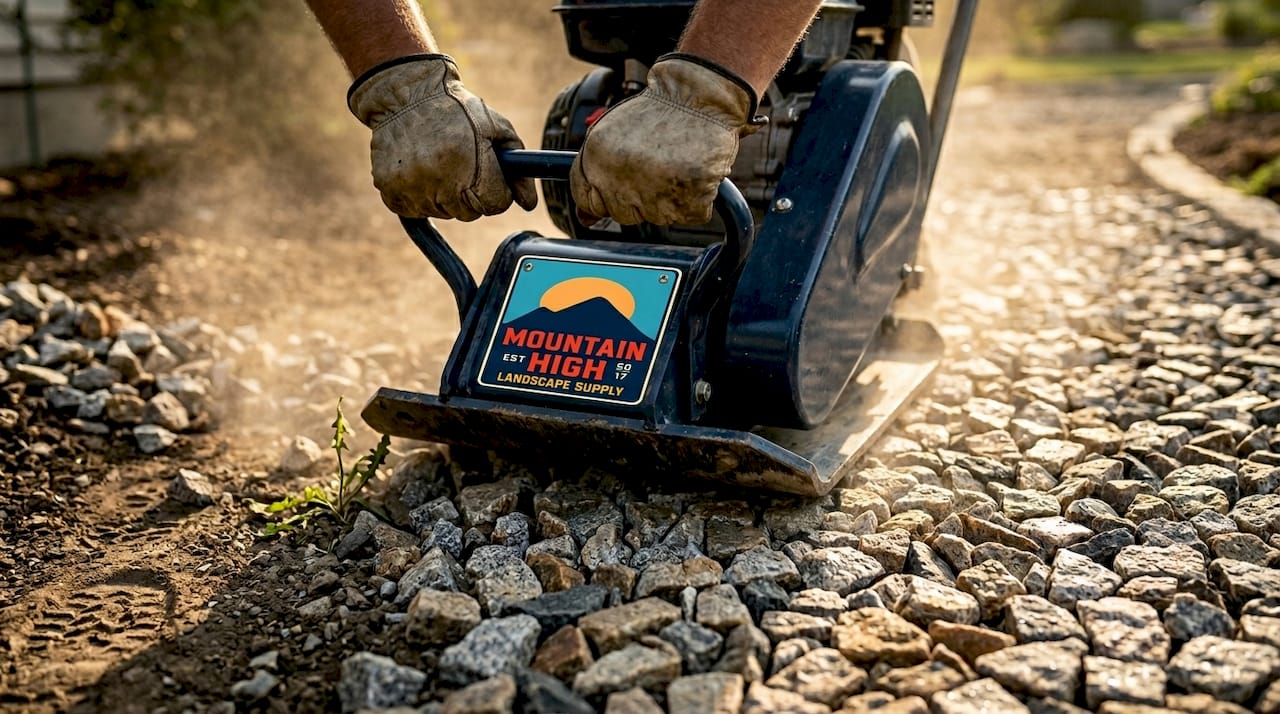
Compactability and stability are strongly affected by particle shape and grading, not just the rock type. Consistent compaction with appropriate equipment and moisture control prevents weak spots that lead to ruts and movement over time. This is why a plate compactor is essential, not optional.
Pro Tip: For Atlanta’s clay-heavy soils, consider placing a layer of geotextile fabric beneath your crushed granite base. It separates the aggregate from the soft clay below, preventing the granite from sinking into the ground over years of rainfall and freeze-thaw cycles.
Selecting the right grade from the start is equally critical. Our resource on selecting gravel for Atlanta projects helps you match the correct size and gradation to your specific application.
Most articles on crushed granite stop at the basics. Here is what years of working with Atlanta homeowners and contractors have taught us that you rarely read elsewhere.
The majority of surface failures we see, shifting driveways, rutted walkways, eroded patios, trace back to decisions made before a single shovel hit the ground. Choosing the wrong grading for the application, skipping proper base depth to save money, or using rounded gravel instead of angular granite all create problems that no amount of topping off will permanently fix.
What Atlanta pros do differently is take the subgrade seriously. Georgia’s red clay is notorious for expanding when wet and contracting when dry. That movement transfers directly into any surface above it unless you intercept it with proper excavation depth and a stable, angular aggregate base. Consistent compaction and moisture control are the tools that interrupt that cycle.
We also see contractors default to whatever aggregate is cheapest at the moment. Crushed granite costs slightly more than some alternatives upfront, but a correctly installed crushed granite driveway outlasts two or three rounds of cheaper gravel that migrated, thinned, or eroded within a few seasons. The math almost always favors granite when you account for material replenishment and labor.
Local knowledge matters too. Atlanta’s specific soil profile, rainfall patterns, and heat mean that installation guidance written for other regions may not translate directly. Our team works in this market every day, and we build that local experience into every recommendation we make. For a broader overview of strategies that work here, our gravel installation strategies guide reflects real Atlanta conditions, not generic advice.
Ready to move from planning to action? We make it straightforward to source premium crushed granite and get the expert guidance your project deserves.

At Mountain High Mulch, we supply quality crushed granite and a full range of aggregates from our convenient Marietta and Smyrna locations. Whether you are a homeowner building a new driveway or a contractor prepping a large commercial site, our team is ready to help you choose the right material and get it delivered fast. Explore our full range of landscape supply solutions, browse our quality gravel materials selection, or check our residential supply guide to plan your project with confidence. Pick up at our yards or schedule delivery throughout the Atlanta metro area.
Crushed granite is angular stone manufactured by mechanical crushing, while decomposed granite is a naturally weathered, sand-like material that breaks down from granite over time. Crushed granite provides greater structural stability and is better suited for driveways and load-bearing applications.
Angular granite interlocks under compaction to create a surface that resists shifting and ruts. Without proper compaction, even the best-graded material will move under traffic and fail prematurely.
A walkway typically needs 2 to 4 inches of crushed granite over a properly excavated subgrade for lasting durability. Higher traffic areas or soft soil conditions may call for an additional inch of depth.
Yes. Properly installed crushed granite handles Atlanta’s heat, heavy rainfall, and occasional freeze cycles very well, making it one of the most durable and low-maintenance driveway surfaces available in the region.
Skipping compaction or failing to prepare a solid subbase is the leading cause of long-term surface problems. Consistent compaction and a firm subbase are what turn crushed granite from a loose fill into a stable, durable surface.