Many homeowners and contractors across metro Atlanta treat crushed stone and gravel as interchangeable terms, reaching for whatever material is cheapest or most available. That choice often leads to drainage failures, eroding driveways, and costly repairs within a few seasons. The reality is that crushed stone comes in distinct grades, each engineered for specific applications, and Atlanta’s humid climate combined with its occasional freeze-thaw cycles makes that distinction even more important. This article walks you through what crushed stone is, how it’s graded, how to install it correctly, and what to watch out for when buying it locally.
| Point | Details |
|---|---|
| Crushed stone basics | Crushed stone is angular quarried rock, ideal for construction and landscaping where strength and precise size are required. |
| Grading is critical | Choosing the correct grade delivers better drainage, compaction, and long-term performance in Atlanta projects. |
| Installation matters | Proper layering, compaction, and grade selection prevent failure and costly fixes. |
| Ask for documentation | Always request gradation certificates and particle shape info from your supplier to ensure quality. |
| Adapt to Atlanta’s climate | Hard rock like granite and careful grade choice minimize drainage issues in Georgia’s wet, variable weather. |
The confusion between crushed stone and gravel is understandable. Both materials end up in driveways, drainage beds, and landscaping projects. But their properties, and therefore their performance, differ significantly.
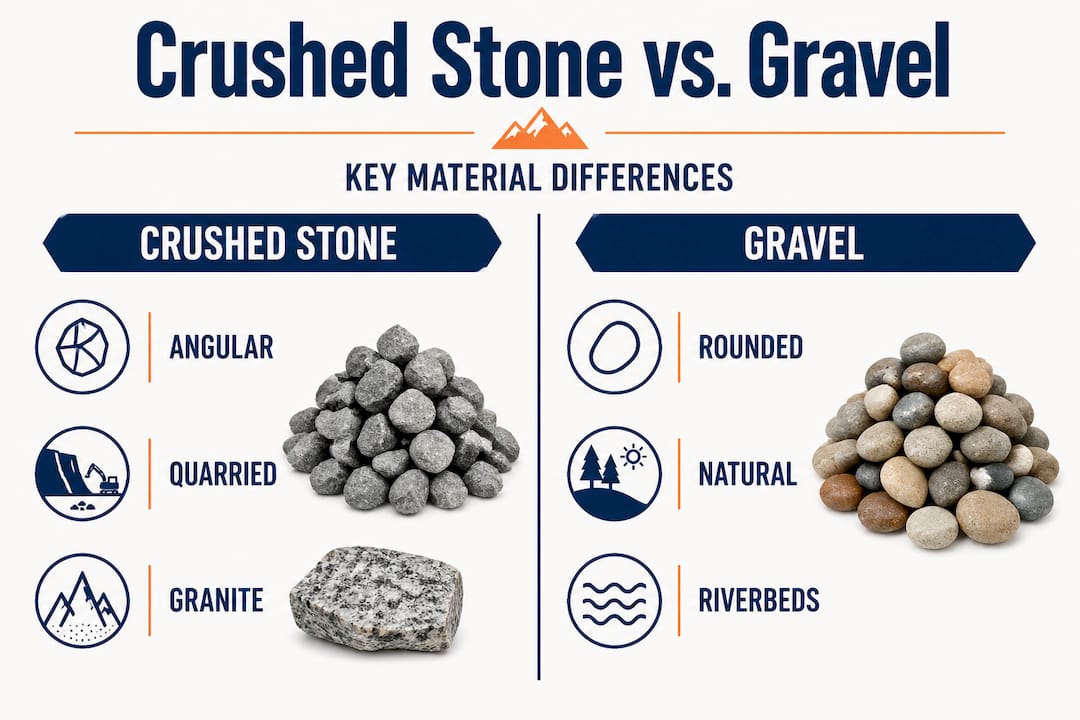
Gravel is naturally occurring rock that has been shaped and smoothed by water or erosion over long periods. Crushed stone, by contrast, is quarried rock that has been mechanically broken into specific sizes. Those angular, fractured edges are not a flaw. They are the feature. Angular edges lock together under load, creating a stable, interlocking surface that rounded gravel simply cannot match.
How crushed stone is produced:
The production involves blasting quarried rock followed by multi-stage crushing using jaw crushers and cone crushers, then screening to achieve specific gradations that meet ASTM C33 or DOT specifications. Here is what that process looks like in practice:
In the Atlanta region, granite is the dominant quarried material. Georgia sits on some of the most durable granite deposits in the eastern United States. That matters because granite-based crushed stone produces less dust, resists breakdown in wet conditions, and outlasts softer stone types like limestone in humid environments.
| Material type | Source | Key characteristic |
|---|---|---|
| Granite | Quarried, hard igneous rock | Low absorption, high durability |
| Limestone | Quarried, sedimentary rock | Softer, more fines in humid conditions |
| Recycled concrete | Processed demolition material | Higher absorption, variable quality |
Products like #89 stone and #57 stone come directly from this production process, each screened to tight size specifications. Understanding this helps you ask better questions at the supply yard and get the right product the first time. You can also learn more about using crush-n-run, a blended product made from the crusher output that includes a mix of sizes and fines.
Understanding how stone is made, the next question is: which grade is right for your project? Grades are defined by particle size ranges, and each grade behaves differently when it comes to drainage, compaction, and load-bearing capacity.
Grades break down as follows: #57 runs from 0.5 to 1.5 inches, #67 runs from 0.25 to 1 inch, #3 runs from 1 to 2.5 inches, and #411 is a well-graded blend that includes fines. Each fills a specific role in the project stack.
| Grade | Size range | Best use | Drainage rating |
|---|---|---|---|
| #3 | 1 to 2.5 inches | Subbase, erosion control | Excellent |
| #57 | 0.5 to 1.5 inches | Base layers, French drains, driveways | Excellent |
| #67 | 0.25 to 1 inch | Concrete aggregate, pipe bedding | Very good |
| #89 | 0.19 to 0.5 inch | Surface layer, small gaps | Good |
| #411 (crusher run) | Mixed with fines | Compacted base, paths | Poor to fair |
Open-graded stone like #57 drains freely because it contains 35 to 45 percent void space between particles. Water passes through quickly without pooling. Well-graded blends like #411 compact denser because the fines fill those voids. That density is great for a stable walking path but a liability anywhere water needs to move.
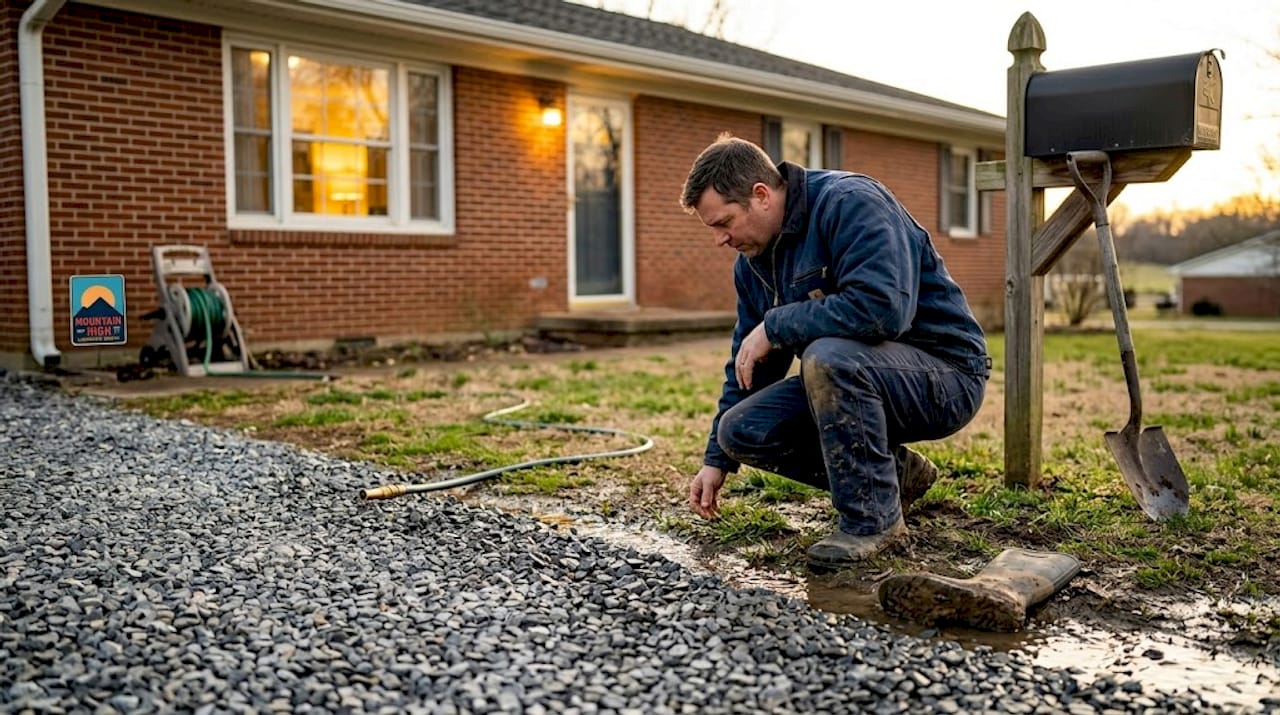
Atlanta averages over 50 inches of rainfall per year, well above the national average. That volume of water puts serious pressure on any drainage system. A French drain filled with #411 instead of #57 will clog and fail within a few seasons. The #57 stone uses page outlines exactly why this grade is the go-to choice for drainage beds, pipe surrounds, and permeable base layers across the metro area.
Key grade properties to evaluate before buying:
Pro Tip: Ask your supplier for a gradation certificate before you order. This document shows exactly how much material falls within each sieve size, confirming you are getting what you ordered. Also ask for the flat/elongated particle percentage. Anything above 25 percent for structural applications is a concern.
For guidance on selecting gravel for projects, matching your project type to the right grade is the single most important decision you will make before breaking ground.
Now that you know about stone types, let’s cover how to install them correctly for lasting results. Poor installation is the number one reason good materials fail. The right stone placed incorrectly will still cause drainage failures, surface rutting, and premature breakdown.
Standard installation steps for a crushed stone driveway:
Proper driveway construction calls for a #3 subbase at 4 to 6 inches, a #57 base at 4 inches, and a #57 or #8 surface layer on top. Skipping the subbase or under-compacting any layer creates weak points that show up as ruts and potholes after the first heavy rain.
“High fines content in base materials causes frost heave in freeze-thaw conditions and restricts drainage in wet climates. Always verify gradation certificates before placement to confirm fines content is within spec for your intended application.”
Atlanta sits in USDA hardiness zone 7, which means it does experience frost and occasional freeze-thaw cycles, particularly in January and February. Clay-heavy soils expand when wet and freeze, pushing poorly drained base layers upward. A stone base with high fines behaves similarly to clay in this regard. It holds moisture, expands, and heaves your surface.
Pro Tip: For any drainage-critical job, including French drains, retaining wall backfill, or permeable base layers, choose open-graded stone over crusher run. The void space that makes open-graded stone feel unstable underfoot is exactly what makes it perform in wet conditions.
For projects involving hardscaping sequences, the hardscaping steps guide outlines how crushed stone fits within a broader installation workflow. For softer surface projects, pea gravel in Atlanta covers a different product category with its own strengths and limitations.
Proper installation is essential, but the right buying process is just as important. Even a perfectly installed crushed stone project will fail if the material itself is the wrong grade or comes from a low-quality source. Here are the mistakes we see most often across metro Atlanta projects.
Most common buying mistakes:
Requesting supplier gradation certificates and flat/elongated particle percentages is essential. Hard rock sources like granite and quartzite perform significantly better in Atlanta’s humid climate because they produce fewer fines over time and resist breakdown when wet. Softer stone like limestone breaks down faster, generating dust and reducing drainage performance within a few seasons.
Your Atlanta buyer’s checklist:
One alternative worth knowing about: recycled concrete aggregate is a viable substitute for some non-structural uses, but it comes with higher water absorption and variable quality. Always check Georgia DOT or local municipal specifications before substituting recycled concrete in any engineered application.
| Checklist item | Why it matters | What to ask |
|---|---|---|
| Gradation certificate | Confirms size distribution matches spec | “Can you provide the sieve analysis?” |
| Percent fines | Controls drainage and compaction behavior | “What is the percent passing No. 200?” |
| Rock source | Determines long-term durability | “Is this granite or limestone based?” |
| Flat/elongated % | Affects structural performance | “What is the particle shape report?” |
The selecting gravel checklist page gives you a printable reference you can bring to the supply yard or share with your material vendor before purchase.
Here is something most articles on this topic will not say directly: the biggest mistake on Atlanta crushed stone projects is not a technical installation error. It is the assumption that stone is stone.
We see it regularly. A homeowner calls after installing a drainage bed, frustrated that it is pooling water three months after the project wrapped up. Or a contractor is replacing a driveway base that failed in the first winter. In almost every case, the root cause is the same. Someone chose material based on price per ton or grabbed whatever the local big-box store had in stock, without checking what that material actually was.
Atlanta’s wet, variable climate is genuinely harder on materials than most parts of the country. Fifty-plus inches of rain a year, combined with clay-heavy native soils and periodic freeze-thaw stress in winter months, means your crushed stone needs to perform consistently under real pressure. Granite holds up. Limestone erodes. High-fines crusher run compacts beautifully but clogs drainage systems within a few seasons.
The other thing most articles skip over is the gradation and particle shape conversation. Suppliers sometimes blend material batches, and without a gradation certificate in hand, you have no way to know whether the #57 you ordered matches spec. That variability has a direct impact on void space, drainage rate, and long-term stability. Projects that invest in documentation before purchase almost always outperform those that skip it.
Our view, built from years of supplying Atlanta homeowners and contractors: buy slow, ask for documentation, and match product choice to your project’s primary demand, whether that is drainage, compaction, or surface stability. The material cost difference between a well-specified stone and a budget substitute is rarely significant. The repair cost when the wrong stone fails absolutely is. For more on this, see our expert Atlanta supply tips, which covers this philosophy across multiple material types.
Putting these insights into practice starts with having access to the right materials, and that is exactly what we provide at our Marietta and Smyrna supply yards.

We carry #57 stone for Atlanta drainage and base applications, along with crush and run for compacted driveways and foundations, all sourced from quality granite producers. Whether you are a homeowner tackling a French drain or a contractor pricing out a full driveway installation, our team can help you select the right grade, calculate the volume you need, and get it to your site fast. We also carry mulch, topsoil, sand, sod, and other essential lawn care supplies for complete landscape upgrades. Stop by, call ahead, or order delivery across the metro Atlanta area.
Crushed stone is quarried and crushed into angular pieces through mechanical processing, while gravel is naturally rounded rock shaped by water or erosion. The angular edges of crushed stone create interlocking stability that rounded gravel cannot replicate.
A standard Atlanta driveway uses a layered system: #3 stone at 4 to 6 inches for the subbase, #57 at 4 inches for the base layer, and #57 or #8 stone for the finished surface. Each layer serves a distinct structural and drainage purpose.
Ask your supplier for a gradation certificate confirming that #57 stone contains less than 2 percent material passing the No. 200 sieve. Low fines content is the primary indicator of reliable drainage performance.
Recycled concrete aggregate is viable for certain non-structural applications, but it absorbs more water than natural stone and quality can vary significantly. Always check Georgia specifications and confirm suitability with your engineer or local jurisdiction before substituting.
Atlanta’s humidity and freeze-thaw cycles favor hard granite stone over softer limestone because granite generates fewer fines over time, maintains void space in drainage beds, and resists breakdown in consistently wet conditions. The material type directly affects how long your installation performs without maintenance.