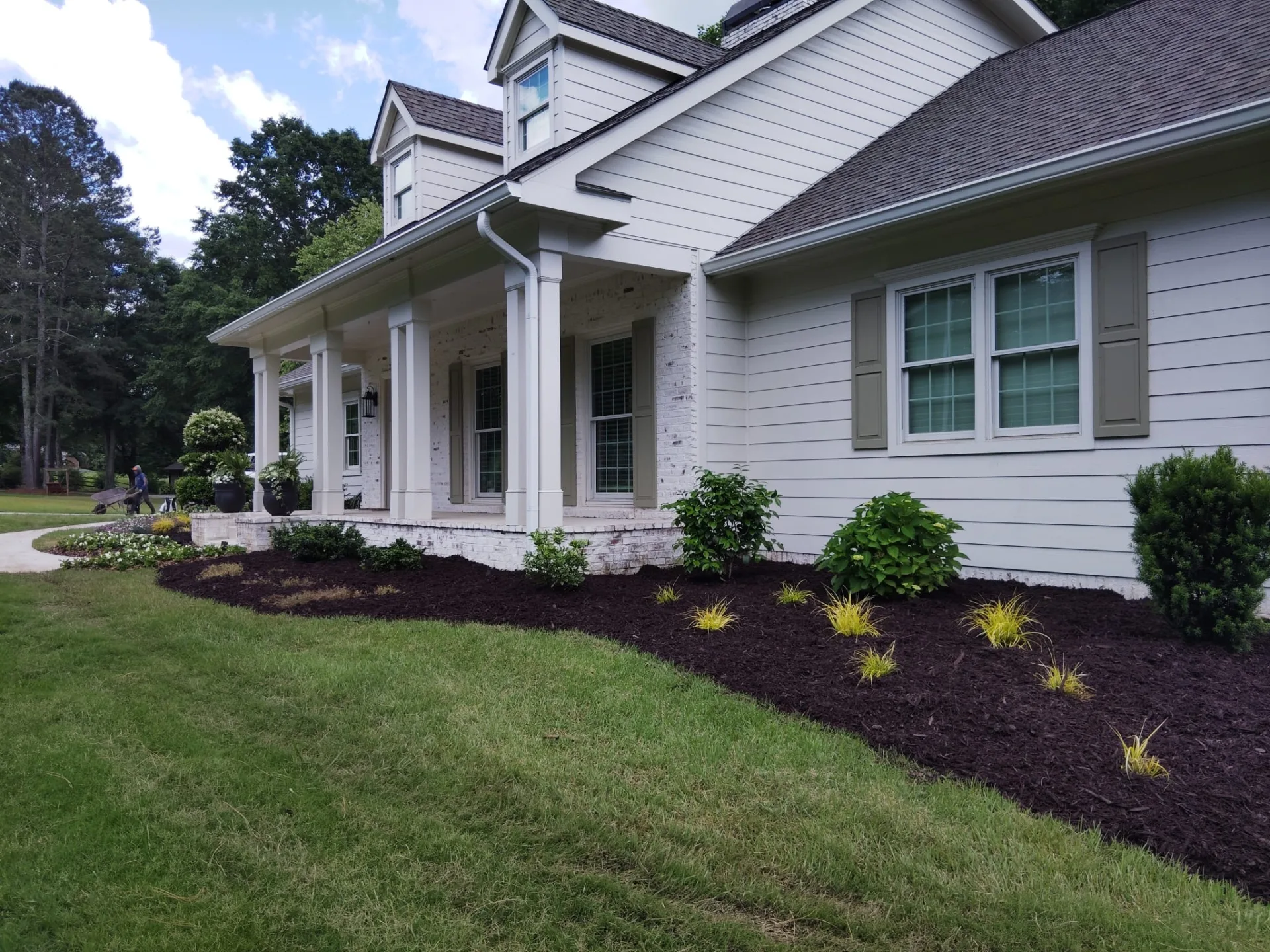
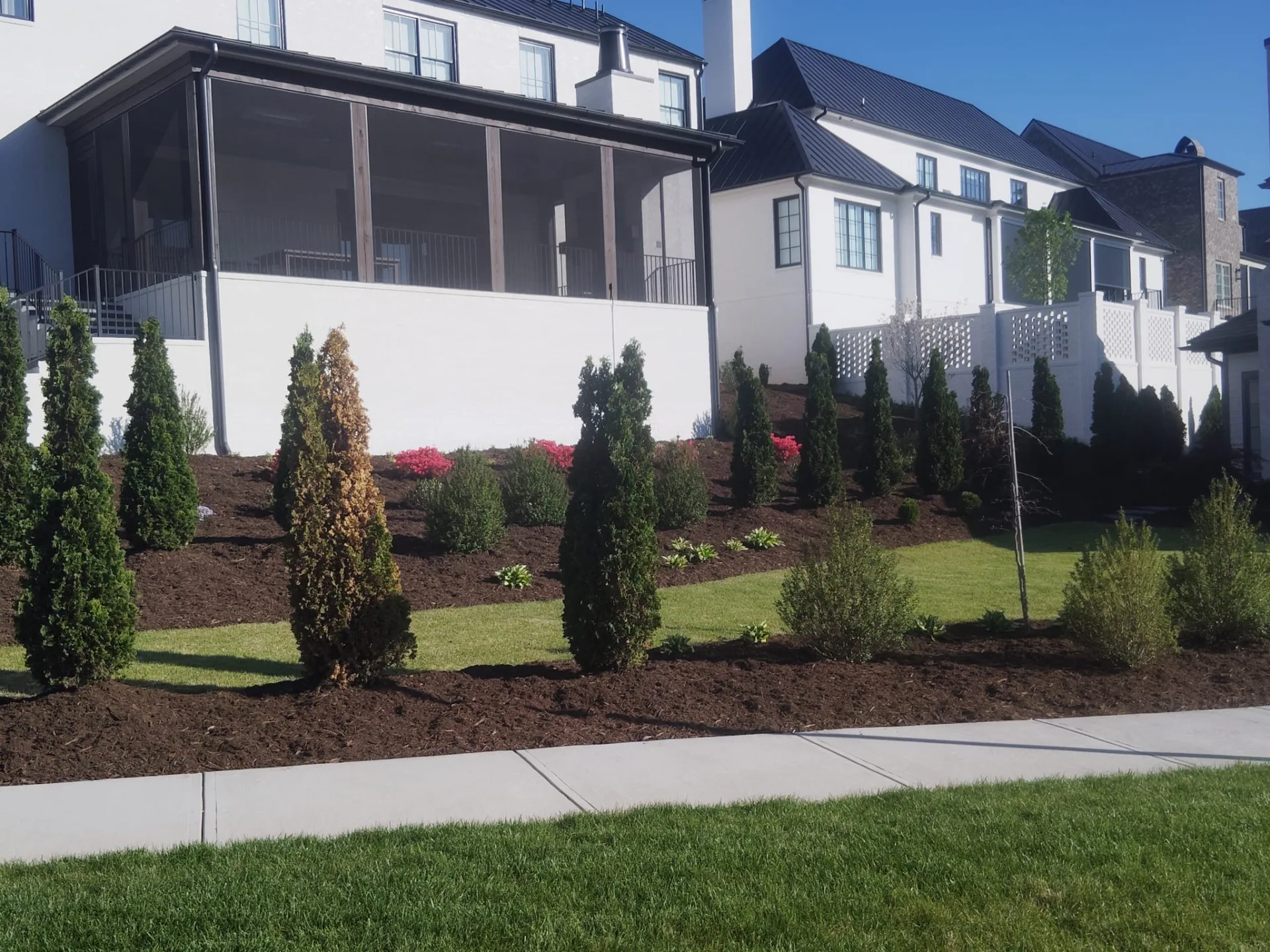
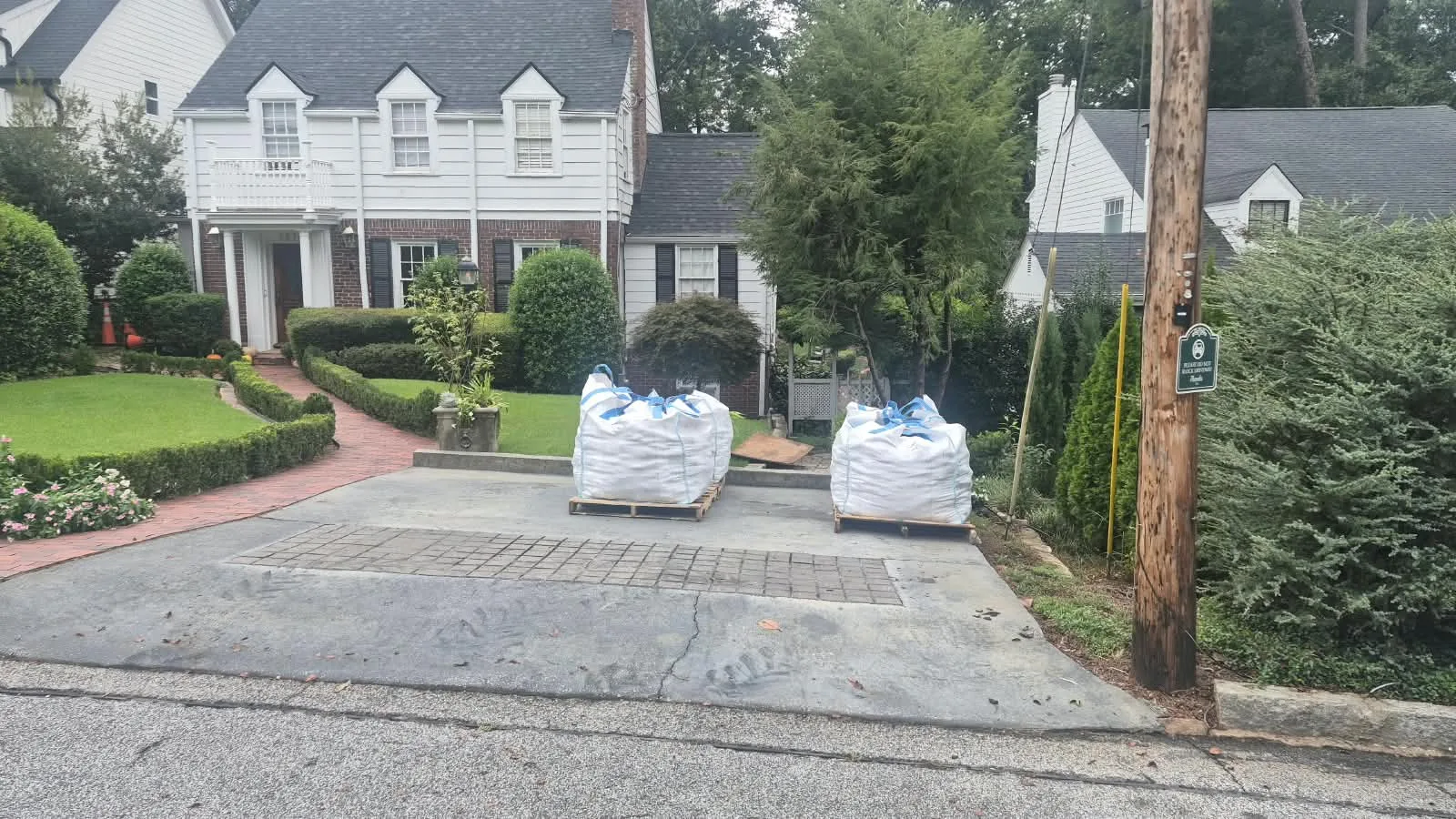
Most Atlanta homeowners spend hours choosing plants and garden layouts, then rush through the material selection that actually determines whether their project succeeds or fails. The supplies you choose, from mulch and topsoil to sod and gravel, shape how your yard looks, drains, and holds up through Georgia’s hot summers and wet winters. Getting this part right is not complicated, but it does require local knowledge that generic online guides simply cannot provide. This article walks you through every major supply category, helps you match materials to your specific goals, and gives you practical sourcing advice built for the Greater Atlanta area.
| Point | Details |
|---|---|
| Know your supply options | Understanding mulch, soil, sod, sand, and hardscape choices leads to successful landscaping in Atlanta. |
| Match materials to project goals | Select supplies that align with your climate, yard conditions, and intended results for lasting curb appeal. |
| Source locally for value | Choosing a trusted Atlanta supplier ensures material quality, local expertise, and reliable delivery. |
| Plan delivery smartly | Proper delivery planning helps avoid costly mistakes and gets your project off to a smooth start. |
With supply selection being foundational, it’s crucial to understand the options Atlanta offers. Atlanta’s unique soil and climate conditions affect which landscape materials perform best in your yard, which is why a one-size-fits-all approach rarely works here. The region’s red clay soil, humid summers, and occasional freeze-thaw cycles in winter all influence how materials behave over time.
The main categories of landscape supplies you’ll encounter include:
Each of these materials serves a specific function. Mulch retains soil moisture and suppresses weeds. Quality topsoil provides the nutrient base plants need to establish strong root systems. Sand creates stable, well-drained foundations for hardscape projects. Gravel manages water runoff and adds visual texture. Sod delivers an instant, finished lawn. Understanding how architectural design for homes integrates with landscape planning helps you see why material choices are never purely cosmetic.
| Supply Type | Primary Function | Best Use Case |
|---|---|---|
| Organic mulch | Moisture retention, weed control | Garden beds, tree rings |
| Screened topsoil | Plant nutrition, drainage | Lawn repair, raised beds |
| Coarse sand | Drainage, base prep | Under pavers, drainage trenches |
| Pea gravel | Drainage, aesthetics | Pathways, dry creek beds |
| Zoysia sod | Instant lawn coverage | Full lawn installation |
| Pavers/stone | Structure, curb appeal | Patios, walkways, walls |
Pro Tip: Before ordering any material, walk your yard after a heavy rain. Where water pools tells you exactly where drainage improvements are needed, which directly affects your material choices.
Local supply yards in Marietta and Smyrna carry materials specifically suited to Atlanta’s conditions. That regional expertise is something you simply cannot replicate by ordering from a national retailer who does not know what Georgia clay does to a poorly prepared garden bed.
Now that you know your options, let’s pinpoint how to choose the best mulch and soil for your yard. Selecting the right mulch and soil directly improves plant health and landscape durability, which means this decision affects your yard for years, not just one season.
Mulch types and what they do:
Dyed mulches (red, brown, and black) hold their color longer and give your beds a polished, finished look. Red mulch tends to complement brick homes and red-toned stone. Brown and black mulches suit modern or neutral-colored exteriors. Natural hardwood mulch breaks down faster, adding organic matter to the soil, which is a genuine benefit for Atlanta’s nutrient-poor clay. Pine straw is a regional favorite, especially under acid-loving plants like azaleas and camellias.
Soil selection matters just as much:
Screened topsoil removes rocks and debris, giving you a clean base for planting. Organic topsoil blends add compost and nutrients, which is ideal for new garden beds where you want fast plant establishment. If you’re repairing bare lawn patches, a 50/50 mix of topsoil and compost gives grass seed the best start. For raised beds, a dedicated garden mix with perlite or coarse sand improves drainage significantly.
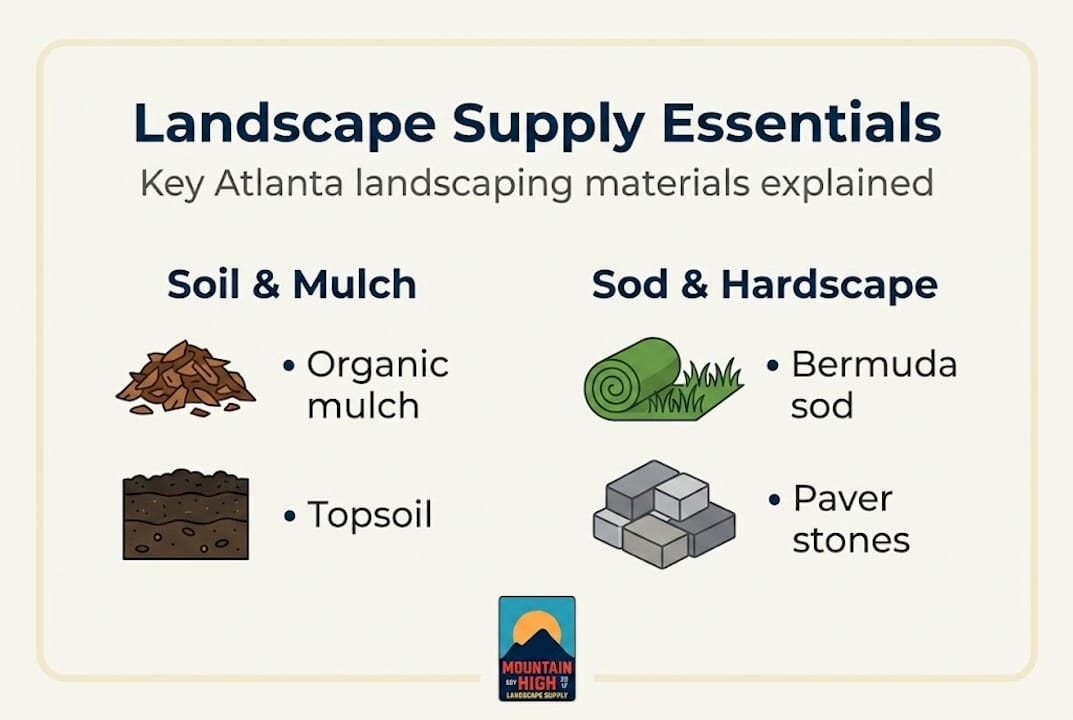
| Product | Best For | Avoid When |
|---|---|---|
| Red dyed mulch | Brick or red-toned homes | You want a natural look |
| Natural hardwood mulch | Soil improvement, garden beds | You need long-lasting color |
| Pine straw | Acid-loving plants, slopes | Formal or manicured gardens |
| Screened topsoil | Lawn repair, general planting | Raised beds needing drainage |
| Organic soil blend | New garden beds, containers | Budget is very tight |
Here is a step-by-step process to match mulch and soil to your specific project:
Staying current with landscaping trends for 2026 can also help you make choices that keep your home looking current and increase its resale appeal.
Pro Tip: For Atlanta’s clay-heavy soil, always mix in at least 2 inches of compost before laying new sod or planting a garden bed. Clay compacts easily and suffocates roots without proper amendment.
Beyond mulch and soil, let’s look at how sod, sand, and hardscape tie your landscape together. These three elements add structure, instant visual impact, and long-term functionality to your outdoor space.
Sod for Georgia lawns:
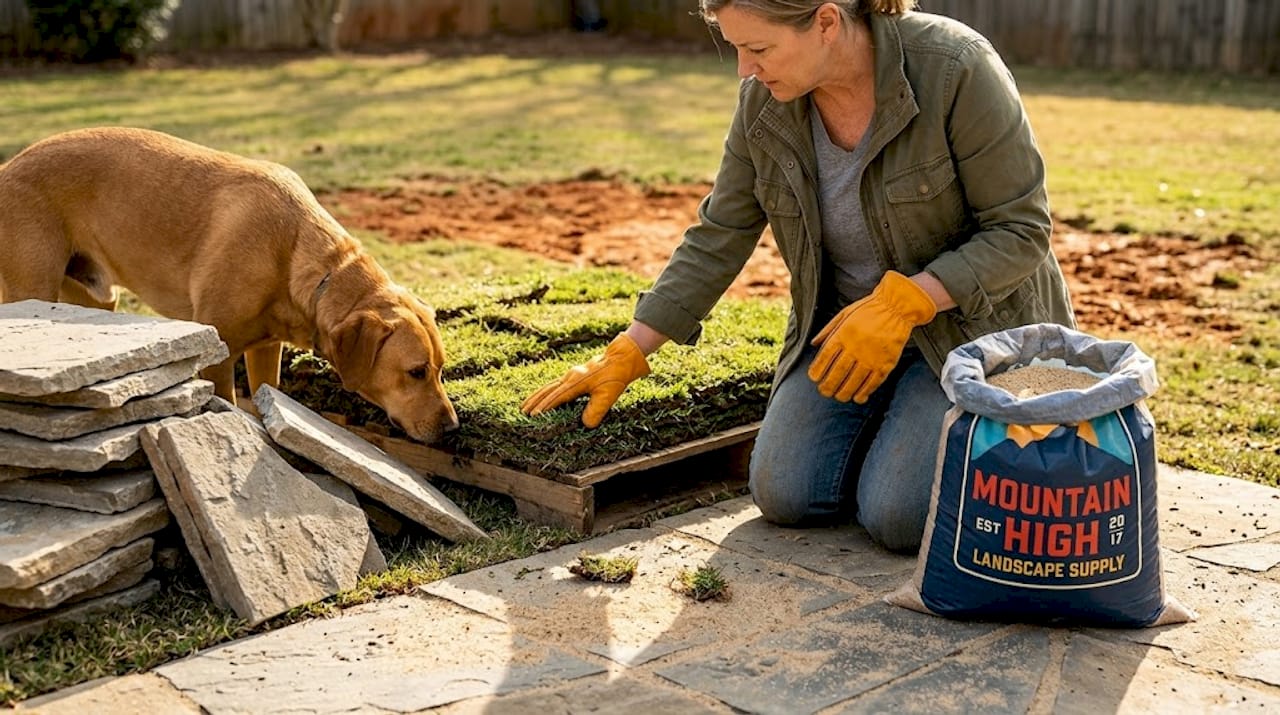
Two grass types dominate Atlanta residential lawns. Bermuda grass is aggressive, drought-tolerant, and recovers quickly from foot traffic, making it ideal for active families. Zoysia grass grows more slowly but forms a dense, lush carpet that handles both sun and partial shade, which suits many Atlanta yards with tree coverage. Both are warm-season grasses that go dormant in winter and green up reliably each spring.
Installing sod correctly requires proper soil preparation. Scalp the existing grass or till the area, amend the soil, grade for drainage, then lay sod in a staggered brick pattern. Water daily for the first two weeks. Skipping any of these steps leads to patchy establishment and wasted money.
Sand applications in landscaping:
Sand plays a supporting role that many homeowners overlook. Coarse sand creates a stable, well-drained base under pavers and retaining walls. Masonry sand levels surfaces before paver installation. Topdressing your lawn with a thin layer of sand improves drainage in low spots and helps level uneven turf over time. Each application requires a specific sand type, so always confirm with your supplier before ordering.
Hardscaping for structure and value:
Hardscaping boosts property value when balanced with softscape, and Atlanta homeowners consistently see strong returns on well-executed patio and walkway projects. Patios extend your living space outdoors. Retaining walls manage slopes and prevent erosion, a real concern in Atlanta’s hilly terrain. Walkways improve safety and guide traffic through your yard intentionally.
“The best Atlanta landscapes balance hardscape structure with softscape warmth. Stone and plants work together, not against each other.”
Choosing the right hardscape materials for your project depends on budget, style, and intended use. Concrete pavers are durable and versatile. Natural flagstone offers a premium, organic look. Gravel paths are budget-friendly and excellent for drainage. Considering home improvement costs before you start helps you plan realistically and avoid mid-project budget surprises.
Key benefits of integrating hardscape with softscape include:
You’ve decided on your materials. Here’s how to get them to your home with zero surprises.
Sourcing landscape supplies locally in Atlanta offers real advantages. A reputable local supplier ensures material quality and reliable delivery, which matters when your project timeline depends on getting the right product on the right day. National chains often carry generic products that are not optimized for Georgia’s specific soil and climate conditions.
Here is a step-by-step checklist for sourcing your materials efficiently:
Common mistakes Atlanta homeowners make:
Many homeowners underestimate how much material they need for a project, then face delays waiting for a second delivery. Others order without measuring site access, only to find the delivery truck cannot reach the backyard. Some choose the cheapest topsoil available, not realizing it contains weed seeds or poor nutrient content that undermines the entire project.
Understanding the mulch delivery workflow before you order saves time and frustration. Similarly, reviewing hardscape installation steps helps you sequence your project correctly so materials arrive when you actually need them.
Pro Tip: Schedule deliveries on a weekday morning when possible. You’ll have the full day to spread materials before they dry out or shift, and suppliers often have more flexible delivery windows early in the week.
Local supply yards in Marietta and Smyrna offer pick-up options for smaller projects, which saves delivery costs and lets you inspect materials before loading. For larger projects, delivery is the practical choice, and a good supplier will work with your schedule.
Stepping back, here’s what really matters in the Atlanta home landscaping journey.
We’ve worked with hundreds of Atlanta homeowners, and the projects that succeed share one trait: attention to local details. Generic DIY advice found online often ignores the specific challenges of Georgia’s red clay soil, the humidity that affects how mulch breaks down, and the seasonal timing that determines whether sod establishes before summer heat arrives.
The homeowners who get the best results are not necessarily the most experienced. They are the ones who ask specific questions, choose materials suited to their actual yard conditions, and work with suppliers who understand the region. Saving a few dollars on lower-quality topsoil or off-brand mulch almost always costs more in the long run through replanting, erosion repairs, or weed management.
We also see homeowners over-rely on Atlanta landscaping trends without considering whether those trends suit their specific yard. A material that looks stunning in a magazine may perform poorly in a shaded, clay-heavy Atlanta backyard. Local expertise bridges that gap. The details, soil testing, material matching, delivery timing, and site preparation, are what separate a yard that thrives from one that just survives.
Ready to upgrade your home’s curb appeal? Choosing the right materials from a trusted local source is the single most impactful step you can take before breaking ground on any outdoor project.

At Mountain High Mulch, we stock premium mulch, topsoil, sand, gravel, stone, and sod from our clean, organized yards in Marietta and Smyrna. Our team helps you select the right products for your specific yard conditions and project goals. Browse our Atlanta residential supply guide to explore material options, or check out our red mulch options if you want a bold, polished look for your garden beds. Visit the Mountain High Mulch homepage to see our full product range, get delivery information, or contact our expert team today.
Choose mulch that matches your yard’s soil conditions and aesthetic goals, and confirm it suits Atlanta’s climate. Mulch selection depends on local climate and specific yard needs, so a local supplier’s recommendation is worth more than a generic online guide.
Most Atlanta yards benefit from 2 to 3 inches of new organic topsoil, applied over prepared ground. Use the cubic yard formula (length x width x depth in feet, divided by 27) and review topsoil depth recommendations for Atlanta lawns to confirm your estimate.
Yes, reputable suppliers cover a wide delivery area throughout the Atlanta metro and publish detailed delivery zone information online. Call ahead to confirm your address is within the service area and to schedule your preferred delivery window.
Sod provides an instant lawn and is ideal for high-traffic or erosion-prone areas, while seed is more budget-friendly for large yards with time to establish. Sod offers fast results and strong resilience in Georgia’s warm climate, making it the preferred choice for most residential lawn installations.
DIY installation is achievable with the right materials and careful planning, but complex projects often benefit from professional guidance. Hardscape installation requires precise material selection, proper base preparation, and correct sequencing to ensure lasting results.