Most Atlanta homeowners default to concrete or pavers when planning a new walkway, assuming those are the only real options. That assumption costs money. Gravel walkways are consistently chosen for their low cost and long-term savings, yet they remain one of the most underused landscaping choices in the metro area. This guide breaks down exactly why gravel deserves a serious look, how it performs in Atlanta’s specific climate, and how you can install and maintain one yourself.
| Point | Details |
|---|---|
| Cost-effective solution | Gravel walkways install for a fraction of the cost of pavers and deliver significant long-term savings. |
| Adaptability to Atlanta | Gravel outperforms rigid materials on Georgia clay, is easy to maintain, and stands up to local climate challenges. |
| DIY-friendly installation | Homeowners can build and maintain gravel walkways themselves with basic tools and planning. |
| Easy upkeep | Regular raking and occasional replenishing keep gravel paths looking fresh at low annual cost. |
| Not always ideal | Gravel walkways may not suit heavy-traffic, wheelchair, or sloped areas and need proper edging to prevent issues. |
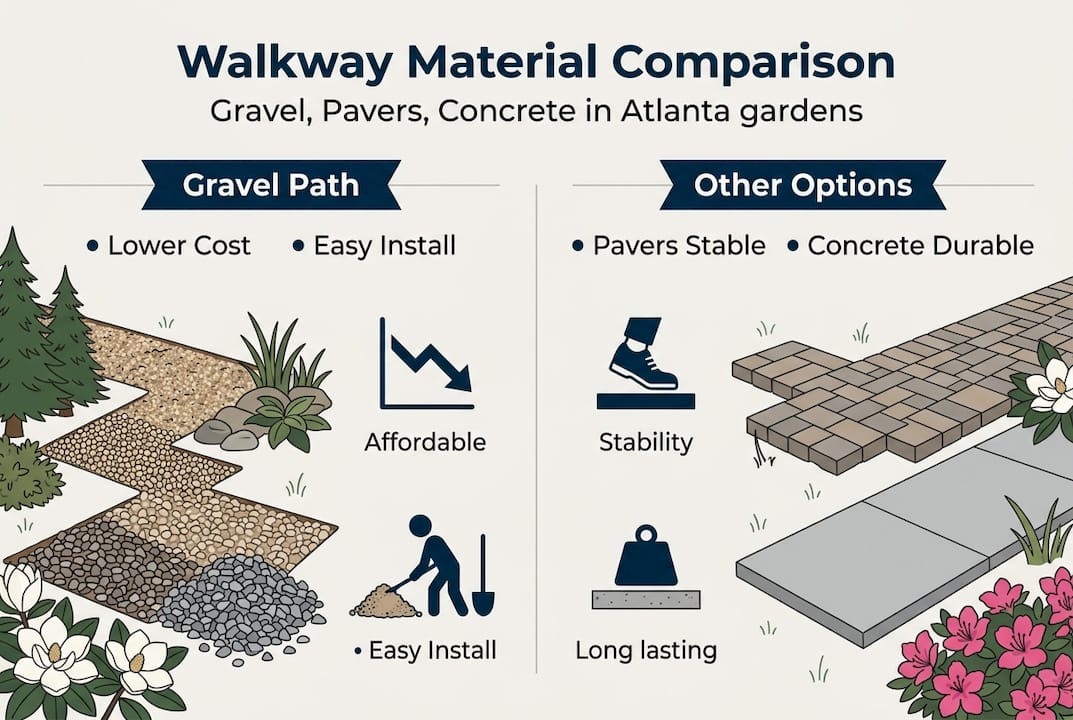
Let’s start with the number that matters most: money. Gravel installation costs $1 to $3 per square foot, while pavers run $10 to $20 per square foot and concrete falls somewhere in between. Over a decade, gravel can save you 40 to 60% compared to paver alternatives. That’s a real difference for a typical Atlanta backyard project.
| Material | Install cost per sq ft | 10-year maintenance | Best for |
|---|---|---|---|
| Gravel | $1 to $3 | Low | Garden paths, side yards |
| Concrete | $4 to $8 | Medium | High-traffic areas |
| Pavers | $10 to $20 | Medium to high | Patios, driveways |
Beyond cost, gravel gives you design flexibility that concrete simply cannot. You can select gravel for landscaping in dozens of colors, textures, and sizes to match your home’s exterior. Want a clean, modern look? White marble chips. Prefer something natural and earthy? Decomposed granite or river rock. The options are wide open.
Here are the top reasons Atlanta homeowners are making the switch:
Exploring the full range of gravel options for landscaping available locally makes it easy to match your vision without blowing your budget. Now that you see why gravel makes sense financially and stylistically, let’s explore what makes it so practical in Atlanta specifically.
Atlanta’s weather is not gentle. Hot, humid summers, occasional ice storms in winter, and heavy spring rains put every outdoor surface through its paces. Here’s the good news: gravel handles all of it better than most homeowners expect.
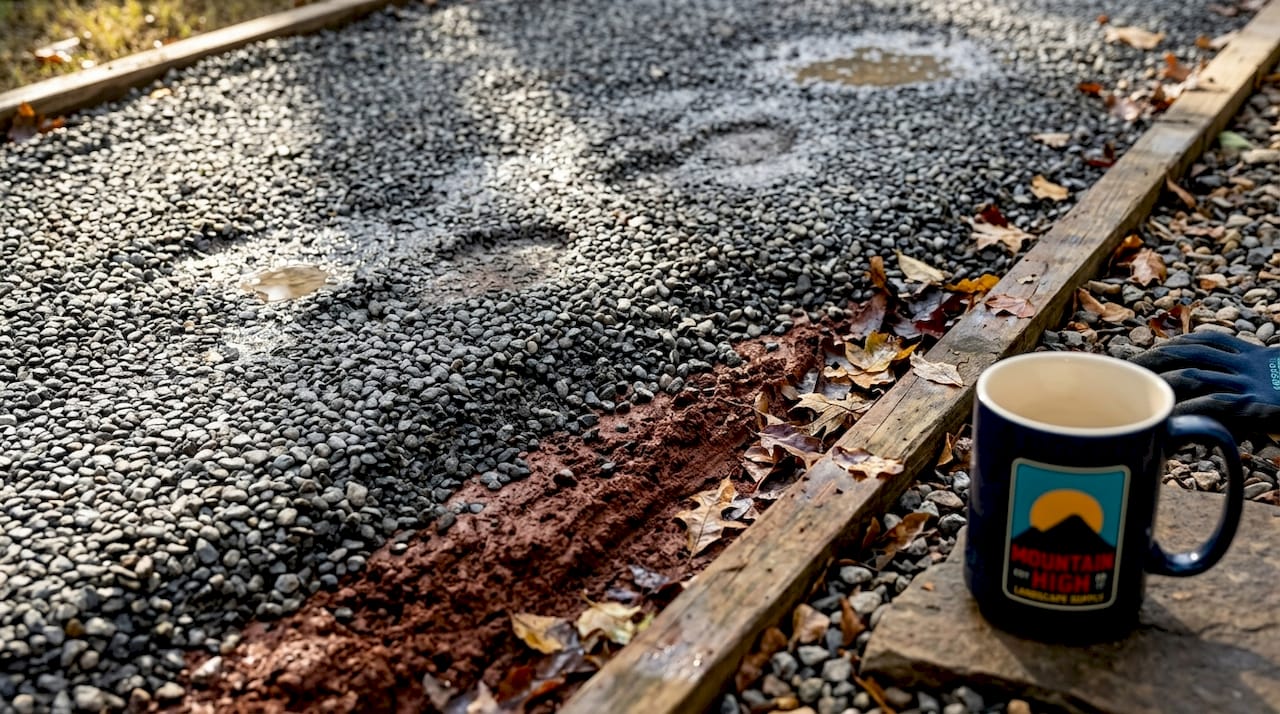
Crusher run gravel compacts for stability on Georgia’s notoriously shifting clay soil and typically lasts 5 to 7 years before needing replenishment. Concrete, by contrast, cracks when clay soil expands and contracts with moisture changes. Gravel simply shifts slightly and settles back, which is actually an advantage here.
| Surface | Clay soil performance | Rain drainage | Freeze/thaw resistance |
|---|---|---|---|
| Gravel | Excellent | Excellent | Excellent |
| Concrete | Poor (cracks) | Poor (runoff) | Fair |
| Pavers | Fair | Good | Good |
For best types of gravel suited to garden walkways, crusher run and pea gravel are the two most popular choices in the Atlanta area. Crusher run is angular and compacts tightly, making it ideal for high-use paths. Pea gravel for landscaping is smooth and rounded, perfect for decorative low-traffic areas.
“In Atlanta’s climate, the biggest mistake homeowners make is skipping proper edging and drainage planning. A well-edged gravel path with a slight crown in the center will shed water beautifully and stay in place for years.” — Local landscape design professional, Atlanta metro area
Pro Tip: Install a 4-inch perforated drain pipe along the low side of any walkway that runs parallel to a slope. This one step prevents the most common gravel washout problems during Atlanta’s heavy summer storms.
For a deeper look at gravel installation strategies specific to the Atlanta area, there are local guides that walk you through every decision point. Understanding how gravel holds up here makes the installation process much more straightforward.
Building a gravel walkway is genuinely one of the most beginner-friendly outdoor projects you can tackle. Most homeowners finish a standard 3-foot-wide, 20-foot-long path in a single Saturday. Here’s how to do it right.
Materials checklist:
Step-by-step installation:
Following this DIY gravel walkway process gives you a stable, attractive path that will last for years with minimal upkeep. For larger projects or driveways, the hardscape installation workflow follows similar principles but with heavier base requirements.
Pro Tip: Southeast weeds are aggressive. Use a landscape fabric rated at 3 to 4 ounces per square yard, not the thin rolls sold at big-box stores. The heavier fabric blocks nutgrass and other stubborn Atlanta weeds far more effectively.
The three biggest DIY mistakes are: skipping the compacted base (your path will sink), ignoring drainage slope (water pools and erodes), and using pea gravel on any slope steeper than 5 degrees (it rolls away). Avoid those three and you’re in great shape. The gravel driveway installation guide covers slope and drainage planning in detail if your yard has grade changes. With your path built, maintenance is the next piece of the puzzle.
Gravel walkways are low maintenance, but they are not zero maintenance. The good news is that upkeep is simple, inexpensive, and something any homeowner can handle without hiring anyone.
Routine maintenance tasks:
For a 1,000-square-foot walkway in Atlanta, annual maintenance runs $100 to $400, which includes raking, occasional weed treatment, and periodic replenishment. Replenishment material typically costs around $0.50 per square foot, so refreshing a standard path is a very manageable expense.
Pro Tip: Set a recurring calendar reminder every April and October to inspect your gravel walkway. Catching small issues like low spots or loose edging twice a year keeps the path looking sharp and prevents bigger problems from developing.
For long-lasting gravel walkways, the single biggest factor is quality edging installed at the start. Edging that holds firm means gravel stays on the path instead of migrating into your lawn or flower beds. It also dramatically reduces how often you need to replenish. If you chose low-maintenance pea gravel for a decorative area, plan to replenish slightly more often since its smooth shape means it scatters more easily than angular gravel. Of course, gravel walkways are not the right choice for every situation.
Gravel is a great material, but it has real limitations. Knowing them upfront saves you from a frustrating project.
Gravel is not ideal for high-traffic or wheelchair-accessible areas because the surface shifts underfoot and can be uneven. It also gets very hot in direct summer sun, which matters for bare feet or pets. Pea gravel on any slope is a particular problem since it rolls and scatters constantly.
Situations where gravel is a poor choice:
“Gravel is a fantastic material in the right context, but accessibility and safety have to come first. For front entries or any path used by people with mobility challenges, pavers or brushed concrete are simply the better call.” — Landscape design professional
For situations where gravel falls short, pavers offer a stable, attractive surface with excellent longevity. Concrete works well for high-traffic utility paths. Reviewing the full gravel vs paver pros and cons helps you make the right call for each specific area of your property. You can also check the pea gravel drawbacks page for a closer look at where that specific material struggles. Armed with this balanced view, you can make a confident decision or find the right local partner to help.
Ready to move from planning to building? Mountain High Landscape Supply makes it easy for Atlanta homeowners to get exactly what they need, whether you’re a first-time DIYer or managing a larger property upgrade.

Browse our full selection of Atlanta gravel options to find the right material for your path, garden border, or driveway project. Our pea gravel for walkways is a customer favorite for decorative paths, and our 57 stone for landscape projects is a go-to for base layers and drainage applications. Pick up at our Marietta or Smyrna locations, or schedule delivery anywhere in the metro area. Our team is here to help you choose the right material, estimate quantities, and get your project done right the first time.
Most gravel walkways last 5 to 7 years before needing major replenishment when properly installed with a compacted base and quality edging.
Replenishment is typically needed every 1 to 5 years, depending on foot traffic levels and how well the edging contains the material.
Crusher run compacts for stability on Georgia clay and handles heavy rain well when installed with proper base depth, edging, and a slight drainage crown.
Generally no. Gravel shifts and becomes uneven under rolling wheels, making it a poor surface choice for wheelchairs, strollers, or anyone with mobility challenges.
Crusher run works best for paths that need firm, stable footing, while pea gravel suits low-traffic decorative areas that have solid edging on both sides.