Many homeowners and contractors in Atlanta believe sourcing hardscape materials is complicated or expensive. That misconception keeps people from starting projects that could transform their outdoor spaces. The truth is that understanding hardscape supply options empowers you to make informed decisions, save money, and create durable landscapes that last for decades. This guide clarifies what hardscape supply includes, where to find quality materials in the Atlanta metro area, how to install them properly with attention to drainage, and when to tackle projects yourself versus hiring professionals.
| Point | Details |
|---|---|
| Hardscape supply definition | Non-living durable materials like pavers, stone, gravel, and retaining blocks used for patios, walkways, and walls. |
| Top Atlanta suppliers | Mountain Stone, Bulks Landscape Supply, Green Landscape Supply, and Mountain High offer delivery and diverse materials. |
| Drainage is critical | Proper slope, French drains, gravel backfill, and geogrid reinforcement prevent failure in Atlanta’s clay soils. |
| DIY vs. professional | Simple gravel paths suit DIY, but complex walls and patios require professional installation for lasting results. |
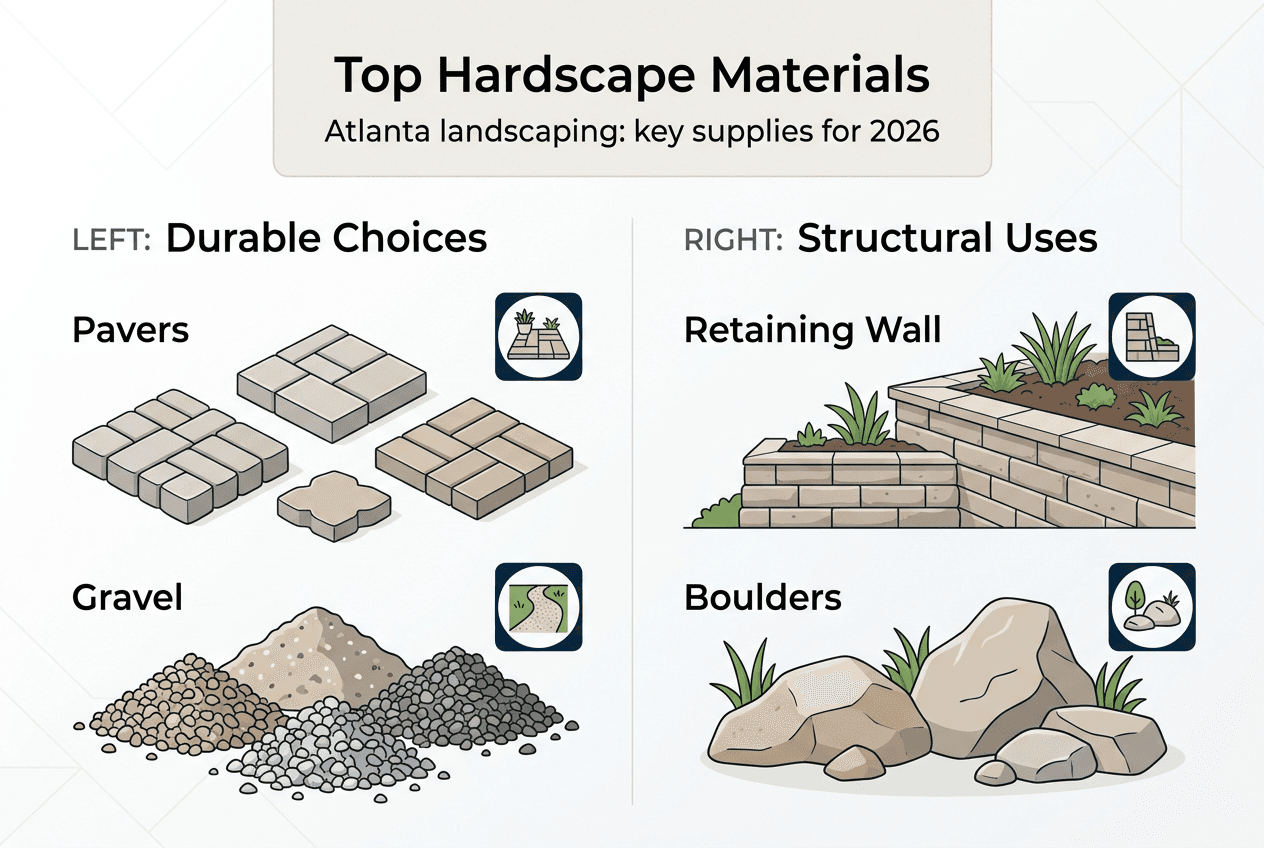
To understand how to choose your supplies, let’s first clarify exactly what hardscape supply means and the materials it covers. Hardscape supply includes pavers, natural stone, gravel, retaining blocks, boulders, and timbers for patios, walkways, and walls. These non-living elements form the structural backbone of your landscape, contrasting with softscape features like plants and soil. Unlike organic materials, hardscape components resist decay and provide permanent solutions for outdoor living spaces.
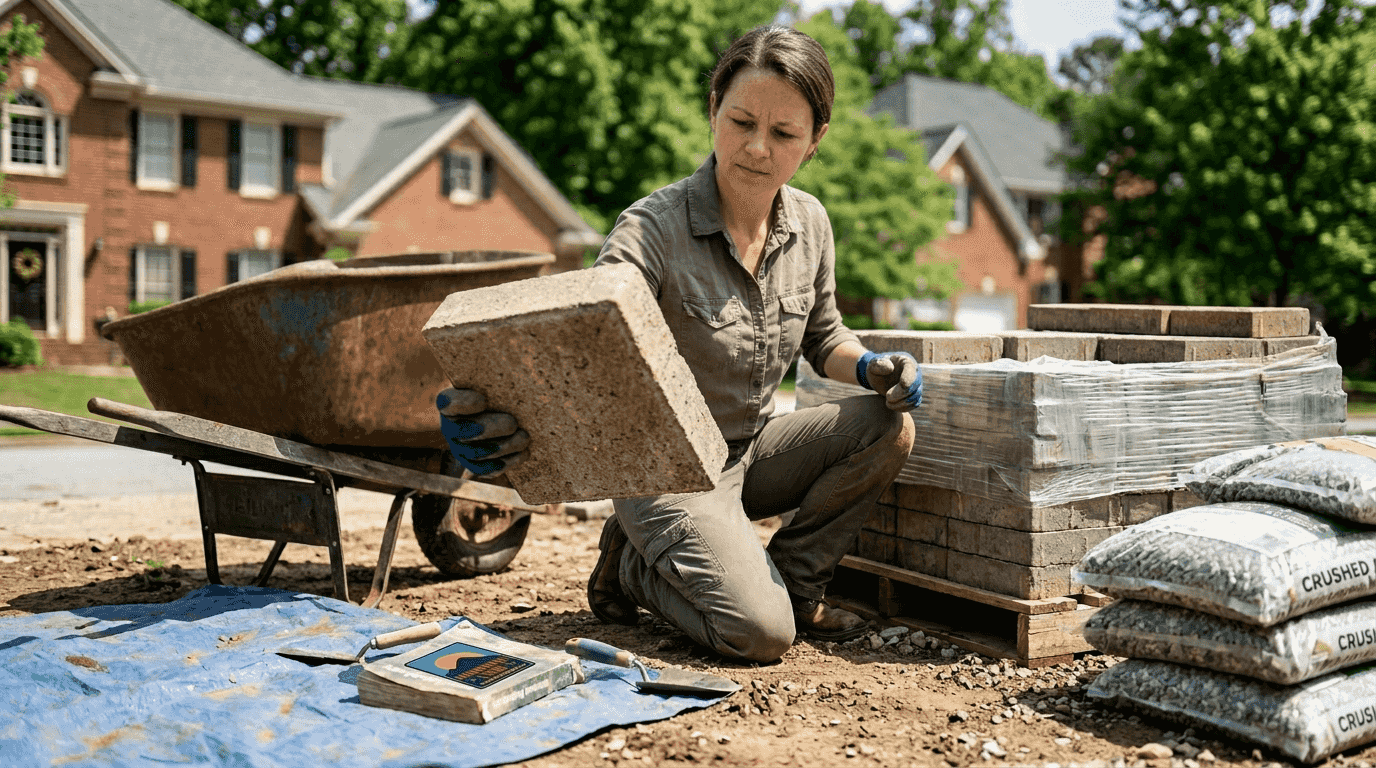
Concrete pavers are among the most popular choices in Atlanta because they offer versatility in color, shape, and texture. Natural stones like slate, granite, and river rock deliver timeless beauty and exceptional durability. Bricks provide a classic aesthetic that complements traditional architecture common throughout the metro area. Each material serves specific functions based on your project goals and budget.
Gravel types play essential roles in both visible surfaces and hidden base layers. Pea gravel works well for decorative pathways and ground cover. #57 stone creates stable bases for pavers and patios. Crusher run compacts tightly to form solid foundations for driveways and heavy-use areas. Understanding these distinctions helps you select the right product for each application.
Retaining wall blocks, stacked stone, boulders, and timbers address elevation changes and erosion control. These materials create functional structures that also enhance visual interest. Retaining walls prevent soil movement on sloped properties common in North Georgia. Boulders add natural focal points and define garden beds. Timbers offer affordable solutions for low walls and edging. Exploring hardscaping essentials reveals how these materials work together to create cohesive outdoor designs.
Knowing what materials you need, let’s explore where to find trusted suppliers in your Atlanta area for quality products. Several established companies serve the metro region with comprehensive inventories and delivery services. Atlanta-area suppliers include Mountain Stone, Bulks Landscape Supply, Green Landscape Supply, Complete Landscape Supply, and Mountain High, offering delivery and various materials.
Mountain Stone specializes in natural stone products including flagstone, boulders, and decorative rock. Their Marietta location stocks materials sourced from quarries across the Southeast. Bulks Landscape Supply operates multiple yards throughout the metro area, providing convenient access to gravel, sand, and aggregate products. Green Landscape Supply focuses on eco-friendly options and permeable materials that manage stormwater effectively. Complete Landscape Supply offers a wide selection of retaining wall systems and paver brands.
Mountain High stands out as an independent Belgard dealer, giving customers access to premium paver collections and design support. Belgard products are engineered for durability in Georgia’s climate, with warranties that protect your investment. The company’s Marietta and Smyrna locations feature organized yards where you can view materials before purchasing. Delivery service extends throughout the Atlanta metro area, eliminating transportation challenges for large orders.
When selecting a supplier, consider these factors:
Visiting multiple suppliers lets you compare materials, prices, and service levels. Many yards allow you to take samples home to see how they look in your actual landscape lighting. Building a relationship with a trusted supplier pays dividends across multiple projects. Learn more about Atlanta landscape supplies and seasonal considerations.
Professional contractors often develop preferred supplier relationships based on consistent quality and reliable delivery. If you’re hiring a landscaper, ask which suppliers they recommend and why. Their experience can guide you toward the best sources for your specific project needs. Discover why Belgard hardscape in Atlanta remains a top choice for winter projects. Explore Belgard pavers durability and how they perform in Georgia’s weather. Mountain High’s status as a Belgard independent dealer Atlanta brings exclusive products to local customers.
After choosing your materials and suppliers, understanding proper installation and drainage is key to long-lasting results in Atlanta’s landscape conditions. Installation requires site prep with excavation, gravel base compaction, material laying with edge restraints, polymeric sand joints, and proper slope for drainage. Skipping steps or rushing the process leads to premature failure and costly repairs.
Begin with accurate site layout and marking. Excavate to the proper depth, typically 6 to 8 inches for patios and walkways. This depth accommodates base layers and the finished material thickness. Remove all organic matter, roots, and debris from the excavation area. Compact the native soil to create a stable foundation that resists settling.
Install base layers in lifts, compacting each thoroughly before adding the next. A 4-inch crushed stone base provides structural support. Add a 1-inch leveling layer of coarse sand. Use a plate compactor for bases and hand tampers for tight spaces. Proper compaction prevents future settling that creates uneven surfaces and standing water.
Edge restraints are non-negotiable for paver installations. Plastic, metal, or concrete edging keeps materials from shifting laterally over time. Secure restraints with spikes driven deep into the base. Install pavers or stones according to your pattern, maintaining consistent joint spacing. Fill joints with polymeric sand, which hardens when wet to lock materials in place and resist weed growth.
Proper drainage is critical to avoid hydrostatic pressure and material failure; includes weep holes, gravel backfill, filter fabric, and geogrid reinforcement in Atlanta’s clay soils. Atlanta’s heavy clay soils retain moisture and expand when wet, creating pressure that pushes walls and lifts pavers. Combat this with comprehensive drainage solutions integrated during installation.
Slopes should be at least 6% away from structures; permeable pavers improve runoff management. A minimum 1 to 2% slope works for open areas, but steeper grades near buildings prevent water from reaching foundations. Check slope with a level and straightedge during installation. Adjust base materials to achieve proper pitch before laying finished surfaces.
French drains behind retaining walls collect and redirect groundwater. Install perforated pipe in gravel-filled trenches, wrapping everything in filter fabric to prevent soil intrusion. Weep holes in wall faces allow water to escape, reducing hydrostatic pressure. Space weep holes every 4 to 6 feet along the wall base. Gravel backfill behind walls creates a drainage zone that channels water to collection points.
Geogrid reinforcement strengthens walls in challenging soil conditions. These synthetic mesh layers tie into the wall and extend back into the soil mass, creating a composite structure. Atlanta’s clay soils benefit significantly from geogrid, especially for walls over 3 feet tall. Consult engineering guidelines for proper geogrid spacing and length.
Pro Tip: Always slope hardscape surfaces away from your home at a minimum 6% grade to protect foundations from water damage, and install French drains behind any retaining wall over 2 feet tall in Atlanta’s clay soils.
Permeable pavers allow water to infiltrate through joints and base layers, reducing runoff and recharging groundwater. These systems work well for driveways, parking areas, and patios where stormwater management matters. They require specific base configurations with open-graded stone that stores and infiltrates water. Review hardscaping essentials for more drainage strategies. Consider #89 stone for construction projects requiring drainage layers.
| Drainage Solution | Purpose | Installation Depth |
|---|---|---|
| French drain | Collects and redirects groundwater | 12-18 inches below surface |
| Weep holes | Releases pressure behind walls | Wall base, every 4-6 feet |
| Gravel backfill | Creates drainage zone | Full wall height, 12 inches wide |
| Filter fabric | Prevents soil migration | Wraps all drainage aggregates |
| Geogrid | Reinforces soil mass | Every 8-16 inches vertically |
To ensure your hardscape investment lasts, let’s look at which projects you can safely DIY and when it’s best to hire skilled professionals. DIY is suitable for simple paths and gravel installations; professional help recommended for patios and walls due to drainage and engineering complexities. Honest self-assessment of your skills, tools, and time prevents costly mistakes.
Simple gravel pathways and small decorative areas make excellent DIY projects. These require basic excavation, landscape fabric, and gravel placement. You can complete them over a weekend with minimal tools. Small stepping stone paths through garden beds also suit DIY approaches. The stakes are low, and mistakes are easily corrected.
Projects demanding professional expertise include:
Professionals bring specialized equipment like plate compactors, concrete saws, and laser levels. They understand local building codes and permit requirements. Their experience prevents drainage failures that plague amateur installations. Licensed contractors carry insurance that protects you from liability if workers are injured on your property.
Neglecting proper drainage and engineering leads to catastrophic failures. Walls topple when hydrostatic pressure builds behind them. Patios settle unevenly, creating trip hazards and standing water. Improperly graded surfaces direct water toward foundations, causing basement flooding and structural damage. These repairs cost far more than hiring professionals initially.
Use this checklist to decide whether to hire professionals:
Answering yes to any question suggests professional help is wise. Get multiple quotes from licensed, insured contractors. Check references and view completed projects. Verify they understand Atlanta’s specific soil and drainage challenges. A quality installation lasts decades, making professional fees a sound investment.
Pro Tip: If your project involves any retaining wall over 3 feet tall or requires a building permit in your municipality, always hire a licensed professional to ensure structural integrity and code compliance.
Professionals also provide warranties on their work, giving you recourse if problems develop. They source materials efficiently, often at better prices than retail customers pay. Their expertise in pattern layout and color selection elevates the final aesthetic beyond what most DIYers achieve. Master landscape supply terminology to communicate effectively with contractors.
For projects in the middle ground, consider a hybrid approach. Hire professionals for critical elements like drainage and base preparation, then complete finishing work yourself. This strategy ensures structural integrity while controlling costs. Discuss this option with contractors during the bidding process.
Having learned what and how to install, turn to Mountain High for trusted supplies and professional support to bring your project to life. As Georgia’s leading landscape supply company, we serve Atlanta, Marietta, Smyrna, and surrounding communities with premium hardscape materials. Our organized yards in Marietta and Smyrna let you view pavers, natural stone, gravel, sand, and boulders before purchasing. Our expert team provides design guidance and answers technical questions about installation and drainage.

We offer flexible options including pickup from our convenient locations or reliable delivery throughout the metro area. Whether you’re a homeowner tackling a DIY project or a professional contractor managing multiple jobs, we stock the materials you need. Explore our comprehensive landscape supply terminology Atlanta guide to understand product options. View our river sand landscape supply for base and leveling applications. Check our landscape supply delivery Atlanta service area and scheduling.
Hardscape refers to non-living, durable materials like stone, concrete, pavers, and gravel that form permanent landscape structures. Softscape includes living elements such as plants, trees, shrubs, flowers, and soil. Hardscape provides the structural framework for patios, walkways, walls, and driveways. Softscape adds color, texture, and seasonal interest through vegetation. Successful landscapes balance both elements, using hardscape to define spaces and softscape to soften edges and provide natural beauty. The two work together to create functional, attractive outdoor environments that serve diverse needs.
Simple projects like gravel pathways, small stepping stone walks, and decorative rock beds are DIY-friendly for homeowners with basic tools and weekend time. These installations have minimal risk and don’t require specialized equipment. Complex structures like retaining walls over 2 feet tall, large patios, and driveways demand professional installation due to drainage challenges and Atlanta’s clay soil conditions. Professionals have the equipment, expertise, and insurance to handle complicated drainage systems and ensure structural integrity. Attempting complex projects without proper knowledge often leads to expensive failures.
Effective drainage solutions include French drains that collect and redirect groundwater away from structures. Weep holes in retaining walls release hydrostatic pressure that builds behind them. Gravel backfill creates drainage zones that channel water to collection points. Filter fabric prevents soil from clogging drainage aggregates. Ensure all hardscape surfaces slope at least 6% away from buildings to direct water properly. Permeable pavers allow infiltration through joints and base layers, reducing runoff. In Atlanta’s clay soils, geogrid reinforcement strengthens retaining walls and prevents soil movement that causes failures.
Suppliers like Mountain Stone, Bulks Landscape Supply, Green Landscape Supply, Complete Landscape Supply, and Mountain High serve the Atlanta metro area with comprehensive inventories. These companies offer concrete pavers, natural stone, gravel, sand, retaining wall blocks, and boulders. Most provide delivery service throughout the region, eliminating transportation challenges for large material orders. Mountain High operates convenient locations in Marietta and Smyrna with organized yards for easy material selection. Visit Atlanta landscape supplies to explore options and place orders for your next project.