Choosing the right hardscaping materials for your Georgia property is one of the most consequential decisions you will make for your outdoor space. Georgia’s red clay soil, humid summers, and occasional hard freezes create conditions that can crack, shift, or erode the wrong materials within just a few seasons. Get it right, and your patio, walkway, or retaining wall will look sharp and hold strong for decades. This guide walks you through the key criteria, the best material options, a clear side-by-side comparison, and practical maintenance advice so you can move forward with confidence.
| Point | Details |
|---|---|
| Criteria first | Durability, style, and maintenance needs should guide your material selection. |
| Top Georgia options | Pavers, gravel, stone, mulch, and pine straw are the most versatile and widely used. |
| Compare before buying | Use a side-by-side table to weigh cost, upkeep, and performance differences. |
| Match material to project | Choose materials based on the specific needs of patios, walkways, or walls. |
| Keep up with maintenance | Proper care extends the lifespan and appearance of your hardscapes. |
Before you order a single pallet of pavers or a load of gravel, you need to understand what drives a smart material decision in Georgia. Material performance depends heavily on local soil and weather, which means a material that thrives in Arizona or the Pacific Northwest may fail quickly here. Knowing your criteria upfront saves you money and frustration.
Here are the core factors to evaluate before selecting any hardscaping material:
Pro Tip: Always check your HOA or city guidelines before finalizing your material choice. Some neighborhoods in Atlanta and Marietta restrict certain colors, materials, or installation methods for front-yard hardscaping.
Understanding hardscaping basics before you shop gives you a clear framework for every conversation with a supplier or contractor.
Now that you have your selection criteria in hand, let’s look at the materials that consistently perform well across Georgia yards, patios, and garden projects.
Pavers (concrete, natural stone, and brick): Concrete pavers and natural stone are top choices for patios in Georgia because they handle heat, moisture, and foot traffic without warping or cracking. Brick adds a classic Southern character that suits many Atlanta-area homes. Explore Belgard paver solutions for premium options with proven regional performance.
Gravel and crushed stone: Gravel pathways remain a cost-effective and durable solution for Georgia properties. They drain well, which is critical on clay soil, and they are easy to install and refresh. Pea gravel, crusher run, and decomposed granite are all popular choices here.
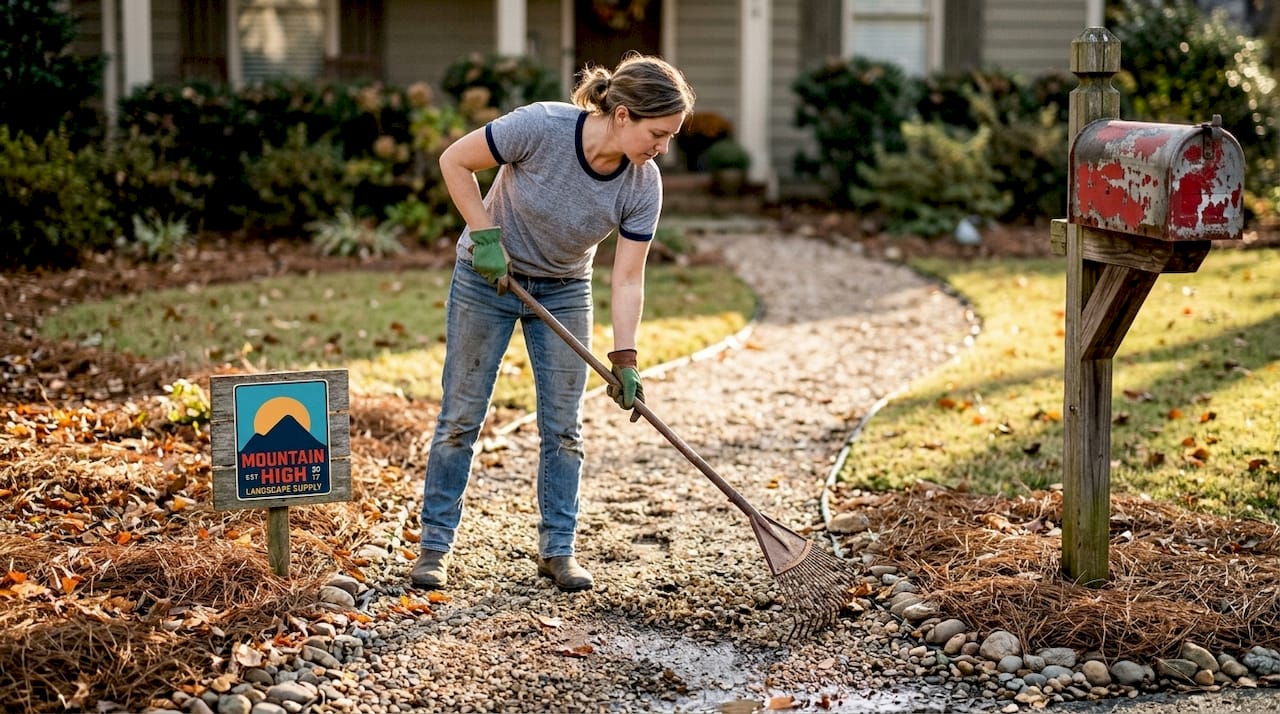
Mulch and pine straw: These soft-surface materials work well for garden borders, tree rings, and play areas. Pine straw is especially popular in Georgia because it is locally abundant and naturally acidic, which suits the region’s plant life.
Boulders and large accent stones: Boulders add structure and visual weight to slopes, garden beds, and water features. Check out decorative rock options to find sizes and colors that complement your landscape design.
Sand and base aggregates: Every solid hardscape installation starts with a proper base. Masonry sand, concrete sand, and crusher run provide the stable foundation that prevents shifting and settling over time.
Retaining wall blocks and timbers: For sloped Georgia yards, retaining walls are often a necessity. Concrete blocks offer strength and longevity, while treated timbers provide a more natural look at a lower upfront cost.
Familiarizing yourself with supply terminology helps you order the right products and avoid costly mistakes at the yard.
| Material | Best use | Avg. cost per sq. ft. | Durability |
|---|---|---|---|
| Concrete pavers | Patios, driveways | $8 to $20 | Very high |
| Natural stone | Patios, walkways | $15 to $35 | Very high |
| Brick | Walkways, borders | $10 to $25 | High |
| Gravel | Paths, drainage | $1 to $4 | Medium |
| Mulch | Garden beds, borders | $0.50 to $2 | Low to medium |
| Retaining wall blocks | Slopes, walls | $10 to $30 | Very high |
With the major material types identified, comparing them directly helps you match your project needs with the smartest choice available.
Maintenance, weather resistance, and installation difficulty differ dramatically by material type, so a quick comparison prevents expensive surprises after installation.
| Material | Durability | Upkeep | Cost | Best for | Weakness |
|---|---|---|---|---|---|
| Concrete pavers | Very high | Low | Moderate | Patios, driveways | Can stain over time |
| Natural stone | Very high | Medium | High | Feature areas | Higher install cost |
| Gravel | Medium | Low | Low | Paths, drainage | Shifts with traffic |
| Mulch | Low to medium | Medium | Low | Beds, borders | Decomposes annually |
| Concrete (poured) | High | Low | Moderate | Slabs, walls | Cracks without joints |
| Brick | High | Low | Moderate | Walkways, edging | Can heave in freeze |
Which material fits your situation? For high-traffic areas like driveways and main walkways, concrete pavers or natural stone are your strongest options. For sloped yards prone to erosion, retaining wall blocks paired with gravel backfill provide the best structural support. For shaded garden areas where moisture lingers, mulch or pine straw outperforms hard surfaces by allowing airflow and reducing mold risk.
Reviewing installation best practices before you begin ensures your chosen material is installed correctly from the start, which directly affects how long it lasts.
After comparing your options, the next step is connecting the best material to each specific feature in your outdoor space. Material selection should depend on site specifics like drainage and sunlight, not just aesthetics or price alone.
Follow these steps to make a confident, well-informed decision:
Pro Tip: Blending materials adds long-term value and visual interest. Pair natural stone borders with a gravel fill, or use brick edging around a mulched garden bed. Mixed-material designs are more forgiving to install and easier to repair section by section.
For patios, prioritize pavers or natural stone for durability. For walkways, gravel or brick offer a balance of cost and performance. For retaining walls, concrete blocks are the most reliable choice in Georgia’s variable soil conditions.
Matching the right material to the project is only half the equation. Knowing how to maintain it will keep your outdoor spaces functional and attractive for years to come. Proper maintenance extends the lifespan of hardscaping installations significantly, and the steps are straightforward once you know what each material needs.
Here is a practical maintenance guide by material type:
For seasonal care, spring is the best time to inspect, clean, and reseal hardscaping after winter. Fall is ideal for clearing debris and applying fresh mulch before temperatures drop. Staying on a consistent schedule prevents small issues from becoming costly repairs. Review hardscape care tips for more detailed guidance on protecting your investment through every season.
We know that selecting and sourcing the right materials can feel like a lot to manage on your own. That is exactly why we are here.

At Mountain High Mulch, we supply premium hardscaping materials to homeowners and professional contractors across Atlanta, Marietta, Smyrna, and the surrounding metro area. From bulk gravel supplies to pavers, boulders, sand, and mulch, we carry everything you need to complete your project with confidence. Our team understands Georgia’s unique soil and climate conditions, and we are ready to help you choose the right materials for your specific site. If you are new to hardscaping, brushing up on landscape supply terminology before your visit helps you get the most out of our expert guidance. Stop by our Marietta or Smyrna locations, or contact us to arrange delivery straight to your project site.
Concrete pavers and natural stone are among the most durable choices for Georgia because they resist moisture, heat, and freeze-thaw stress better than most alternatives.
Gravel walkways need annual maintenance, including raking, leveling, and replenishing material to keep the surface even and functional.
Yes, blending materials improves design and function by combining the strengths of each type, such as pairing stone borders with gravel fill for both structure and drainage.
Mountain High Mulch provides a wide selection of hardscaping materials with expert advice for Georgia homeowners and contractors, with convenient pickup locations in Marietta and Smyrna and reliable delivery throughout the metro area.