Many homeowners and landscape professionals in Atlanta assume that “commercial landscape supplies” are strictly for large construction firms or corporate property managers. That assumption leads to costly mistakes, including ordering the wrong grade of material, underestimating quantities, or working with suppliers who can’t support a project’s real demands. The truth is that commercial-grade mulch, sod, gravel, and topsoil are accessible to anyone in the Atlanta metro area, and knowing how to source them correctly can mean the difference between a project that looks great for one season and one that holds up for years.
| Point | Details |
|---|---|
| Understand supply types | Commercial landscape supplies offer durability, scale, and professional support compared to residential options. |
| Choose products wisely | Match your mulch, sod, soil, and gravel choice to your project’s site and climate for best results. |
| Prioritize logistics | Plan delivery with your supplier to ensure timely, site-ready arrival of large orders in Atlanta. |
| Leverage local expertise | Using local Atlanta suppliers provides tailored advice and quick service for landscaping projects large or small. |
The word “commercial” in landscaping does not automatically mean exclusive or expensive. It refers to a category of materials and services designed to handle larger volumes, more demanding site conditions, and tighter project timelines. Understanding this distinction helps you make smarter purchasing decisions from the start.
Commercial landscape supplies differ from standard residential products in three key ways: volume, durability, and service structure. Residential materials are typically sold in bags or small cubic-yard quantities at garden centers. Commercial supplies are sold by the cubic yard, pallet, or truckload, with pricing that reflects bulk efficiency. The materials themselves are also held to stricter consistency standards because contractors and property managers cannot afford variation in color, texture, or performance across a large job site.
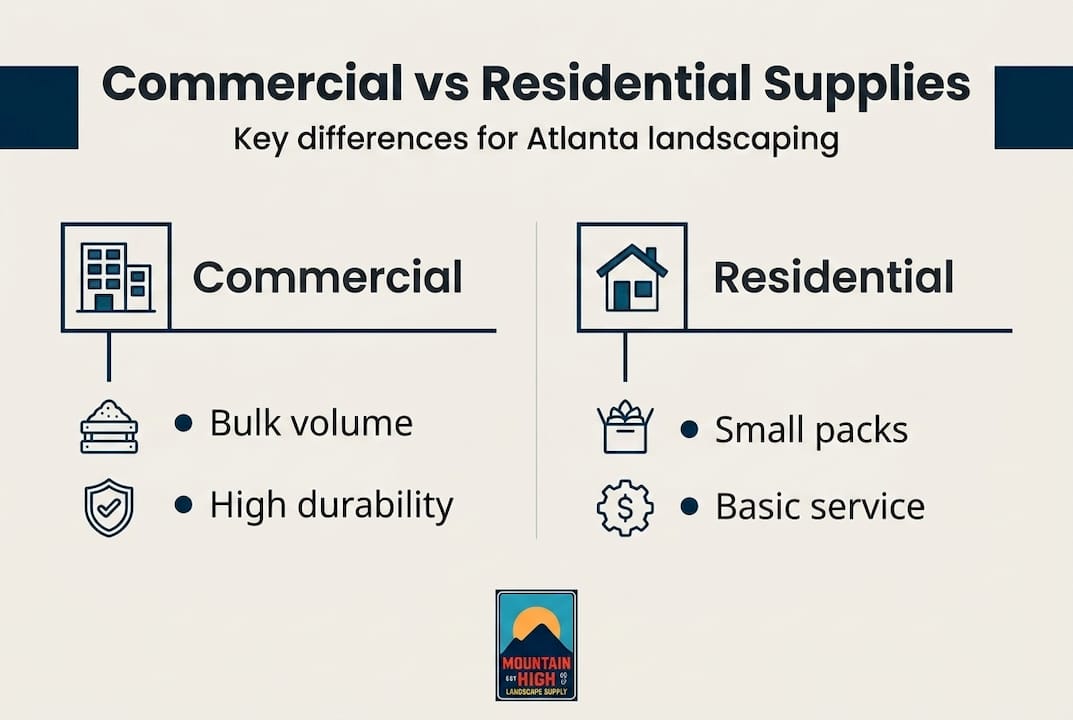
Here is a quick comparison of how the two categories stack up:
| Feature | Residential grade | Commercial grade |
|---|---|---|
| Volume options | Bags or small loads | Bulk cubic yards or pallets |
| Pricing structure | Per bag or small unit | Volume-based, lower per-unit cost |
| Delivery options | Curbside or store pickup | Flatbed, forklift, scheduled drops |
| Material consistency | Variable | Tightly controlled |
| Supplier support | General retail staff | Expert advisors for project specs |
Atlanta’s climate adds another layer of complexity. The region’s red clay soil, heavy summer rainfall, and warm, humid conditions demand materials that can handle moisture retention, erosion, and heat stress. A commercial-grade hardwood mulch, for example, is processed to a consistent depth and density that resists washout during Atlanta’s intense summer storms far better than a light bag product.
Key characteristics that define commercial landscape supplies in the Atlanta market include:
Suppliers like Mulch Pros Landscape Supply serve North Atlanta communities including Cumming, Alpharetta, and Roswell, offering mulch, pine straw, soils, gravel, and sod to both homeowners and property managers through a streamlined online ordering process. This kind of accessibility is exactly what makes commercial supply practical for a much wider audience than most people expect.
“Choosing the right grade of material for your site conditions is the single most important decision in any landscape project. Commercial-grade supplies give you the consistency and volume you need to execute that decision at scale.”
To navigate the full range of options available, it helps to understand mulch supply terminology before placing your first commercial order, especially if you are new to buying in bulk.
Now that you understand what commercial-grade means, let’s review the core products you’ll encounter and how to select the best fit for your Atlanta project.
Commercial landscape supply covers a broad range of materials. Each product serves a specific function, and choosing the wrong one for your site conditions can create problems that are expensive to fix after installation.
1. Mulch is the most widely used commercial landscape product in Atlanta. It suppresses weeds, retains soil moisture, regulates soil temperature, and improves the visual appeal of beds and borders. Commercial mulch is available in several varieties including hardwood, pine bark, and dyed options. The right choice depends on your site’s drainage, sun exposure, and aesthetic goals.
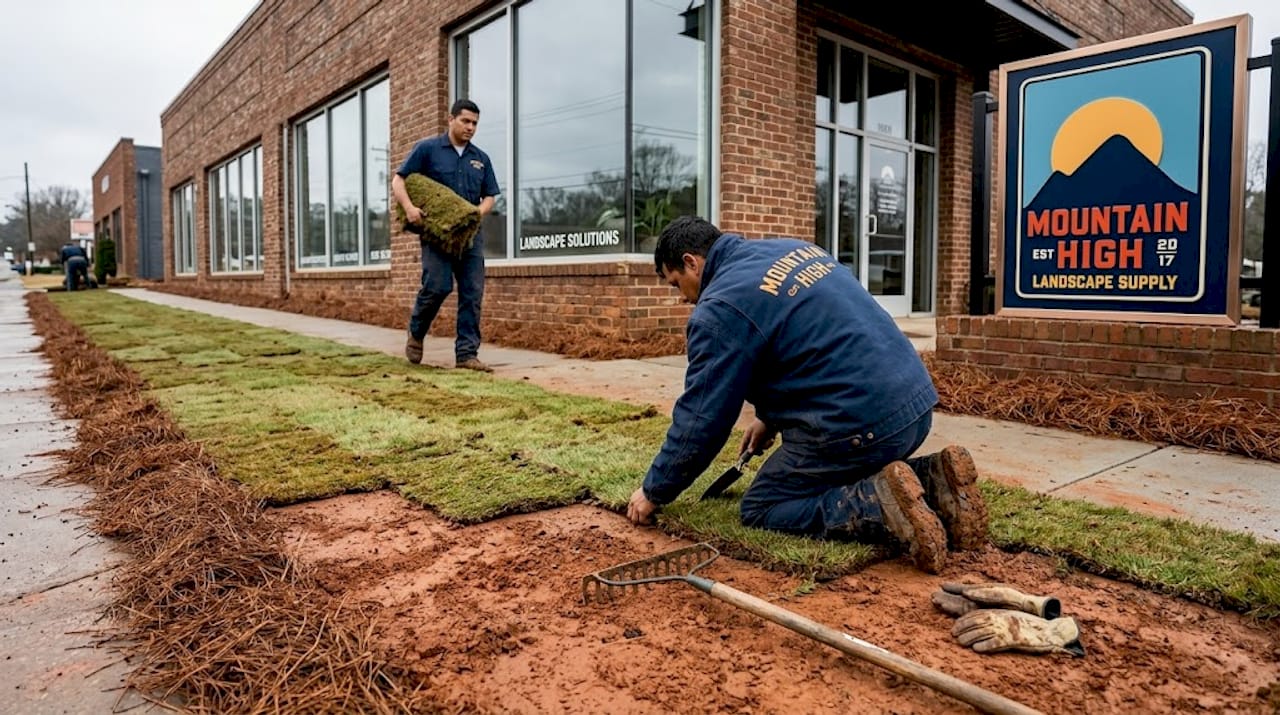
2. Sod is the fastest way to establish a healthy lawn on a commercial or residential property. In Atlanta, warm-season grasses like Zoysia and Bermuda are the most popular sod varieties because they thrive in Georgia’s heat and recover quickly from foot traffic. Sod is sold by the pallet and requires proper site preparation to take root successfully.
3. Topsoil is essential for grading, filling, and establishing healthy planting beds. Commercial topsoil is screened to remove debris and tested for pH and nutrient levels. Using a low-quality topsoil can undermine an entire planting plan, so sourcing from a reputable supplier matters.
4. Gravel and stone serve both functional and decorative purposes. Drainage gravel, crusher run, and decorative river rock each have distinct applications. Selecting gravel correctly for drainage versus decorative use is a decision that affects long-term site performance.
5. Pine straw is a popular ground cover in the Southeast because it is lightweight, easy to apply, and naturally acidic, which benefits plants like azaleas and camellias that thrive in Atlanta’s landscape.
Here is a practical comparison of the most common commercial products:
| Product | Primary use | Best for Atlanta when… | Sold by |
|---|---|---|---|
| Hardwood mulch | Weed control, moisture retention | Heavy rain areas, shaded beds | Cubic yard |
| Sod | Instant lawn establishment | Full sun, high-traffic areas | Pallet |
| Topsoil | Grading, bed building | New construction, poor native soil | Cubic yard |
| Gravel | Drainage, pathways | Slopes, parking areas | Ton or cubic yard |
| Pine straw | Ground cover, acid-loving plants | Wooded lots, naturalized areas | Bale |
Pro Tip: Match your mulch depth to your site’s drainage. In Atlanta’s clay-heavy soils, applying mulch deeper than three inches can trap excess moisture around plant roots, especially during the wet season. Two to three inches is the standard commercial application depth for most beds.
Mulch Pros Landscape Supply provides all of these core product categories across North Atlanta, with online ordering that makes it straightforward to plan quantities and schedule delivery around your project timeline. For more detailed guidance on choosing the right material for your beds, review these mulch selection tips before finalizing your order.
Once you’ve picked your supplies, the next challenge is getting them delivered and installed efficiently. Here’s how it works in Atlanta.
Delivery logistics are where many first-time commercial buyers run into trouble. Ordering the right product is only half the job. Getting it to your site on time, in the right quantity, and placed correctly requires planning.
Here is a step-by-step breakdown of how commercial supply delivery typically works in the Atlanta area:
Key logistics considerations for Atlanta projects include:
Suppliers with strong local reputations, like those rated 4.7 stars across 120 or more customer reviews, consistently deliver on time with the right equipment. That track record matters when your project schedule depends on materials arriving as planned.
Pro Tip: For large commercial projects, schedule your delivery in phases rather than all at once. Receiving all your mulch or topsoil in one drop can create storage and handling problems, especially on tight urban lots or properties with limited staging space. Phased delivery keeps your workflow clean and your materials protected from weather.
Understanding the full mulch delivery workflow before your first commercial order will save you time and prevent avoidable delays. If you prefer to skip the logistics entirely, mulch installation services handle both delivery and application as a single, coordinated process.
Even seasoned pros make mistakes. Let’s look at the most common errors and how to ensure your Atlanta project stands out.
Ordering the wrong product grade is the most frequent mistake we see. Homeowners sometimes purchase residential-grade bagged mulch for a large bed installation because it is familiar, only to find that the color fades quickly and the material breaks down within a single season. Commercial-grade bulk mulch holds its color longer and provides better long-term performance because it is processed to a consistent particle size and moisture content.
Underestimating quantities is equally common. Many buyers calculate based on area alone without accounting for the recommended application depth, which leads to a second order, a second delivery fee, and a gap in the project schedule. Always calculate volume, not just square footage.
Ignoring Atlanta’s soil conditions creates problems that no amount of quality mulch or sod can fix. The region’s heavy clay soil compacts easily, drains poorly, and creates a challenging environment for new plant material. Amending your soil with quality topsoil or compost before laying sod or planting beds dramatically improves outcomes.
Common pitfalls to avoid on Atlanta commercial projects:
“The suppliers who add the most value are the ones who ask questions before confirming your order. A good commercial supplier will want to know your site conditions, your timeline, and your end goal before recommending a product.”
Mulch Pros Landscape Supply takes this advisory approach seriously, helping customers across North Atlanta select the right combination of products for their specific site and project requirements.
Pro Tip: Before any large commercial installation, walk your site after a heavy rain. Standing water, erosion channels, and compacted areas will tell you exactly where you need drainage gravel, amended topsoil, or adjusted mulch depth. This single step prevents the majority of post-installation problems we see on Atlanta properties.
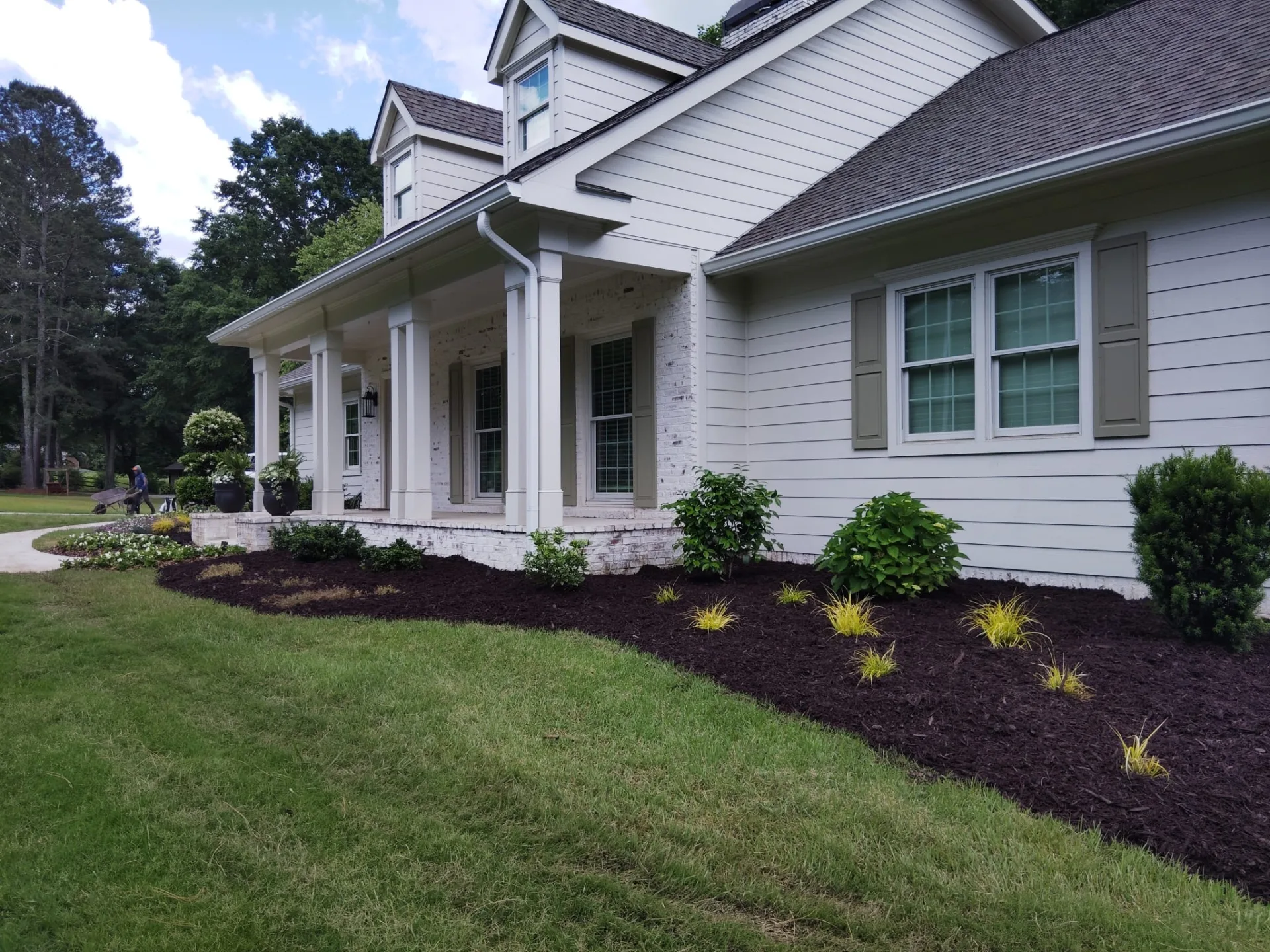
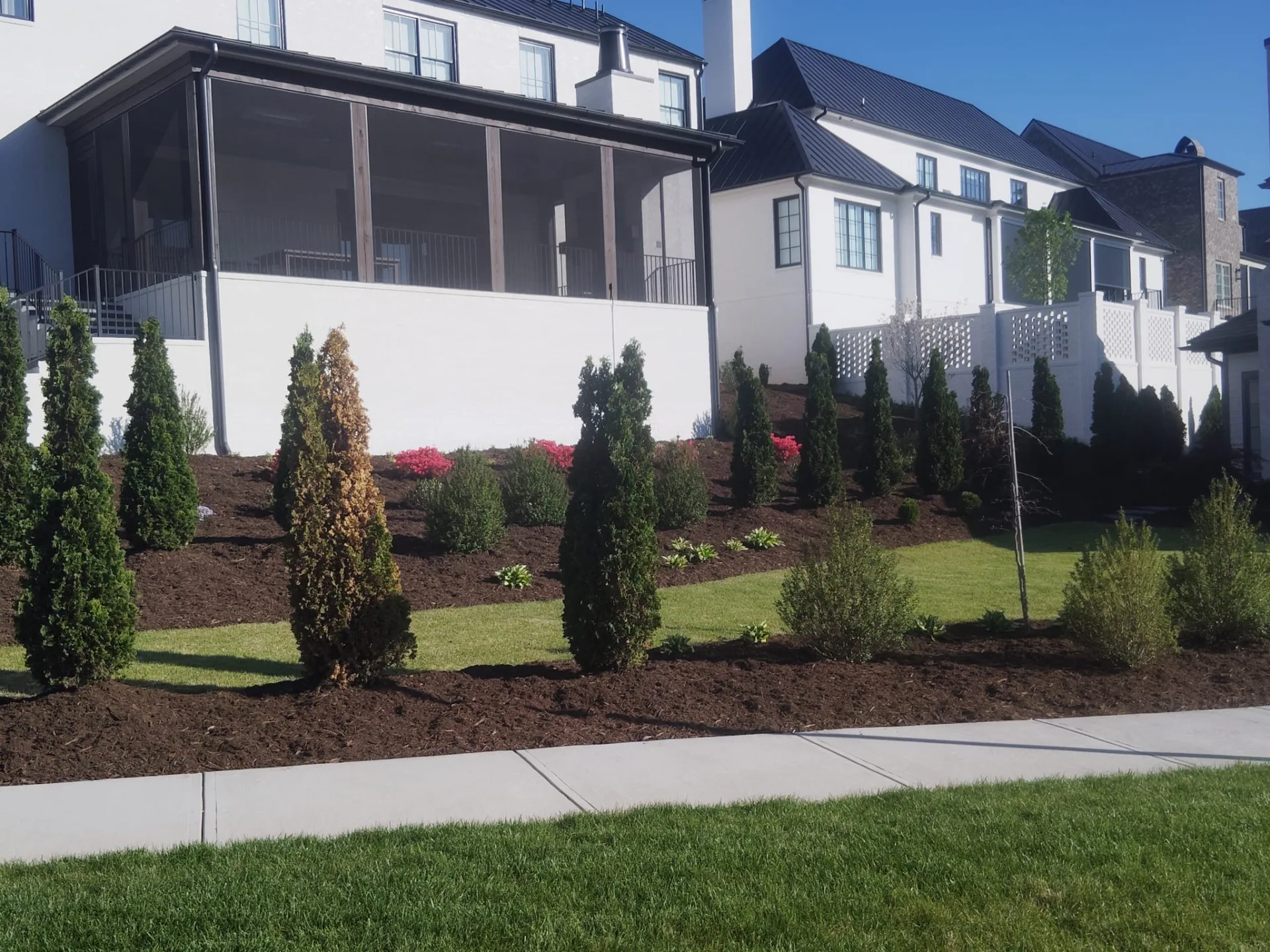
For a detailed look at best practices in mulch application, the mulch installer guide covers everything from bed preparation to final grading. You can also see real-world results from professional installations in this East Cobb project, which illustrates what proper commercial-grade application looks like in practice.
We have seen firsthand what happens when Atlanta landscape projects rely on distant suppliers. The problems are rarely about product quality alone. They are about timing, communication, and the inability to course-correct quickly when something goes wrong.
A supplier based in another state cannot tell you that Atlanta’s spring season arrived two weeks early this year and that sod installation windows are shifting. A local supplier can. That kind of real-time, localized knowledge is genuinely difficult to put a price on, but it shows up clearly in project outcomes.
Local sourcing also reduces freight costs significantly on heavy materials like gravel and topsoil, where transportation makes up a large portion of the total price. Buying from a supplier with yards in Marietta and Smyrna means shorter haul distances, faster delivery windows, and lower overall costs per cubic yard.
We also believe that local suppliers are more accountable. When a supplier is part of the same community as their customers, they have a direct stake in getting every order right. Our Atlanta supply guide reflects this philosophy, offering specific guidance for Atlanta-area projects rather than generic landscaping advice that could apply anywhere.
The future of commercial landscaping in Atlanta is hyper-local. Suppliers who know the soil, the climate, and the community will consistently outperform distant alternatives on every metric that matters to your project.
Armed with best practices and insider insights, it’s simple to connect with trusted commercial landscape suppliers in Atlanta.
At Mountain High Mulch, we supply premium mulch, sod, topsoil, gravel, and more to homeowners and contractors across Atlanta, Marietta, Smyrna, and surrounding communities. Whether you need a single pallet of sod or a full truckload of hardwood mulch, our team is ready to help you select the right product and get it delivered on your schedule.

Explore our red mulch options for high-impact color in commercial beds, browse our sod supply for warm-season varieties suited to Atlanta’s climate, or let our team handle everything with our commercial mulch installation service. Pick up from our Marietta or Smyrna locations, or schedule delivery throughout the metro area. We are here to make your next project straightforward and successful.
Commercial landscape supplies are designed for larger-scale projects, offering greater durability, bulk options, and support services compared to residential products. Commercial supply caters to both homeowners and professionals, providing bulk ordering and flexible delivery that residential retail channels typically cannot match.
Yes, many Atlanta suppliers allow homeowners to order commercial-grade supplies with the same convenience as landscaping professionals. Atlanta commercial suppliers serve both audiences, making premium bulk materials accessible regardless of project size.
Most suppliers offer multiple delivery options tailored to commercial quantities, often including flatbed trucks with forklift service for easy site placement. Flatbed and forklift delivery alongside online ordering makes scheduling straightforward for both contractors and homeowners.
Mulch, sod, topsoil, gravel, and pine straw are among the top commercial products used for Atlanta landscaping projects. Key commercial products like these are available in bulk from local Atlanta-area suppliers, with options suited to the region’s specific soil and climate conditions.