- Georgia lawns require soil testing and region-specific amendments for best results.
- Proper cultural practices like mowing and watering significantly reduce chemical use.
- Organic mulching and targeted weed control help maintain healthy, weed-free turf.
Georgia lawns face a set of challenges that most generic supply lists simply do not account for. Heavy clay soils, high humidity, and a climate that swings from mild winters to scorching summers create conditions where the wrong product choice can cost you time, money, and a healthy lawn. Bermuda, Zoysia, and Fescue all behave differently here, and what works in the Midwest or Pacific Northwest rarely translates to Atlanta or Marietta. This guide gives you a region-specific checklist built around Georgia’s actual soil and climate realities, so you can shop smarter, apply more accurately, and get results that last through every season.
| Point | Details |
|---|---|
| Prioritize soil testing | Soil tests guide all other supply and application decisions for best Georgia lawn health. |
| Customize your checklist | Base your supply list on your grass species, soil, and yard conditions to avoid waste. |
| Choose local-appropriate products | Select fertilizers, grass seed, and amendments made for Georgia’s soil and climate. |
| Finish with mulch and weed control | Add mulch or pine straw and effective weed tactics to protect your investment and boost curb appeal. |
Now that you know why a checklist matters, let’s break down the must-haves that work for nearly every Georgia lawn. The goal is not to fill a cart with every product on the shelf. It is to identify the items that genuinely move the needle for Georgia turf.
According to UGA Extension essentials, the core supply list for Georgia homeowners includes soil test kits, pre-emergent herbicides, slow-release fertilizers like 16-4-8 for Bermuda, lime for pH adjustment since Georgia clay often runs acidic between pH 5.0 and 6.5, post-emergent herbicides combining 2,4-D, dicamba, and MCPP, plus mulch or pine straw for moisture retention and weed suppression.
Here is what belongs in every Georgia lawn care toolkit:
If you are new to landscape terminology, reviewing supply terminology for Atlanta gardens will help you shop with confidence and avoid costly mix-ups at the supply yard.
“A well-prepared Georgia lawn starts with the right inputs in the right order. Skipping soil testing before fertilizing or liming is one of the most common and expensive mistakes homeowners make.” — UGA Cooperative Extension
Pro Tip: Always run a soil test before buying fertilizer or lime. It costs very little and tells you exactly what your lawn needs, saving you from over-applying products that can damage turf or pollute runoff.
For homeowners, a single bag of each product is usually enough to start. Professionals managing multiple properties should consider bulk purchasing, especially for lime and mulch, to control costs. Understanding the best soils for Georgia lawns also helps you choose the right amendments before laying sod or seeding.
Once you have your supply list, it is smart to begin with what matters most: your lawn’s soil. Georgia’s clay-heavy soils compact easily, drain poorly, and tend to run acidic. These conditions stress grass roots and reduce the effectiveness of every product you apply on top.
Here is a practical step-by-step approach to soil evaluation and amendment:
UGA research confirms that prioritizing soil testing before amendments saves money and prevents over-application, and that proper cultural practices like correct mowing and irrigation can reduce chemical needs by 50 to 70 percent.
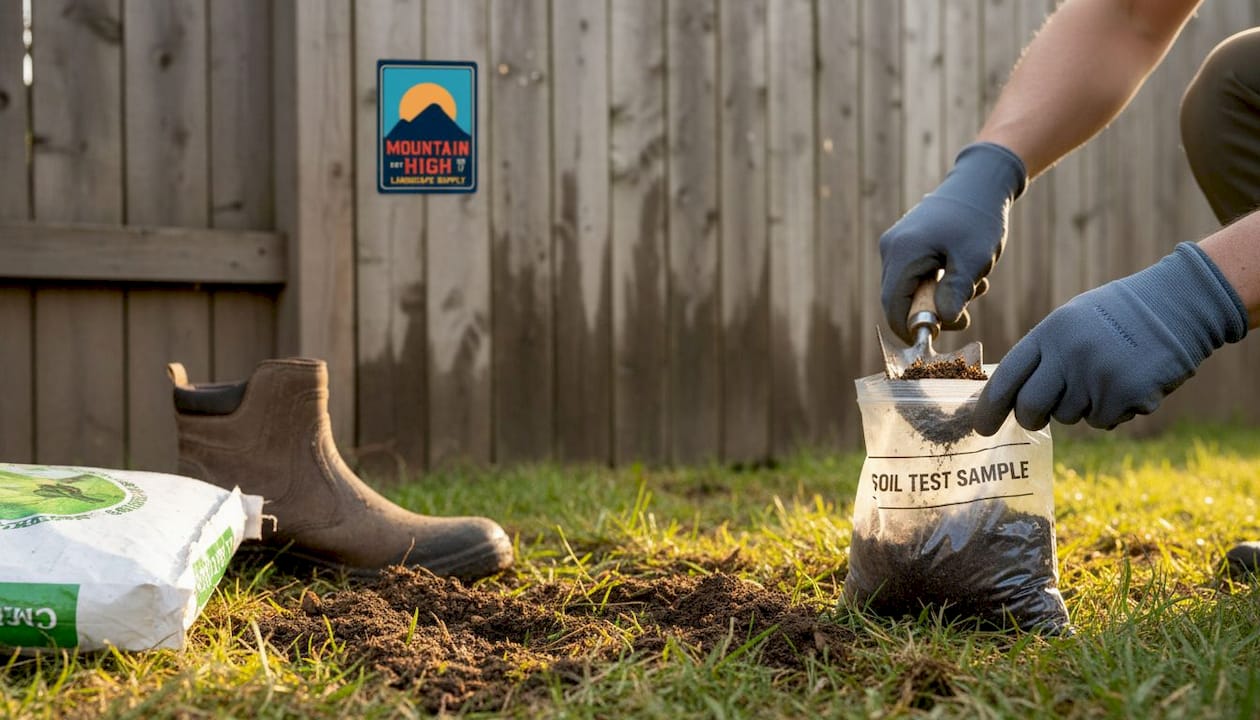
Pro Tip: Do not blindly add lime or fertilizer based on a neighbor’s recommendation or a general bag label. Over-application of lime raises pH too high, locking out manganese and iron. Under-application wastes money. Your soil test result is the only reliable guide.
If you are preparing for new sod installation, proper soil prep is especially critical. Our guide on sod prep in Atlanta walks through the full process. For larger projects, bulk soil delivery in Atlanta is a practical and cost-effective option that saves you multiple trips to the supply yard.
Integrated Pest Management, or IPM, also starts at the soil level. Healthy, well-fed soil grows dense turf that naturally resists weeds and disease, reducing your need for chemical intervention over time.
With your soil dialed in, it is time to pick the right grass and the nutrients to help it thrive. Georgia’s climate supports several warm-season and cool-season grasses, but not every variety performs equally in every yard.
UGA benchmarks recommend matching your turfgrass species to your site conditions, using certified seed or sod, mowing at the correct height for each species, irrigating only when 30 to 50 percent of your lawn shows wilt, and applying fertilizer and lime based strictly on soil test results.
Here is a quick comparison to help you choose:
| Grass type | Sun needs | Fertilizer blend | Mow height |
|---|---|---|---|
| Bermuda | Full sun | 16-4-8 or 32-0-10 | 0.5 to 1.5 inches |
| Zoysia | Full to partial sun | 15-0-15 or similar | 1 to 2 inches |
| Tall Fescue | Partial to full shade | 16-4-8 in fall | 3 to 4 inches |
Key points to keep in mind when selecting:
Proper mowing and irrigation alone can reduce chemical inputs by 50 to 70 percent, which means getting these basics right pays off in lower supply costs every season. For a detailed breakdown of which sod varieties perform best in Georgia sun and shade, our guide on sod types for Georgia is a reliable resource.
After seed, sod, and fertilizer are set, give your lawn staying power with the right finishing materials and weed strategies. These products protect your investment and keep your yard looking sharp between maintenance visits.
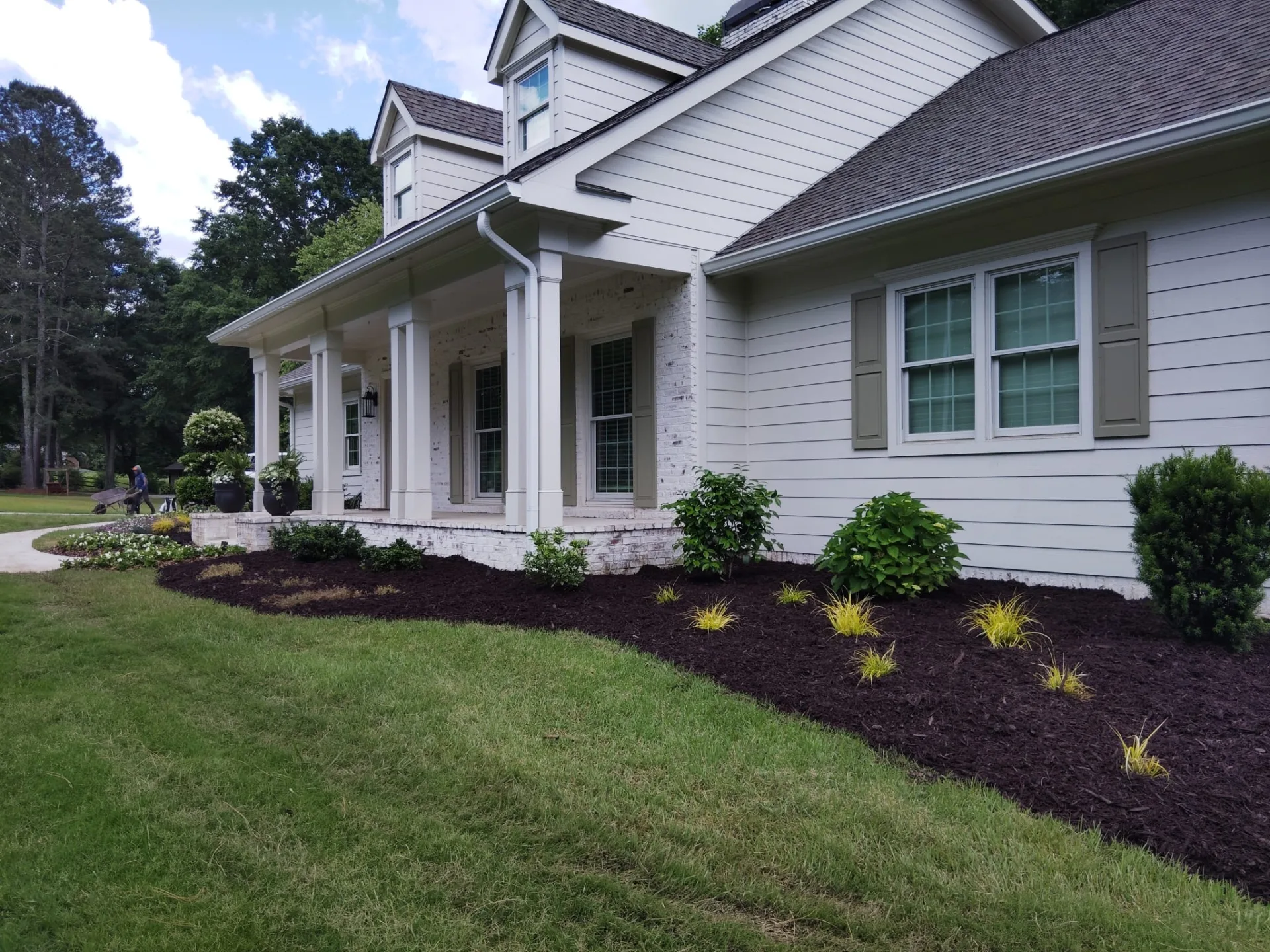
Organic options like hardwood mulch, compost, and pine straw improve soil health as they break down. Synthetic options like rubber mulch offer longevity but add no nutritional value to the soil. For most Georgia homeowners, organic materials are the better long-term choice.
| Material | Cost | Lifespan | Soil benefit | Best use |
|---|---|---|---|---|
| Hardwood mulch | Moderate | 12 to 18 months | High | Beds, tree rings |
| Pine straw | Low | 6 to 12 months | Moderate | Slopes, naturalistic areas |
| Rubber mulch | High | 10 or more years | None | Playgrounds, high-traffic zones |
For weed control, timing and product selection are everything:
UGA Extension guidance strongly cautions against using weed-n-feed products near ornamental beds, recommending IPM and targeted cultural practices first, with pesticides used only when necessary and applied with precision.
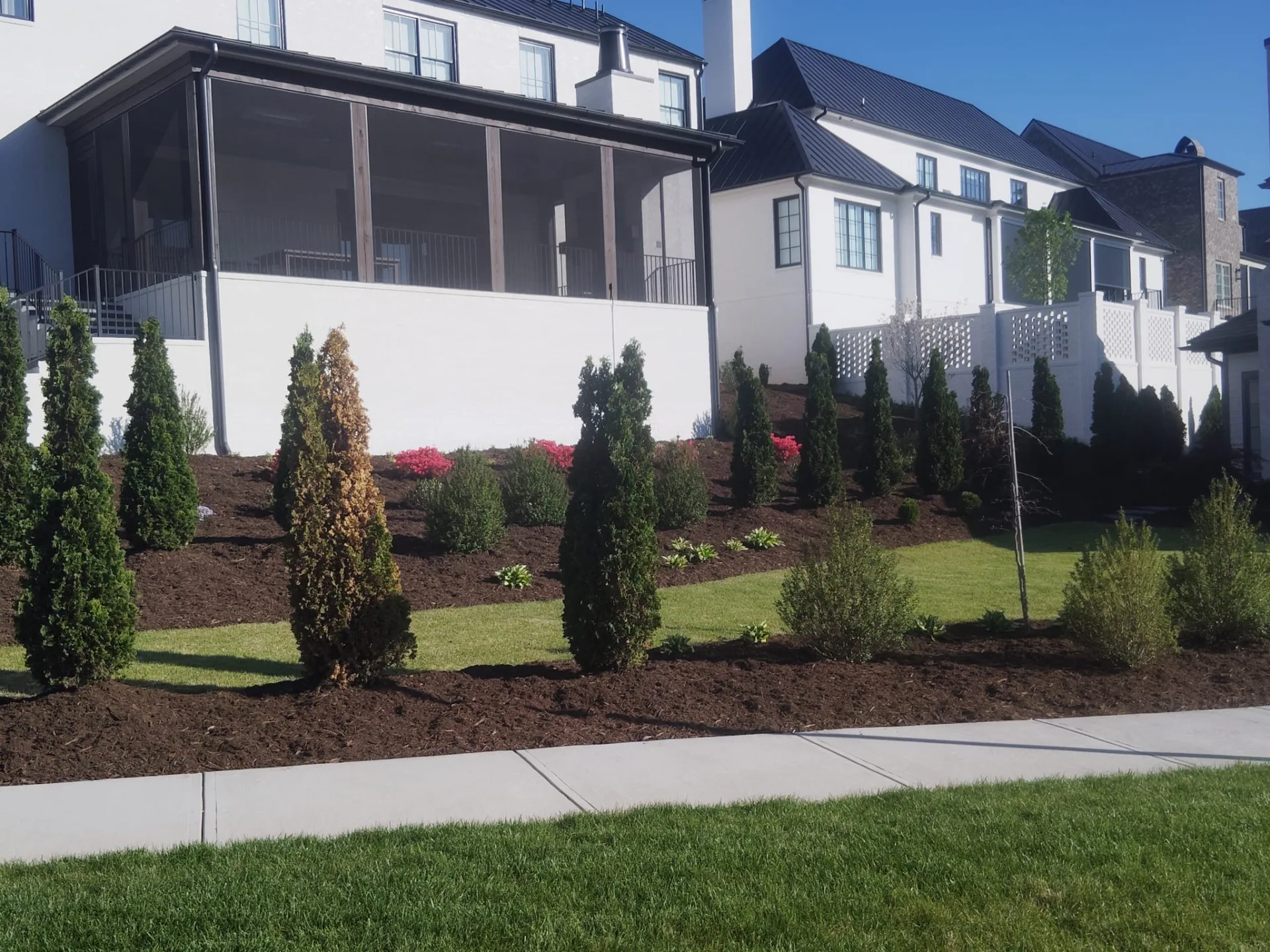
The benefits of pine straw go beyond aesthetics. It insulates soil, reduces erosion on slopes, and is one of the most cost-effective ground covers available in Georgia. If you are managing a larger property, understanding the mulch delivery workflow for Atlanta gardens can save you significant time and coordination effort.
Taking all these supplies into account, here is our expert perspective on what genuinely leads to a standout Georgia lawn. Most checklists we see focus almost entirely on products. Buy this fertilizer, apply that herbicide, spread this mulch. The list grows longer, the cart gets fuller, and the results are often disappointing.
The uncomfortable truth is that most Georgia lawn problems are cultural, not chemical. They come from mowing too short, watering too frequently, or planting the wrong grass species for the available sunlight. No bag of product fixes a Bermuda lawn planted in deep shade.
Cultural practices like proper mowing and irrigation reduce chemical needs by 50 to 70 percent. That is not a small number. It means half your supply budget could be unnecessary if you simply get the basics right first.
We always tell our customers: start with soil, not supplies. A UGA Extension soil test costs roughly the same as one bottle of herbicide and gives you a personalized roadmap for your specific yard. That is a better return than any product on our shelves. Explore landscape project ideas that build on a strong foundation rather than trying to fix a weak one with more product.
With your checklist in hand, here is where to find the supplies, guidance, and delivery options to make your Georgia lawn vision a reality.

At Mountain High Landscape Supply, we serve homeowners and professionals across Atlanta, Marietta, Smyrna, and the surrounding metro area. Whether you need organic screened topsoil for soil amendment, premium mulch for your beds, or guidance on Georgia sods that match your yard’s sun and shade conditions, our team is ready to help. If you are still building your knowledge base, our supply terminology guide makes it easy to shop with confidence. Stop by our Marietta or Smyrna locations, or schedule a delivery to your property today.
Essential lawn care supplies for Georgia homeowners include soil test kits, region-specific fertilizer, lime, pre- and post-emergent herbicides, certified seed or sod, and mulch or pine straw. These seven categories cover the full range of needs for Georgia’s climate and soil conditions.
Soil testing saves money and prevents over-application by showing your lawn’s exact pH and nutrient levels before you spend anything on amendments. Without it, you risk applying products your lawn does not need or missing deficiencies that limit growth.
Both mulch and pine straw are recommended for Georgia landscapes. Mulch lasts longer and offers higher soil benefit, while pine straw is more affordable and works especially well on slopes and in naturalistic settings.
Use targeted pre-emergent applications or spot-treat with labeled products, and avoid weed-n-feed near ornamentals since broadcast applications can damage sensitive plants in adjacent beds.