Managing mulch delivery for your Atlanta landscaping project shouldn’t feel like guesswork. Between choosing the right mulch type, coordinating delivery logistics, and preventing common issues like erosion and saturation, homeowners and professional landscapers face real challenges that can derail timelines and budgets. This guide walks you through a proven workflow for 2026 mulch projects, from preparation through verification, ensuring you get the materials you need delivered efficiently and distributed correctly. You’ll learn how to select cost-effective mulch options, prepare your site to avoid delays, execute flawless installation, and troubleshoot problems before they become expensive mistakes.
| Point | Details |
|---|---|
| Bulk delivery saves money | For projects over 2 cubic yards, bulk mulch costs $15-$40 per cubic yard versus $4-$8 per bag, cutting expenses significantly. |
| Site preparation prevents problems | Clearing pathways and designating drop-off zones ensures timely delivery without property damage or misplaced materials. |
| Proper thickness matters | Applying 2-3 inches of mulch optimizes weed control and soil health without suffocating plant roots. |
| Edging reduces erosion | Physical barriers trap mulch during Atlanta’s heavy rains, preventing displacement and costly reapplication. |
| Quality inspection is essential | Verifying mulch volume and condition on delivery prevents disputes and ensures project success. |
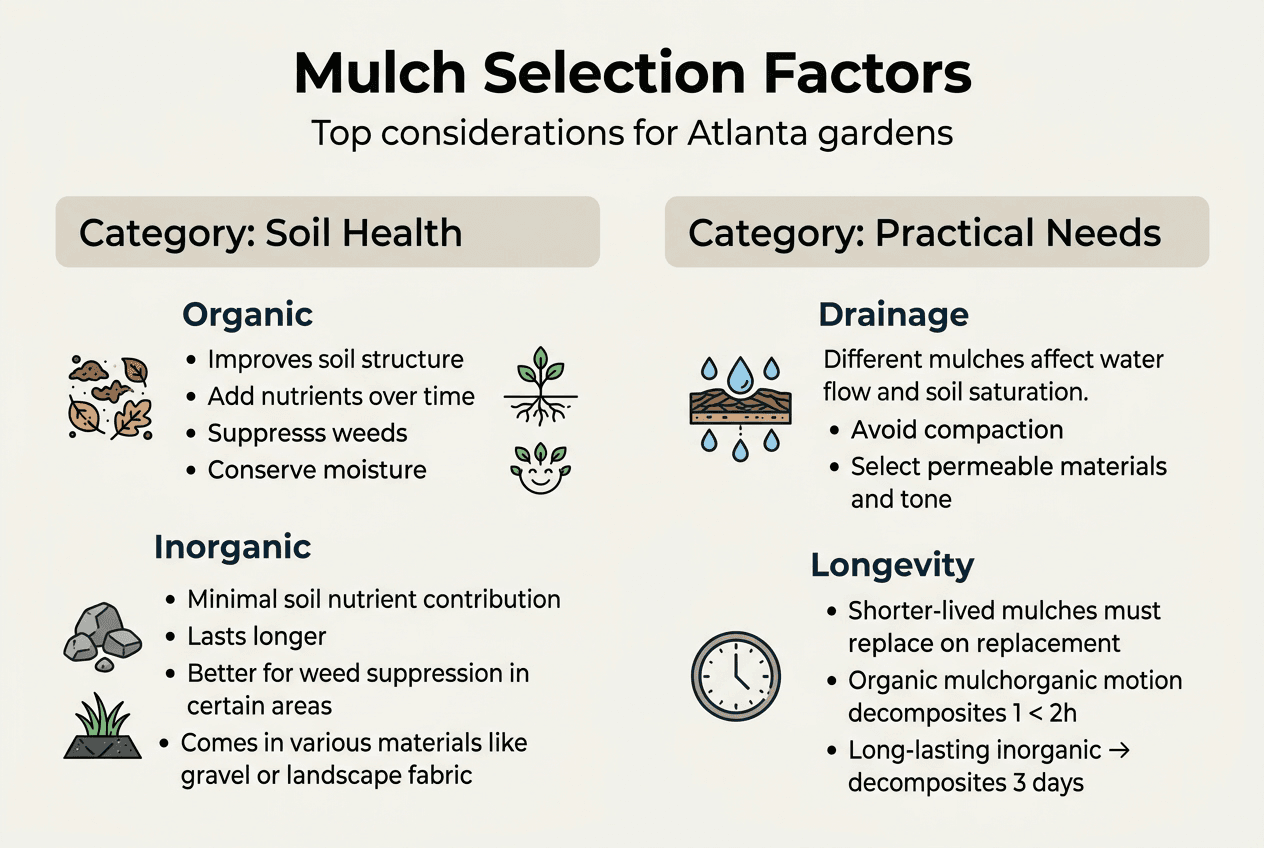
Selecting the right mulch starts with understanding two main categories: organic and inorganic. Organic options like wood chips, pine bark, and shredded hardwood decompose over time, enriching your soil with nutrients and improving moisture retention. These materials work beautifully for garden beds where soil health matters. Inorganic mulches such as rubber or stone last longer and resist decomposition, making them ideal for high-traffic areas or decorative borders where you prioritize longevity over soil enrichment.
Cost becomes a major factor when you scale up from small planters to full landscape beds. Bulk mulch delivery significantly reduces costs compared to bagged options once your project exceeds a few cubic yards. Bagged mulch runs $4 to $8 per 2-cubic-foot bag at retail stores, while bulk delivery costs $15 to $40 per cubic yard depending on mulch type and supplier. A cubic yard equals 27 cubic feet, so you’d need roughly 13 bags to match one yard of bulk material.
Here’s how the numbers break down for typical Atlanta landscaping projects:
| Project Size | Bagged Mulch Cost | Bulk Mulch Cost | Savings |
|---|---|---|---|
| 3 cubic yards | $156-$312 | $45-$120 | $36-$192 |
| 5 cubic yards | $260-$520 | $75-$200 | $60-$320 |
| 10 cubic yards | $520-$1,040 | $150-$400 | $120-$640 |
Several factors should guide your mulch selection beyond just price. Soil health needs determine whether organic decomposition benefits outweigh the need for periodic reapplication. Weed control effectiveness varies by mulch depth and material density. Aesthetic preferences matter too, especially for visible front-yard beds where choosing the right mulch for your landscape impacts curb appeal.
Organic mulches come in multiple varieties, each with distinct characteristics. Pine bark nuggets resist compaction and allow excellent water penetration. Shredded hardwood creates a dense mat that suppresses weeds effectively. Natural mulch blends seamlessly with woodland gardens. For bold color statements, red mulch provides vibrant contrast against green foliage. Understanding these types of shredded mulch expert guide options helps match materials to your specific project goals.
Pro Tip: For projects requiring more than 2 to 3 cubic yards of mulch, bulk delivery almost always beats bagged purchases on both cost and convenience, eliminating dozens of trips to the store and heavy lifting.
Proper preparation for bulk mulch delivery, including clearing pathways and designating drop-off spots, prevents delays and protects your property from damage. Delivery trucks need adequate clearance, typically 10 to 12 feet of width and 14 feet of height for standard dump trucks. Survey your driveway, side yards, and access routes to identify potential obstacles like low-hanging branches, narrow gates, or overhead power lines.
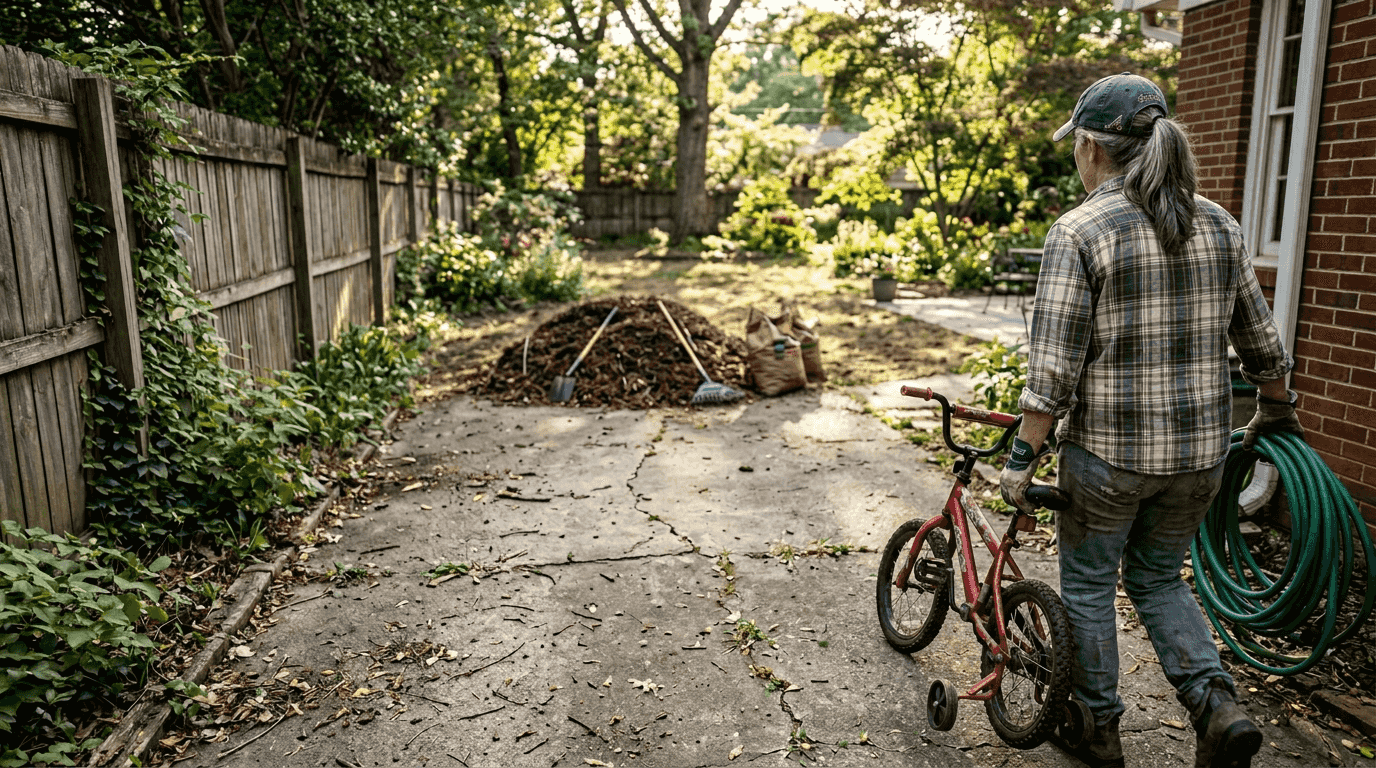
Start by walking the delivery route from street to drop-off location. Remove any vehicles parked along the path, even if they seem out of the way. Delivery drivers need room to maneuver, back up, and position their trucks safely. Clear garden tools, hoses, decorative planters, and outdoor furniture that could get damaged or obstruct the mulch pile. Check for sprinkler heads or irrigation lines that might get crushed under truck weight.
Designating a specific drop-off location requires strategic thinking. Choose a spot that balances truck accessibility with your distribution needs. Placing mulch too far from garden beds creates unnecessary wheelbarrow trips. Positioning it too close risks damaging plants, walkways, or structures when the pile gets dumped. Ideally, select a flat, stable surface like a driveway section or compacted gravel area within 50 feet of your primary mulching zones.
Communicate clearly with your supplier about delivery logistics:
Weather considerations matter significantly in Atlanta. Heavy rain can soften ground surfaces, causing delivery trucks to sink or leave deep ruts. If rain is forecast, consider rescheduling or preparing the drop-off area with plywood sheets to distribute weight. Timing is everything when to mulch your garden beds affects both delivery success and mulch performance.
Measure your garden beds accurately before ordering to avoid excess material or shortages. Online mulch calculators simplify volume estimation by converting bed dimensions and desired depth into cubic yards. For irregular shapes, break areas into rectangles and triangles, calculate each section separately, then sum the totals. Add 10% extra to account for settling and uneven distribution.
Pro Tip: Use online mulch calculators to determine precise volume needs, preventing costly over-ordering or project-stalling shortages that require emergency redelivery.
Successful mulch delivery and installation follows a systematic approach that protects your investment and ensures optimal results. Here’s the step-by-step workflow:
Atlanta’s rainfall patterns create specific challenges for mulch longevity and placement. Heavy rainfall accelerates mulch erosion, breakdown, and displacement, particularly during spring and summer thunderstorm seasons. Understanding these effects helps you design installation strategies that resist weather damage.
Common rain-related problems include:
Heavy rainstorms can displace up to 30% of improperly secured mulch in a single event, turning a fresh installation into a patchy mess that requires costly touch-ups and cleanup.
Physical edging creates the first line of defense against mulch migration. Install barriers that extend at least 2 inches above the mulch surface and 3 to 4 inches below ground level. This configuration traps material during runoff events while maintaining clean visual lines. On steep slopes, consider terracing beds or installing erosion control fabric beneath mulch layers.
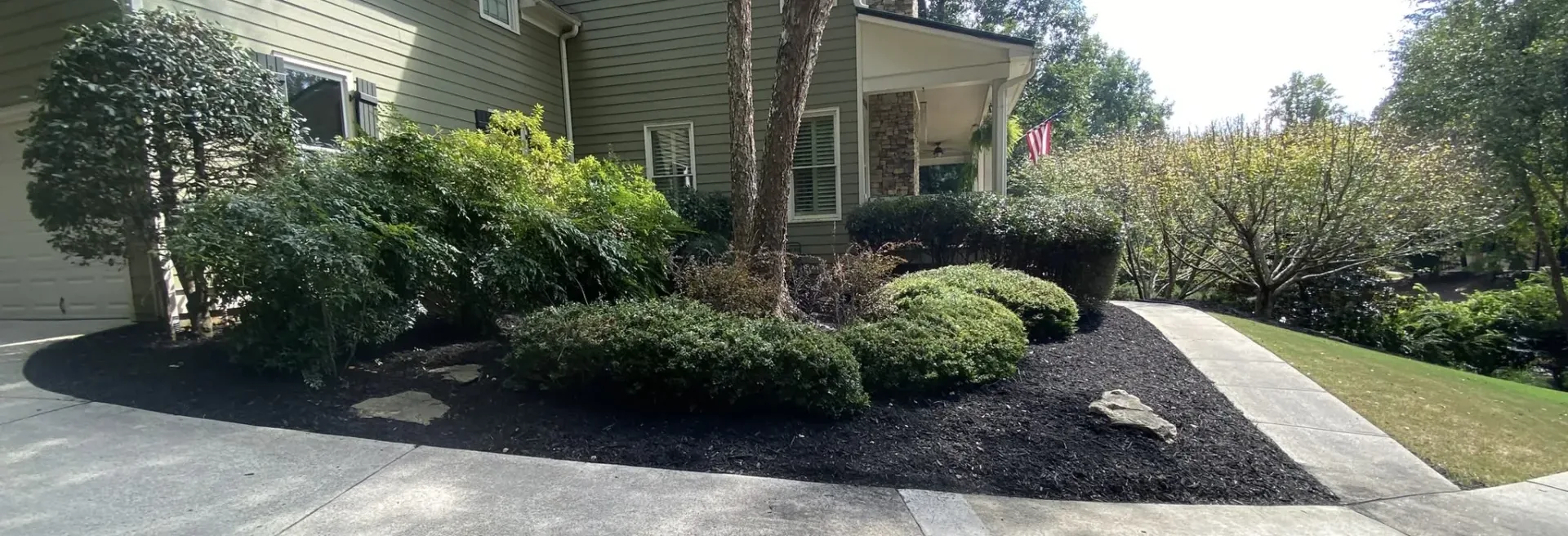
Proper guide to mulch installation techniques make the difference between a landscape that thrives and one that requires constant maintenance. Professional installations like this premium brown mulch installation demonstrate best practices for achieving uniform coverage and long-lasting results.
Pro Tip: Install physical edging barriers before spreading mulch to create containment from the start, saving hours of cleanup after the first heavy rain washes material onto hardscapes.
Verification begins the moment your mulch pile arrives. Compare the delivered volume against your order by estimating pile dimensions. A cubic yard of loose mulch forms a pile roughly 3 feet wide, 3 feet long, and 3 feet tall. Multiply length times width times height in feet, then divide by 27 to calculate cubic yards. Significant shortfalls warrant immediate contact with your supplier.
Use this inspection checklist to confirm delivery success:
Saturation problems emerge quickly in Atlanta’s humid climate, especially after delivery during rainy periods. Saturated mulch creates ideal conditions for pests, accelerates decomposition, and reduces oxygen flow to plant roots. Warning signs include fungal growth appearing as white threads or mushrooms, foul ammonia or sulfur odors, and increased insect activity including termites or carpenter ants.
Soil type dramatically affects how mulch performs in your landscape. Atlanta’s red clay soils drain poorly, holding water near the surface where mulch sits. Sandy soils drain rapidly but may not retain enough moisture for mulch to stabilize. Loamy soils provide ideal conditions with balanced drainage and moisture retention. Understanding your soil composition helps you adjust mulch application strategies.
Rainfall intensity impacts mulch differently based on material type and installation quality:
| Rainfall Condition | Erosion Rate | Decomposition Speed | Displacement Risk |
|---|---|---|---|
| Light rain (under 0.5 inches) | Minimal | Normal | Low |
| Moderate rain (0.5 to 1.5 inches) | 10-15% loss | Accelerated 20% | Medium |
| Heavy rain (over 1.5 inches) | 25-30% loss | Accelerated 40% | High |
| Intense storms (over 3 inches) | 40-50% loss | Accelerated 60% | Critical |
Improving soil drainage reduces saturation problems and extends mulch lifespan. Amend clay-heavy soils with compost or sand to increase porosity. Install French drains or swales to redirect water away from mulched beds. Grade beds with slight slopes to encourage surface water movement rather than pooling. Choosing the right mulch for your specific soil conditions optimizes both plant health and material longevity.
Edging installation techniques vary based on landscape style and budget. Plastic edging costs $0.50 to $2 per linear foot and installs quickly with ground stakes. Metal edging runs $3 to $8 per foot but provides superior durability and clean lines. Stone borders cost $8 to $15 per foot including materials and labor but create permanent, attractive boundaries. Natural wood timbers offer rustic appeal at $4 to $10 per foot.
Regular maintenance prevents small issues from becoming major problems. Schedule inspections every 4 to 6 weeks during growing season to check mulch depth, identify thin spots, and assess overall condition. Rake mulch lightly to prevent matting and restore fluffy texture that allows air and water penetration. Reapply mulch annually or as needed when depth falls below 2 inches, typically requiring 25% to 50% of your original volume.
Pro Tip: Schedule quarterly mulch inspections and plan for annual top-up applications to maintain optimal depth, keeping beds healthy and attractive while preventing weed breakthrough and soil exposure.
Mountain High Landscape Supply brings premium mulch varieties and reliable delivery throughout the Atlanta metro area, supporting successful landscaping projects for homeowners and professionals alike. Our extensive selection includes everything from classic red mulch options for vibrant color contrast to natural wood tones that blend seamlessly with woodland gardens. We serve Marietta, Smyrna, and surrounding communities with world-class service from our clean, organized supply yards.

Beyond mulch, we offer complementary materials that maximize your landscape’s health and beauty. Organic top soil delivery provides the nutrient-rich foundation your plants need before mulch application. Our expert team helps you select the right combinations of topsoil, compost, and mulch for your specific project requirements. Whether you need materials for a small residential garden or a large commercial installation, we provide flexible pickup and delivery options that fit your timeline and budget. Master landscape supply terminology through our educational resources to make informed decisions for every project.
Measure bed length and width in feet, multiply by desired depth in inches, then divide by 324 to get cubic yards. For example, a 20-foot by 10-foot bed at 3 inches deep needs 1.85 cubic yards. Add 10% extra for settling and irregular shapes.
Organic hardwood mulch performs excellently in Atlanta’s humid conditions, decomposing slowly while enriching soil and retaining moisture during summer heat. Pine bark nuggets resist compaction and allow superior water penetration during heavy rainfall periods.
Avoid scheduling delivery during active rain or within 24 hours of heavy storms, as wet ground causes truck rutting and makes spreading difficult. Plan deliveries during dry periods when soil is firm and you can work comfortably.
Improve drainage by creating slight bed slopes away from plant crowns, installing French drains for chronic wet areas, and avoiding mulch application over saturated soil. Rake waterlogged mulch to restore air circulation and prevent anaerobic conditions.
Verify the supplier offers consistent product quality, reliable delivery scheduling, accurate volume measurements, and responsive customer service. Check reviews from other Atlanta landscapers and homeowners to confirm their reputation for professionalism.
Plan to refresh mulch annually in spring before growing season begins, adding 1 to 1.5 inches to restore optimal depth. High-traffic areas or beds with fast-decomposing materials may need touch-ups twice yearly to maintain coverage and appearance.