TL;DR:
- Organic mulch enhances soil health and retains moisture better than rock in Georgia landscapes.
- Incorrect installation of mulch can lead to pests, fungal issues, and reduced plant longevity.
- Combining mulch and rock strategically improves drainage, pest control, and long-term landscape performance.
Mulch and rock are often treated as interchangeable landscaping materials, but they produce very different results in the ground beneath your plants. Research from the University of Georgia confirms that mulch reduces evaporation and cools soil, while rock absorbs and radiates heat and retains almost no moisture. In Georgia’s hot, humid summers, that difference is not minor. It can determine whether your plants thrive, struggle, or die outright. This guide walks you through the specific effects, common mistakes, and practical decision-making criteria so you can make an informed choice for your outdoor space.
| Point | Details |
|---|---|
| Mulch cools, rock heats | Mulch lowers soil temperature and retains moisture while rock increases heat and dries out the soil. |
| Long-term weed control | Mulch outperforms rock for sustained weed suppression and boosts soil health over time. |
| Avoid fabric under mulch | Landscape fabric fails quickly and is not recommended under mulch; use only temporarily under rock. |
| Placement matters | Keep mulch six inches from foundations to prevent pests and moisture damage; use rock near bases and mulch in beds. |
| Choose by area | Select your material based on landscape location, drainage, plants, and maintenance needs for best results. |
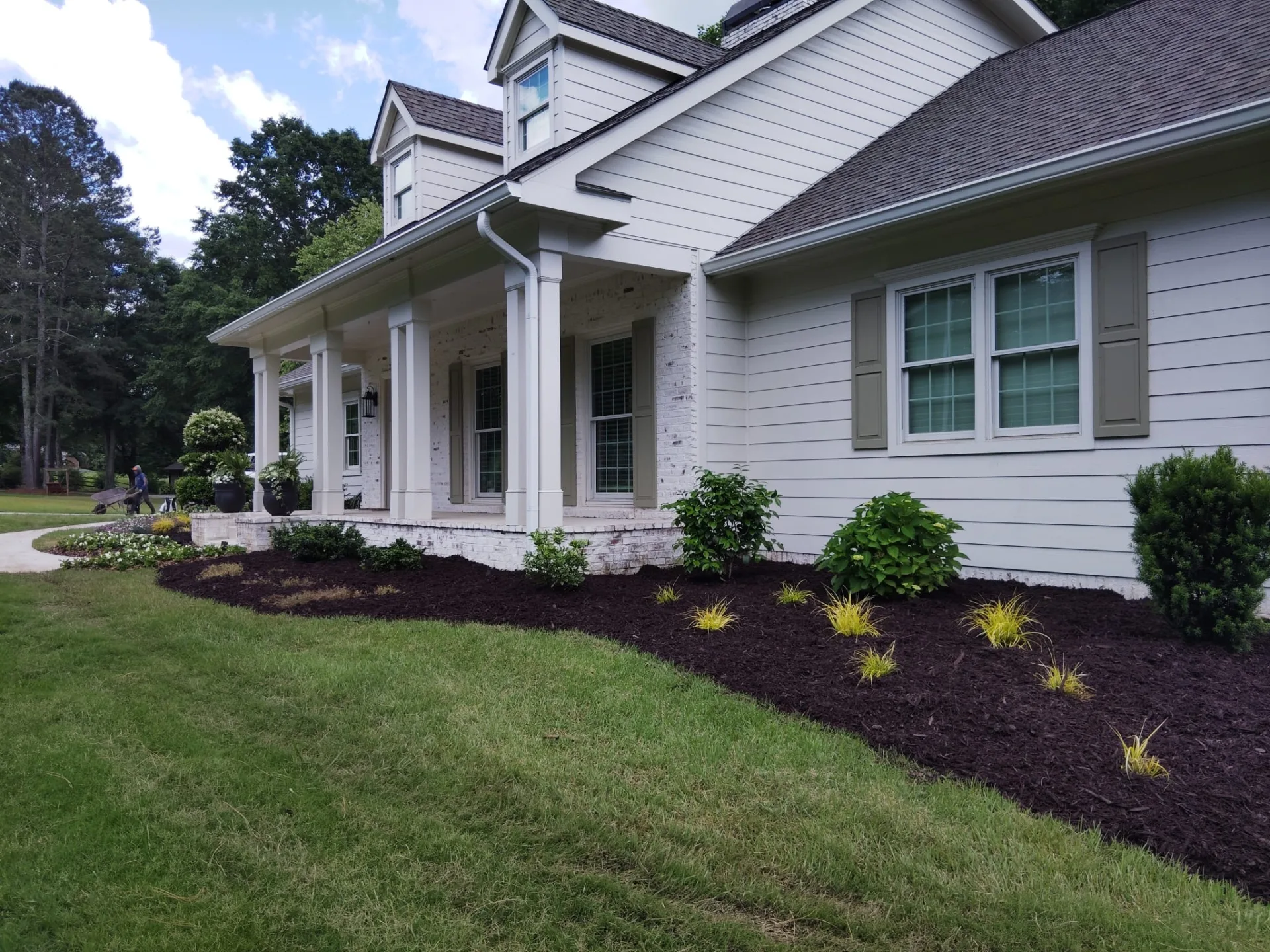
Mulch refers to any material applied to the surface of soil to protect it and improve growing conditions. Organic mulches, the most common type in Georgia landscaping, include pine bark nuggets, hardwood mulch, pine straw, and wood chips. These materials break down over time and feed the soil. Inorganic mulches include materials like rubber and landscape fabric, though these are less commonly recommended. Rock, on the other hand, covers a wide range of decorative and functional stone materials used in Georgia yards. Common choices include river rock, pea gravel, crushed granite, and lava rock. Each has distinct weight, drainage, and thermal properties that affect how your landscape performs across seasons.
Both materials serve a few overlapping purposes:
However, UGA extension guidance notes that pro-mulch evidence emphasizes long-term soil health benefits, while pro-rock perspectives from industry sources point to durability and reduced pest pressure. There is no universal consensus because the right answer depends heavily on site conditions.
Georgia’s climate creates specific pressures that influence this choice. Clay-heavy soils common in the Piedmont region drain poorly and compact easily. The state’s summer heat routinely pushes soil temperatures into damaging ranges for shallow-rooted plants. High humidity also creates conditions where pests, mold, and fungal issues thrive. All of these factors matter when you are selecting your ground cover material. You can also review our smart mulch selection tips to understand how to match mulch types to specific plant and site profiles common in the Atlanta region.
Pro Tip: Before selecting any material, walk your site and note three things: how water flows after rain, how much direct sun the area receives, and what plant types are growing there. These three factors will narrow your choice faster than any other method.
With the basics clear, let’s see their real-world impact on your yard’s performance.
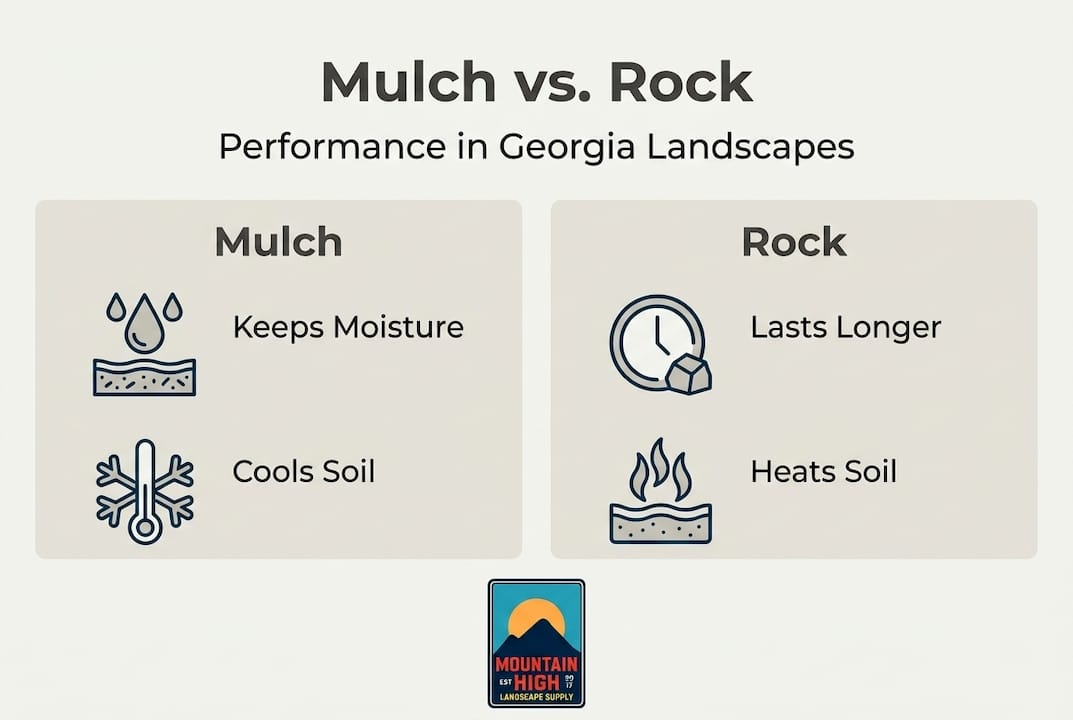
The practical effects of mulch versus rock show up in five key categories: moisture retention, soil temperature, weed control, soil health, and long-term durability. Here is a direct comparison:
| Category | Organic mulch | Decorative rock |
|---|---|---|
| Moisture retention | High, reduces evaporation significantly | Very low, allows rapid moisture loss |
| Soil temperature | Cools soil, buffers temperature swings | Absorbs and radiates heat, raises soil temp |
| Weed control | Strong long-term via soil health improvement | Moderate short-term, weeds establish later |
| Soil health | Improves as material decomposes | No benefit, may compact surface over time |
| Durability | Requires replenishment every 1-2 years | Very durable, lasts many years with minimal attention |
Research confirms that mulch reduces evaporation and cools soil, while rock increases heat absorption, which is a significant concern for Georgia gardeners working with heat-sensitive plants. When afternoon temperatures in Atlanta and Marietta regularly exceed 90°F in summer, a layer of rock can push soil temperatures even higher, stressing root systems that would otherwise be shielded by organic mulch.
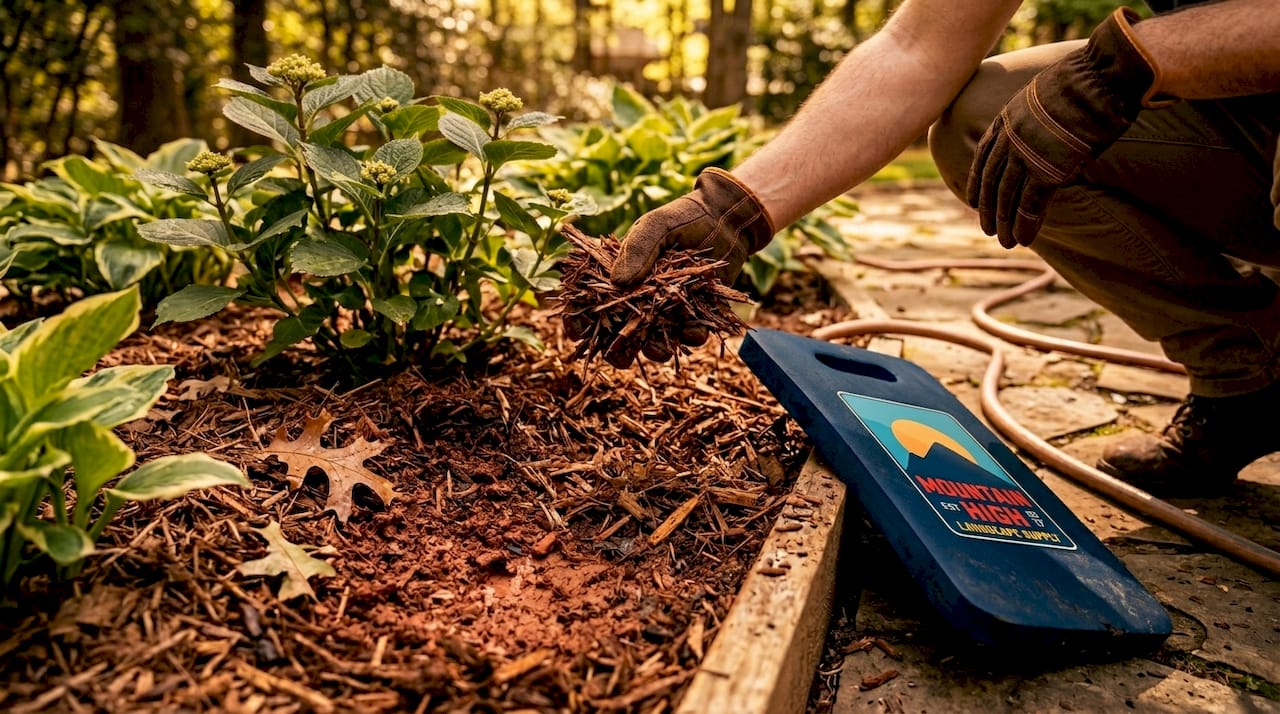
Applying mulch at the correct depth is one of the most impactful things you can do for your planting beds. A layer of three to four inches prevents soil crusting and reduces leaching, which is especially important in Georgia’s red clay soils that tend to form hard surface layers after rain. This depth keeps roots cool, maintains consistent moisture levels through dry spells, and creates a stable environment for beneficial soil organisms. Going deeper than four inches, however, can suffocate roots and create conditions for fungal growth against plant stems.
Mulch also provides compounding benefits over multiple seasons. As organic mulch breaks down, it adds carbon, nutrients, and microbial activity to the soil. This improves both drainage in heavy clay soils and water retention in sandy soils. Rock provides no equivalent benefit and in some cases creates a heat sink that worsens the microclimate around delicate plants.
Certain Georgia plant species deserve special attention here:
For plant selection and matching material guidance, our resource on choosing the right mulch walks through how pine bark, hardwood, and pine straw each interact differently with Georgia’s most common landscape plants.
Pro Tip: Use organic mulch, specifically hardwood or pine bark, around any plant prone to heat stress. The soil temperature difference between a mulched bed and a rock-covered bed can be 10 to 15 degrees Fahrenheit on a Georgia summer afternoon.
Knowing the difference isn’t enough. Correct installation and maintenance keeps problems at bay.
Even when homeowners and contractors choose the right material, installation errors can eliminate all the expected benefits. The following mistakes are among the most common we see in Georgia landscapes, and each carries real consequences.
Always keep mulch six inches from foundations and avoid landscape fabric under mulch or as a long-term solution under rock.
This guidance from foundation mulching best practices reflects expert consensus that a combination approach works best around structures. Rock placed along the foundation perimeter provides a dry, pest-unfriendly buffer. Mulch then covers the planting beds further out, where plants benefit most from its moisture and temperature regulation.
Georgia’s humidity accelerates the consequences of these mistakes. In drier climates, improperly installed mulch may cause minor problems. In Atlanta or Smyrna where summer humidity regularly exceeds 70%, a poorly installed mulch bed can develop fungal issues, attract carpenter ants, or produce conditions that shorten plant lifespans significantly. If you want a step-by-step walkthrough of correct installation, our guide on how to install mulch like a pro covers edging, depth calibration, and proper clearance from structures.
Finally, let’s pull everything together for your specific project needs.
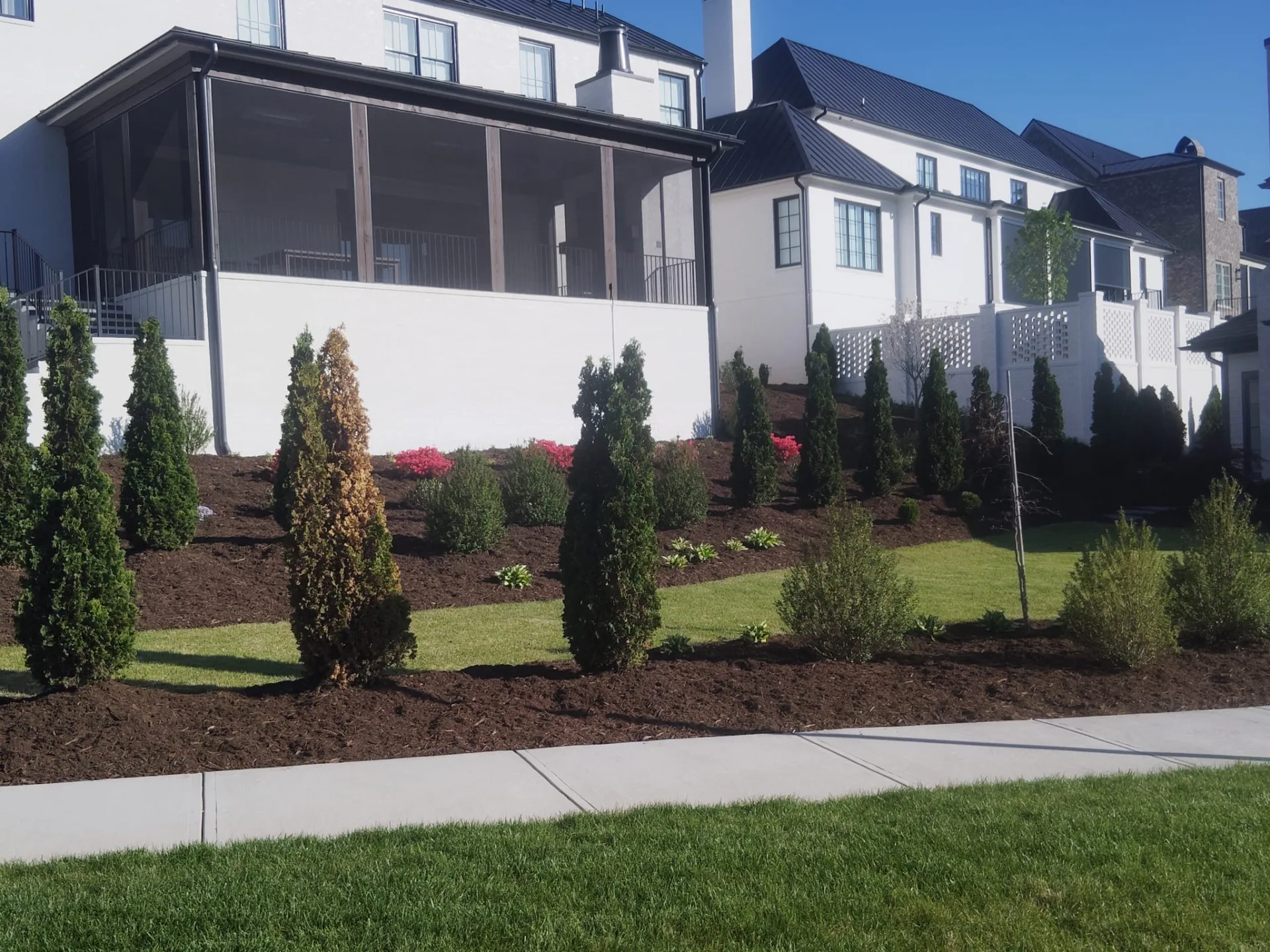
The most effective Georgia landscapes rarely use just one material. A strategic mix, with each material placed where its properties create the most value, delivers better results than a uniform approach. Here is a decision framework organized by landscape area:
| Landscape area | Recommended material | Primary reason |
|---|---|---|
| Foundation edge (within 18 inches) | Decorative rock | Pest and moisture buffer near structure |
| Planting beds with ornamental shrubs | Organic mulch | Moisture retention, soil health, temperature control |
| Walkways and paths | Pea gravel or crushed granite | Drainage, stability, low maintenance |
| Shady spots under trees | Hardwood mulch or pine straw | Root protection, moisture, organic matter |
| Slopes prone to erosion | Rock or mulch with erosion netting | Stabilization, depends on slope severity |
| Drainage channels and dry creek beds | River rock or large gravel | Water flow management, durability |
Research confirms that a rock-at-base, mulch-in-beds strategy captures the durability advantages of stone near structures while preserving the long-term soil health benefits of organic mulch where plants are growing. This combination approach is now widely used by professional landscapers across the Atlanta metro area.
For your final decision, run through this quick checklist:
If you are planning a design that incorporates decorative stone elements, our resource on best decorative rocks for Atlanta covers material options that work well with Georgia’s soil types and design aesthetics.
Most online guides present mulch versus rock as a simple binary choice, but the reality we see in Georgia yards every season is more nuanced. The honest answer is that neither material is universally superior, and the sites where rock “wins” in a Georgia landscape are narrower than most homeowners expect.
Here is what field experience in this region consistently shows: rock performs well in the short term and in very specific locations like drainage zones and foundation buffers. But in the planting beds where most homeowners actually want low-maintenance ground cover, rock often creates more work over five years than mulch does. Weeds eventually establish through or around rock. Heat stress on plants increases watering demands. And the aesthetic of faded, dirty rock in a bed that once looked sharp becomes a recurring frustration.
Georgia’s specific combination of summer heat, clay soils, and pest pressure also changes the math on durability. In a drier, hotter climate like Arizona, rock landscapes make practical and ecological sense. Here, where rainfall is abundant and organic decomposition is rapid, mulch replenishes the soil in a way that reduces long-term maintenance rather than increasing it. A well-mulched bed in an Atlanta backyard can outperform a rock bed on nearly every metric within three seasons.
We also see a pattern where homeowners who try to save money by skipping annual mulch refreshes end up spending more on weed control, soil amendments, and plant replacement. The perceived savings from a one-time rock installation often disappear within two to three years. Tracking your true five-year cost, not just your upfront installation cost, changes how most people evaluate this decision.
Our position is practical: use the right material for the right location, stay consistent with maintenance, and do not let installation myths like landscape fabric and deep mulch layers undermine the benefits you are trying to create. You can also review our mulch delivery workflow to understand how professional-grade mulch refreshes are scheduled and executed efficiently across Atlanta area properties.
Whether your project calls for organic mulch around your flower beds, decorative gravel along a walkway, or a combination strategy around your home’s foundation, we have the materials and local expertise to help you get it right.

At Mountain High Mulch, we supply premium mulch, gravel, stone, and topsoil from our Marietta and Smyrna locations, with reliable delivery throughout the Atlanta metro area. Our team works with both homeowners and professional contractors, and we offer professional mulch installation for those who want expert execution from start to finish. Visit our supply yards, request a delivery, or speak with our team to get the right materials for your specific Georgia landscape.
Mulch suppresses weeds more effectively over the long term in Georgia because it improves soil health as it decomposes, which reduces weed germination at the root level. Rock provides short-term suppression, but weeds eventually establish through gaps or in debris that accumulates on top of the stone.
Keep mulch at least six inches away from your foundation to avoid pest and moisture damage to siding and structural materials. Rock can be used closer to the foundation as a dry buffer, but proper drainage should still be planned carefully.
Landscape fabric should never be placed under organic mulch because it blocks decomposition and traps weed seeds in the mulch layer above it. Under rock, it can be used temporarily, but most landscape fabric fails within two to five years, leaving behind a difficult-to-remove layer.
Three to four inches is the ideal depth because it prevents soil crusting and reduces leaching while still allowing water and air to reach the root zone. Applying mulch deeper than four inches can suffocate plant roots and promote fungal problems in Georgia’s humid climate.