Many Atlanta homeowners assume that concrete and manufactured pavers are the most durable options for outdoor projects. That assumption makes sense on the surface, but it misses a critical reality. Natural stone in Atlanta’s climate actually resists weathering, erosion, and thermal expansion better than most alternatives when installed correctly with proper drainage. Georgia’s clay soils, summer heat, and occasional freeze-thaw cycles put every landscape material to the test, and natural stone consistently comes out ahead. This guide breaks down exactly why, and how you can put that knowledge to work in your own yard.
| Point | Details |
|---|---|
| Lasts for decades | With proper installation, natural stone can endure over 50 years in Atlanta’s climate. |
| Resists weather challenges | Natural stone outperforms concrete and pavers in Georgia’s clay soils and freeze-thaw cycles. |
| Boosts property value | Unique aesthetics and durability of stone can raise curb appeal and home value. |
| Requires minimal care | Most natural stone surfaces need only occasional cleaning and sealing. |
| Choose the right stone | Dense stones like granite are best for Atlanta’s climate; expert installation is key. |
To understand natural stone’s real advantage, first consider what makes Atlanta’s conditions so demanding for landscaping.
Atlanta sits in a region with some of the most challenging soil conditions in the Southeast. The red clay soil that blankets most of metro Atlanta expands when wet and contracts when dry. That constant movement puts enormous stress on any rigid surface. Add occasional winter freeze-thaw cycles and punishing summer heat to the mix, and you have conditions that accelerate cracking and shifting in materials that lack natural resilience.
Concrete, for example, scores well on paper but performs poorly over time in these conditions. It absorbs water, expands and contracts, and eventually cracks. Manufactured pavers can delaminate or fade. But natural stone? It has spent millions of years being shaped by pressure and temperature. Atlanta’s weather is nothing it hasn’t handled before.
Key challenges that local landscapes face include:
When properly installed on a compacted gravel base that accounts for Georgia’s clay soil, natural stone can last 50 to 100+ years without the kind of deterioration that plagues concrete in the same environment. That kind of lifespan changes the entire cost calculation for homeowners and landscape professionals.
Pro Tip: Always ask your supplier about sourcing stone that is compatible with local conditions. Exploring your Atlanta stone choices before you commit to a project saves time and money later.
Understanding using stone in Atlanta gardens also helps you see how these materials perform across different applications, from walkways to retaining walls to decorative garden borders.
Now, let’s see how natural stone holds up against its most common rivals.
When you lay out the facts side by side, the case for natural stone becomes clear. Natural stone rates between 6 and 7 on the Mohs hardness scale, while concrete typically rates between 3 and 5. That difference matters in everyday use. A harder surface resists scratching, chipping, and wear from foot traffic and weather. Natural stone also meets ASTM freeze-thaw standards with a 25+ year minimum lifespan, often far exceeding that when cared for properly.
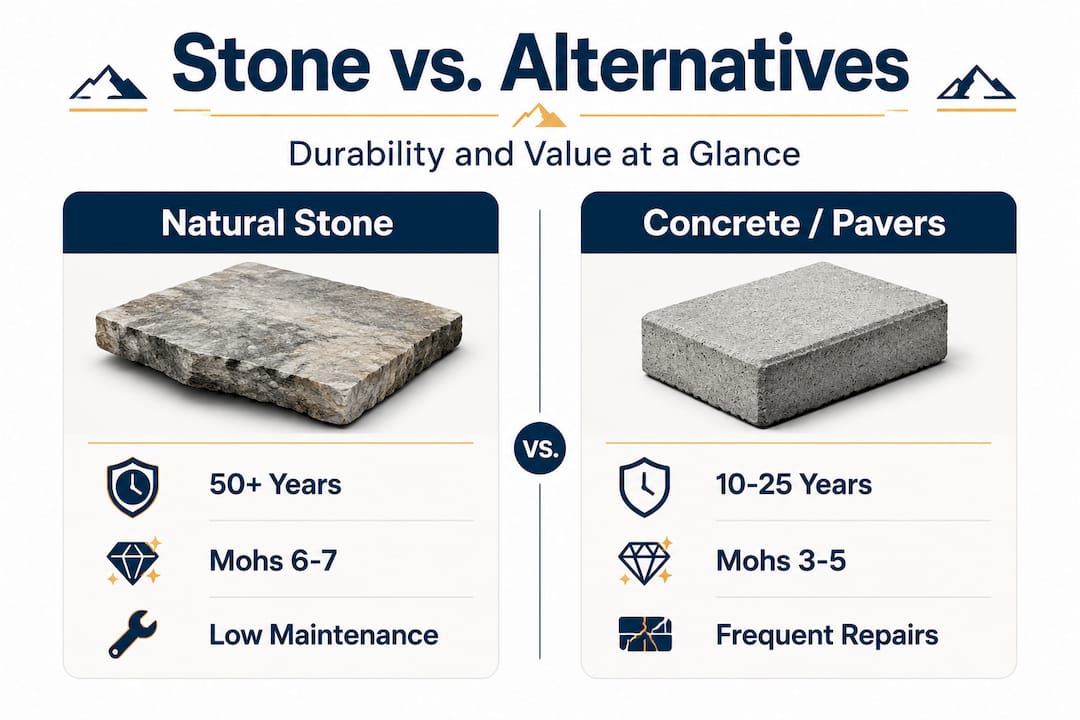
| Feature | Natural stone | Concrete | Manufactured pavers |
|---|---|---|---|
| Hardness (Mohs scale) | 6 to 7 | 3 to 5 | 4 to 6 |
| Estimated lifespan | 50 to 100+ years | 25 to 40 years | 20 to 35 years |
| Maintenance needs | Low (occasional cleaning) | Moderate (sealing, crack repair) | Moderate to high |
| Freeze-thaw resistance | High (dense types) | Low to moderate | Low to moderate |
| Aging appearance | Develops natural patina | Fades, stains, cracks | Fades, color loss |
| Atlanta clay soil suitability | Excellent with proper base | Fair | Fair |
The maintenance difference alone makes natural stone compelling. Concrete requires periodic sealing to prevent water intrusion and staining. Manufactured pavers can lose their color over time, requiring replacement. Natural stone, by contrast, ages with natural beauty, developing a patina that enhances its appearance rather than detracting from it.
Key advantages that set natural stone apart from alternatives:
Pro Tip: When comparing rock landscaping options for your project, always factor in the 10-year maintenance cost, not just the upfront price. Natural stone almost always wins on total cost of ownership.
Selecting the right stone matters as much as choosing stone over concrete. Here’s how to make a smart choice.
Not all natural stones perform equally in Atlanta’s conditions. The key variable is porosity. Porous stones like limestone and sandstone absorb water, which means they are vulnerable to freeze-thaw damage if unsealed. When water enters a porous stone and freezes, it expands and can fracture the material from the inside. Dense, low-absorption stones like granite and bluestone handle these cycles far better and are the preferred choices for Atlanta hardscaping.
| Stone type | Hardness | Porosity | Best use in Atlanta | Freeze-thaw rating |
|---|---|---|---|---|
| Granite | 6 to 7 | Very low | Patios, steps, walkways | Excellent |
| Bluestone | 6 to 7 | Low | Walkways, pool surrounds | Excellent |
| Flagstone (quartzite) | 6 to 7 | Low to moderate | Patios, garden paths | Good |
| Limestone | 3 to 4 | Moderate to high | Decorative, dry climates | Poor unsealed |
| Sandstone | 3 to 5 | High | Walls in sheltered areas | Poor unsealed |
| Slate | 5 to 6 | Low | Patios, steps | Good |
Follow these steps to select the right stone for your Atlanta project:
Learning about garden stone types before you shop gives you a clear framework for asking the right questions and getting the best results.
Pro Tip: For Atlanta patios and walkways, granite and bluestone are the safest bets. They require minimal maintenance and stand up to Georgia’s weather without sealing.
Beyond performance, natural stone’s appeal goes deeper. Let’s look at how it transforms spaces and investments.
A natural stone patio does something a concrete slab simply cannot. It brings texture, color variation, and a sense of permanence that instantly elevates the visual quality of any outdoor space. Each stone has a mineral history that shows in its color and grain, making every project genuinely unique.
“Natural stone develops a patina over time that enhances its beauty, requires low maintenance through occasional cleaning or sealing, and consistently increases property value with aesthetics that manufactured materials cannot replicate.”
The sustainability argument for natural stone is equally strong. It requires minimal processing compared to concrete or manufactured pavers. Its long lifespan means fewer replacements and less waste over the life of your property. Some sustainable renovation approaches highlight how durable materials like natural stone can boost property value while reducing the environmental footprint of home improvements.
Key benefits that homeowners and professionals repeatedly cite:
Investing in exceptional hardscapes built with quality natural stone is one of the most reliable ways to add lasting value to an Atlanta property.
Most articles about natural stone focus on the material itself. That’s useful, but it misses a practical truth we see in Atlanta installations every day: the stone rarely fails. The installation does.
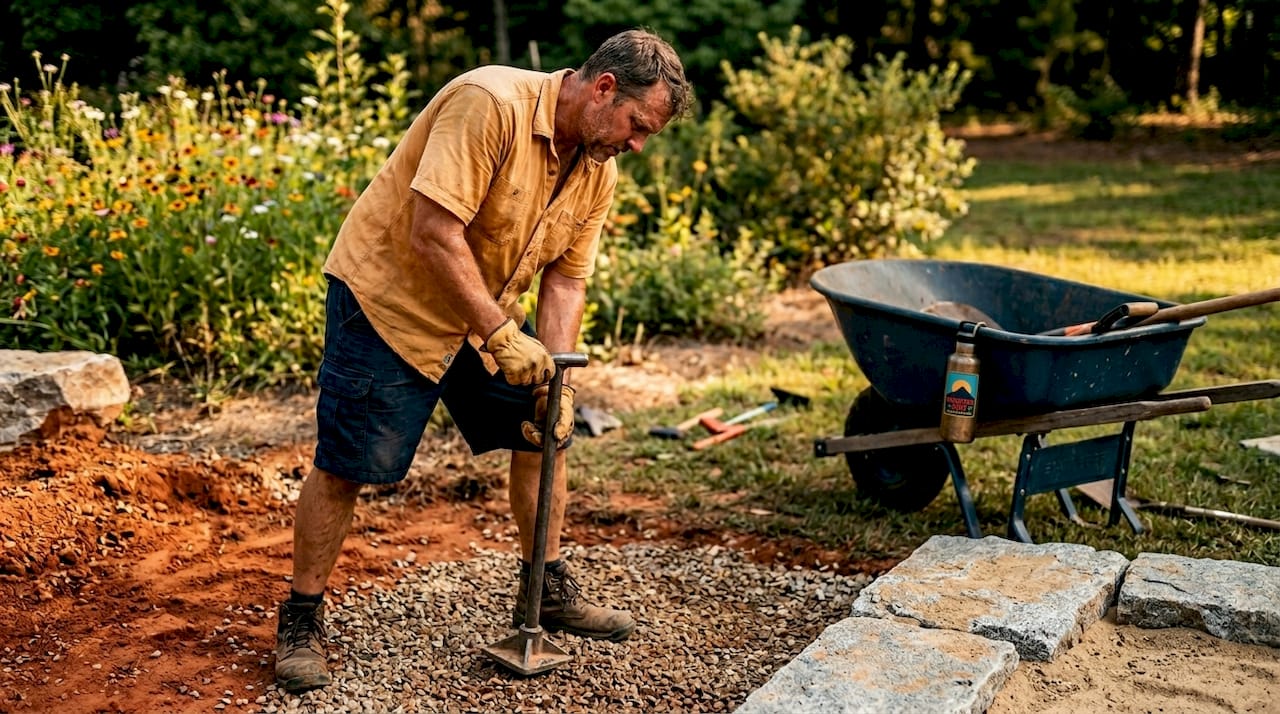
The biggest source of premature failure we observe in Atlanta stone projects is inadequate base preparation. Georgia’s clay soil is notoriously unforgiving. It shifts, it swells, and it settles. A patio installed directly on clay, even with great stone, will develop gaps, wobble, and eventually require full removal and reinstallation. A properly compacted crushed granite or gravel base, typically 4 to 6 inches deep, is not optional. It is the foundation that makes everything else work.
We also see problems when homeowners source stone from distant suppliers who are unfamiliar with local conditions. Local suppliers in the Atlanta area understand which stone types perform best in Georgia’s specific soil and weather, and they can recommend the right materials for each application. That local knowledge is not something you can get from a national catalog.
Our honest take: choosing the right stone is only half the project. The other half is a correctly prepared base, proper joint spacing to allow for minor movement, and appropriate sealing for any stone with moderate porosity. Skip any one of those steps and even the best granite will disappoint you. Follow our Atlanta supply guide for a clear checklist of what to prepare before your project begins.
Ready to apply these insights? At Mountain High Mulch, we supply premium natural stone and hardscape materials to homeowners and landscape professionals across Atlanta, Marietta, Smyrna, and the surrounding metro area. Our expert team helps you select the right stone for your specific project, soil conditions, and design goals, so you start with confidence and finish with results you can be proud of.

Browse our full selection of premium rock and gravel to find the right material for patios, walkways, retaining walls, and garden borders. If you’re looking for a versatile and attractive option, our pea gravel selection is a popular choice for pathways and drainage applications. Pick up from our Marietta or Smyrna locations, or take advantage of our reliable delivery service throughout the metro area. Contact our team today to get started.
With proper installation on a compacted base that accounts for Georgia’s clay soil, natural stone can last 50 to over 100 years in Atlanta’s climate.
Occasional cleaning and optional sealing are typically all that’s needed, and dense stones age gracefully without the fading and cracking that affect concrete over time.
Dense, low-absorption stones like granite and bluestone are the top choices because they resist freeze-thaw damage far better than porous options like limestone or sandstone.
Natural stone consistently increases property value through its unique aesthetics, durability, and the curb appeal it adds to any outdoor space.
Yes. Natural stone is sustainable because of its long lifespan, low maintenance requirements, and the minimal processing it needs compared to manufactured alternatives.