Not all gravel works the same way in every yard, and pea gravel is a perfect example of a material that gets misapplied more often than it should. Atlanta homeowners and landscaping professionals frequently choose it based on looks alone, only to find it shifting out of place or creating unexpected maintenance headaches. Pea gravel has real strengths, but it also has clear limitations that depend heavily on how and where you use it. In this guide, we’ll walk through what pea gravel actually is, where it performs best in Metro Atlanta, and exactly how to install and maintain it for lasting, attractive results.
| Point | Details |
|---|---|
| Unique material traits | Pea gravel’s round, smooth stones provide comfort and visual appeal but move easily if not contained. |
| Best uses | It’s ideal for paths, beds, fire pits, and dog runs, but not for driveways without major prep. |
| Proper installation | Edging and a weed barrier are essential for keeping pea gravel attractive and low-maintenance. |
| Common pitfalls | Avoid spreading, weed problems, and tracking indoors with thoughtful installation and routine upkeep. |
Pea gravel is a small, naturally rounded stone, typically measuring about 3/8 inch in diameter, roughly the size of a garden pea. That compact, uniform size is where it gets its name. Unlike crushed gravel, which is angular and jagged from mechanical breaking, pea gravel forms its smooth shape through years of natural water erosion in riverbeds and streams. Some suppliers also produce it by tumbling quarried stone to achieve a similar rounded finish.
The color range is one of pea gravel’s most appealing qualities. You’ll find stones in shades of tan, brown, white, gray, and even light rose or rust, often mixed together in a single batch. This natural variation gives it a warm, organic look that blends well with garden beds, pathways, and outdoor living spaces. For a closer look at the basics, our guide on pea gravel basics covers the material in detail.
As noted by gravel experts, pea gravel is naturally rounded and smooth, and that characteristic directly shapes how it performs in landscaping applications. Its smoothness makes it comfortable underfoot and safe for pets, but it also means it doesn’t lock together the way angular stones do.
Pea gravel vs. other Atlanta landscaping gravels
| Feature | Pea gravel | Crushed gravel | Decomposed granite |
|---|---|---|---|
| Size | ~3/8 inch | Varies (1/4″ to 1″) | Fine, sand-like |
| Shape | Smooth, rounded | Angular, jagged | Irregular, fine |
| Texture | Smooth | Rough | Gritty |
| Color | Multi-tone natural | Gray to tan | Tan, gold, brown |
| Interlocking | No | Yes | Partially |
| Drainage | Excellent | Good | Moderate |
You can also browse our selection of pea gravel in Atlanta to see available sizes and colors for your specific project.
Where pea gravel’s physical traits work in its favor:
Now that we’ve defined pea gravel’s qualities, we’ll weigh its real-world benefits and drawbacks in Metro Atlanta.
Atlanta gets significant rainfall, averaging around 50 inches per year. That makes drainage a top priority for any outdoor surface. Pea gravel handles water exceptionally well. Its rounded stones create natural gaps that allow rainwater to pass through quickly, reducing runoff and standing water. For garden beds and low-traffic paths, this drainage advantage is hard to beat.
The smooth surface is also genuinely comfortable. Bare feet, sandals, and pet paws all tolerate pea gravel well compared to crushed stone, which can be sharp and abrasive. This makes it a smart choice for areas where people actually spend time, like patios, fire pit surrounds, and garden walkways. For ideas on surface options, our overview of walkway material options is a useful starting point.
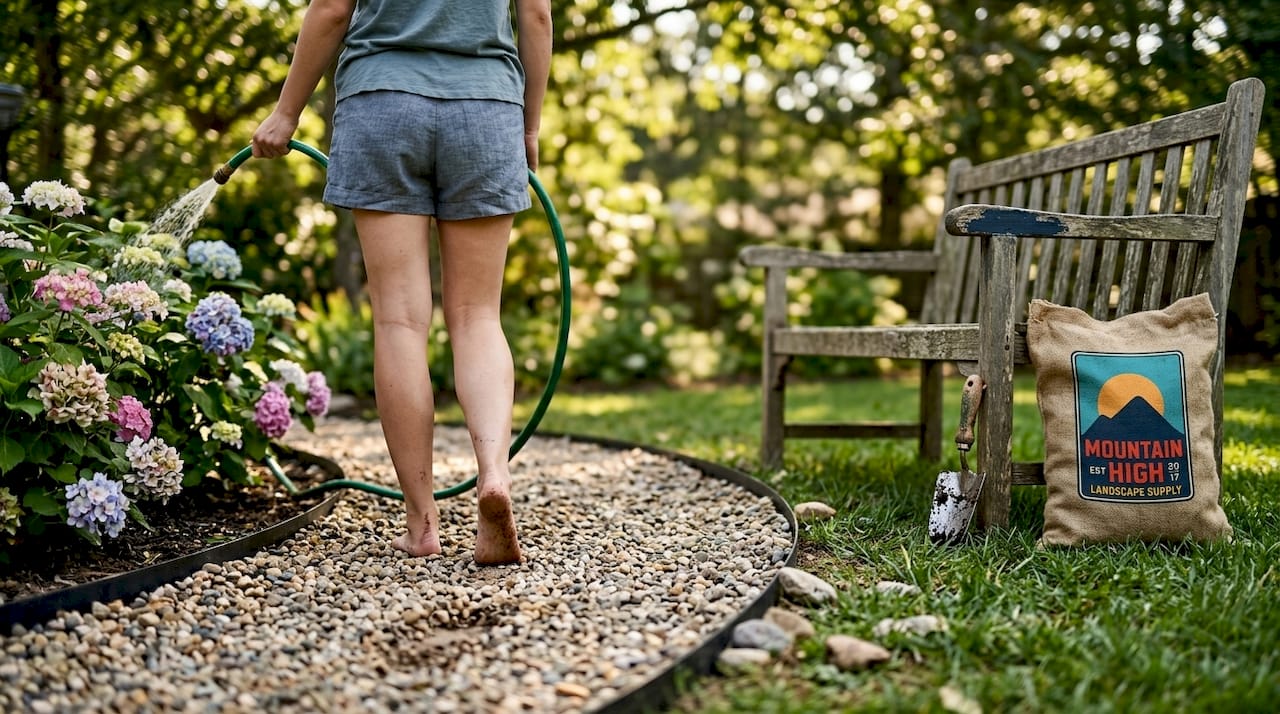
However, pea gravel’s rounded shape is also its biggest weakness. Because the stones don’t interlock, they roll and shift under pressure. As gravel experts confirm, pea gravel’s rounded shape causes displacement under vehicle traffic, making it a poor choice for most driveways without significant structural support underneath. On slopes, it can migrate downhill with every heavy rain.
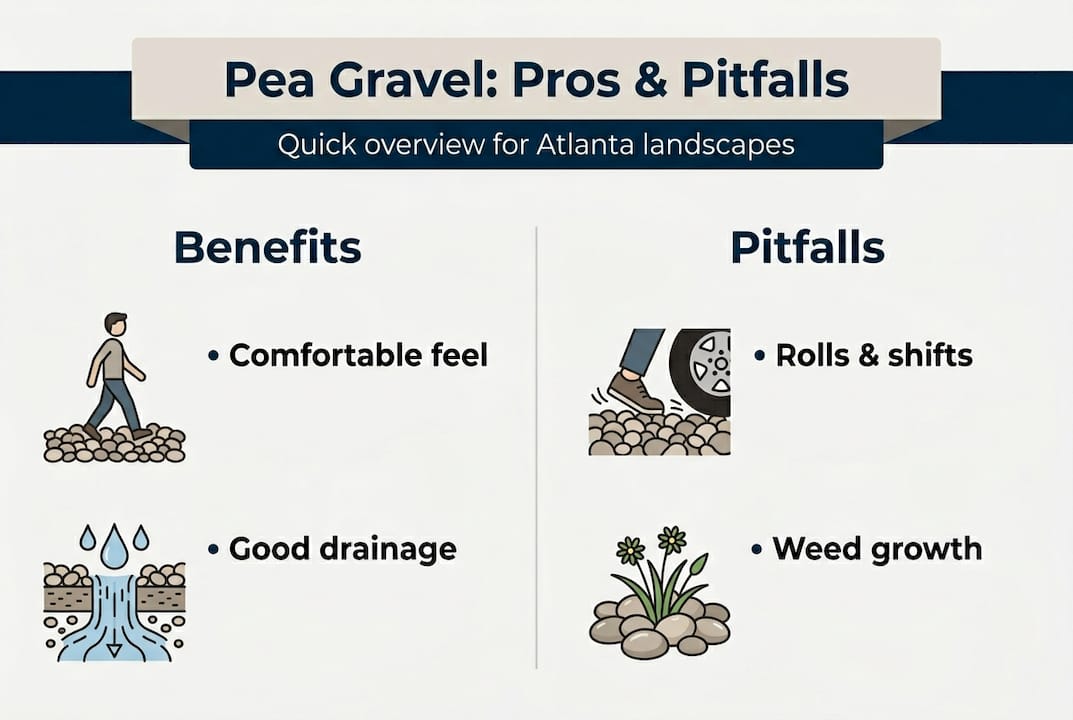
Weed pressure is another real concern. Without a proper barrier, weeds push through pea gravel readily, especially in Georgia’s warm, humid growing season.
Pea gravel vs. alternatives: a quick comparison
| Factor | Pea gravel | Decomposed granite | Crushed gravel |
|---|---|---|---|
| Comfort underfoot | High | Moderate | Low |
| Drainage | Excellent | Moderate | Good |
| Stability on slopes | Low | High | High |
| Weed resistance | Low (needs fabric) | Moderate | Moderate |
| Driveway suitability | Poor | Good | Excellent |
| Decorative appeal | High | Moderate | Low |
For a broader look at how different stones compare, our resource on selecting gravel for landscaping breaks down the options by project type.
Key advantages at a glance:
Key drawbacks to plan around:
Pro Tip: Always install a quality weed barrier fabric beneath pea gravel and use metal or stone edging around the perimeter. These two steps alone eliminate most of the common complaints people have about pea gravel.
Understanding the pros and cons sets up smart usage. Here’s how to use and install pea gravel the right way.
Pea gravel performs best in specific settings. Forcing it into the wrong application leads to frustration, but matching it to the right project produces results that are both functional and visually appealing. As gravel professionals consistently note, pea gravel excels in low-traffic paths, fire pits, dog runs, and garden beds where comfort and drainage matter more than structural rigidity.
For more creative uses and inspiration, our article on pea gravel for walkways shows how Atlanta homeowners are putting this material to work in their yards.
Step-by-step installation guide:
Industry guidance recommends a minimum compacted base depth of 2 to 3 inches beneath pea gravel in any area that receives regular foot traffic. Skipping this step is the single most common reason pea gravel paths feel unstable and sink unevenly over time.
For a full breakdown of preparation and base strategies, our gravel installation strategies guide covers everything from drainage planning to finishing details.
Pro Tip: Edging is not optional. Without a solid border, pea gravel will migrate into lawn areas, garden beds, and hardscape edges within a single season. Metal edging is the most durable choice for Atlanta’s clay-heavy soil, which shifts with seasonal moisture changes.
A little knowledge goes a long way. Here’s how to get the most from pea gravel and avoid headaches.
Most pea gravel problems are entirely preventable. The material itself is reliable when installed correctly, but shortcuts during setup create ongoing issues that frustrate homeowners and professionals alike. Knowing where things go wrong helps you plan a better project from the start.
Common mistakes that cause pea gravel problems:
For a broader look at how pea gravel compares to alternative materials, our guide on other gravel options helps you weigh the full range of choices.
For ongoing maintenance, a simple annual routine keeps pea gravel areas looking sharp. Rake the surface each spring to redistribute settled stones and expose any weed growth. Spot-weed by hand, then apply a fresh 1-inch top-off layer to restore depth and color. This process takes less than an hour for most residential areas and extends the life of your installation significantly. More detailed care advice is available in our pea gravel maintenance resource.
Pro Tip: Place a coarse-bristle doormat or a small section of stepping stones at any entry point near a pea gravel area. This dramatically reduces how much gravel tracks indoors and keeps your floors cleaner year-round.
After years of supplying gravel to Atlanta homeowners and contractors, we’ve seen a clear pattern. The people who end up unhappy with pea gravel almost always chose it for the wrong location or skipped the base preparation entirely. They heard it was affordable and attractive, decided it would work everywhere, and then wondered why it was rolling into the grass or growing weeds by midsummer.
Pea gravel is not a universal solution. It has a specific niche, and within that niche it performs beautifully. The problem is that many projects would genuinely be better served by angular crushed gravel or decomposed granite, materials that compact and lock together. Our guide on gravel selection insights helps clarify which material fits which project.
The most overlooked step, consistently, is base preparation. A proper compacted base transforms pea gravel from a frustrating, shifting surface into a stable, attractive feature. Accepting pea gravel’s strengths and working with them, rather than against them, is what separates a successful installation from a costly redo.
Ready to move forward with your pea gravel project? We’re here to make it straightforward.

At Mountain High Mulch, we supply premium pea gravel along with a full range of landscaping materials from our Marietta and Smyrna locations. Our team works with both homeowners and professional contractors across the Atlanta metro area every day, and we know what works in Georgia’s climate and soil conditions. Whether you need help choosing the right material, planning your base layers, or understanding the hardscape and softscape mix that fits your yard, we’re ready to help. Explore our Atlanta landscape supply guide to build your knowledge before you buy, or contact us directly for a personalized recommendation.
Pea gravel is not ideal for most Atlanta driveways because its rounded shape causes displacement under vehicle traffic. It can work in limited applications if installed over a thick compacted base with firm edging on all sides.
Install a permeable landscaping weed barrier fabric beneath the gravel before you pour it. As experts confirm, weeds grow easily without fabric, so this step is essential for low-maintenance results.
Pea gravel typically stays cooler than darker stones or concrete surfaces because its lighter, mixed tones reflect more sunlight and the gaps between stones allow air to circulate underneath.
A finished depth of 2 to 3 inches of compacted pea gravel provides stable footing and a clean, professional appearance for most residential paths and garden areas.
Install edging made from metal, stone, or durable plastic along the full perimeter of the gravel area. As gravel professionals note, pea gravel requires edging to contain it effectively, especially in areas with foot traffic or seasonal rain runoff.