Most homeowners assume any gravel surface drains well. Pour water on it and it disappears, right? Not always. Regular gravel driveways often include compacted layers with fine particles that block drainage and create runoff. To truly explain permeable gravel, you need to understand that it is an engineered system built around void space, specific particle sizes, and proper installation. This guide walks Atlanta homeowners and contractors through what permeable gravel is, which materials work best, how to install and maintain it, and how it compares to other permeable hardscape options.
| Point | Details |
|---|---|
| Permeability depends on void space | Open-graded gravel with minimal fines preserves voids that allow rapid water infiltration. |
| Correct installation is crucial | Separating drainage and structural layers with geotextile fabric and avoiding compaction of the permeable base maintains performance. |
| Regular maintenance sustains function | Sweeping and periodic pressure washing prevent clogging and extend permeable gravel lifespan. |
| Material selection affects drainage | Choosing proper gravel grades like #2 or #3 crushed stone ensures high infiltration rates suitable for Atlanta projects. |
| Atlanta soils may need underdrains | Low-permeability native soils require drainage outlets to prevent saturation and failure. |
To understand why permeable gravel performs differently than regular gravel, we first need to explore what sets it apart structurally.
Permeable gravel consists of engineered, open-graded aggregates that allow water to infiltrate through connected voids rather than shed off the surface. The key concept here is void ratio, which refers to the percentage of empty space between stone particles. Open-graded permeable gravel maintains a void ratio of 35 to 45 percent. That means nearly half the material’s volume is air space available for water to pass through.
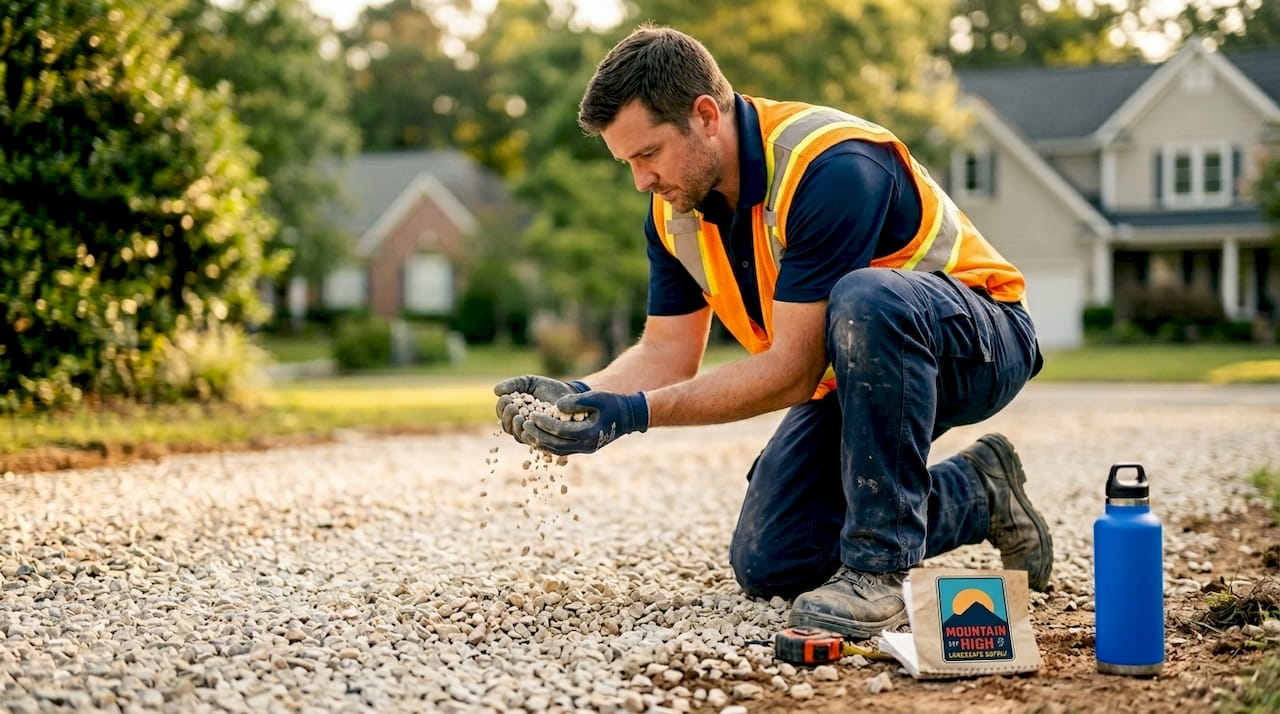
What makes this different from standard gravel is gradation. Open-graded gravel uses uniformly sized particles, which leaves consistent gaps between stones. Well-graded or compacted gravel mixes particles of many sizes together, and smaller particles fill the gaps between larger ones. This dramatically reduces void space. The result looks similar on the surface but behaves very differently under rain.
Fines are the enemy of permeability. Fines are the small, dust-like particles present in crusher run or poorly washed gravel. Even a small percentage of fines can fill the voids between larger stones and reduce drainage performance significantly. Understanding the drainage gravel types and uses available in your area helps you avoid this mistake from the start.
Key characteristics that define permeable gravel:
With a clear understanding of what permeable gravel is, let’s compare the main gravel types you can select for your drainage base layer.
Not all gravel sold at supply yards is suitable for permeable drainage. The difference between the right and wrong material can mean the difference between a system that manages a 2-inch Atlanta downpour and one that floods your driveway. Open-graded #2 or #3 crushed stone with particle diameters between 1 and 3 inches can achieve infiltration rates exceeding 100 inches per hour and typically costs $15 to $30 per ton, making it the top choice for drainage base layers.
Selecting the right material for your gravel landscaping projects comes down to the role each layer plays. Crusher run and well-graded mixes are fine for structural sub-base compaction, but they should never be used where drainage is needed. Their fines content effectively seals the layer.
Key points when sourcing gravel for permeable applications in Atlanta:
Pro Tip: When your delivery arrives, grab a handful of stone and squeeze. If your hand comes away coated in gray dust, the material contains too many fines for a drainage layer. Return it or redirect it to a structural layer.
Knowing the right materials is vital, but installing them correctly is what ensures long-term permeability and performance.
A well-designed permeable gravel installation follows a precise sequence. Skipping steps or changing the order creates problems that are expensive to fix after the fact.
Pro Tip: Confirm gradation and cleanliness of all stone before it goes into the ground. Once layers are covered, fixing a contaminated base layer means tearing the whole surface out.
Understanding gravel drainage tips specific to your site conditions before you begin can save significant time and money during installation.
Once installed correctly, maintaining an open void structure is key to ensuring your permeable gravel system continues to function effectively.
Hydraulic performance of permeable gravel deteriorates over years due to progressive clogging. Regular sweeping and biennial pressure washing with vacuum suction restore infiltration capacity. Atlanta’s urban environment adds to this challenge. Pollen, tree debris, fine red clay particles, and vehicle residue all contribute to void clogging over time. Without a maintenance plan, a well-built system can lose most of its infiltration capacity within five years.
“Maintenance frequency, not concept, limits long-term performance of permeable pavements.”
Common clogging causes and solutions:
Using crusher dust or compacting the drainage layer reduces permeability by filling voids, a common homeowner and installer mistake that is often made during repairs or additions. If you ever add material to top up a worn surface, use only clean, open-graded stone.
The gravel driveway maintenance guide for Georgia homeowners outlines a practical seasonal schedule for keeping permeable gravel systems performing well year-round.
Pro Tip: Keep a 3-inch buffer of vegetation cleared away from gravel edges. Grass and root systems at the perimeter introduce fines and organic matter directly into your drainage layer.
Understanding alternative permeable hardscape options can help you decide whether permeable gravel fits your project best.
Pervious concrete, porous asphalt, and permeable interlocking concrete pavement all depend on an open-graded aggregate reservoir layer with roughly 40 percent void space, but permeability rates and maintenance needs differ considerably. Knowing these differences helps you choose the right surface for your specific project in the Atlanta area.
| Surface type | Void content | Infiltration rate | Maintenance level | Typical application |
|---|---|---|---|---|
| Permeable gravel | 35 to 45% | Very high | Moderate (raking, topping up) | Driveways, paths, parking |
| Pervious concrete | 15 to 25% | 3 to 8 in/min | Low to moderate | Driveways, lots, plazas |
| Porous asphalt | 16 to 20% | 3 to 6 in/min | Low to moderate | Roads, parking, driveways |
| PICP (interlocking pavers) | Joint-based | Moderate | Low (joint cleaning) | Plazas, patios, driveways |
Permeable gravel offers the highest raw infiltration rate because water moves through open air space between loose stones rather than through pores in a rigid material. However, it requires periodic topping up as stones shift, and weed control is more active. The Atlanta landscape hardscape guide covers material selection across all these surface types for residential and commercial projects.
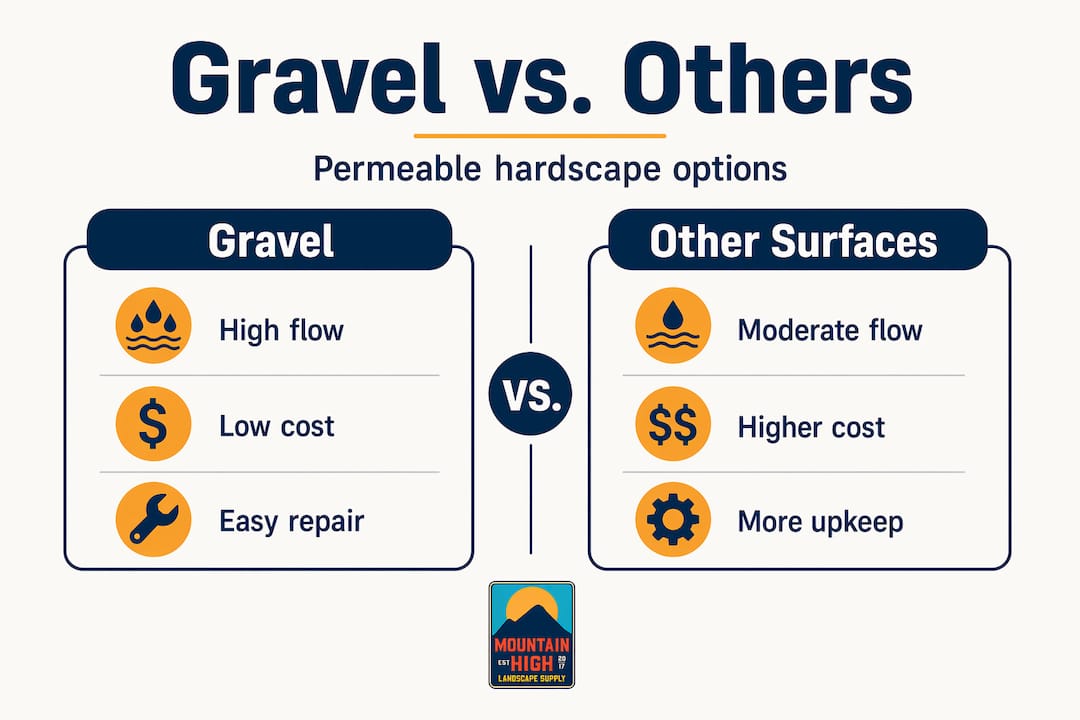
Permeable gravel is often the most cost-effective starting point and the easiest to repair. Other systems may suit high-traffic commercial applications better, but for most Atlanta residential driveways and pathways, well-installed permeable gravel performs reliably when maintained properly.
Here is the perspective we hold after years of supplying gravel to Atlanta homeowners and contractors: most permeable gravel failures are not material failures. They are installation and maintenance failures.
We see this pattern regularly. A homeowner invests in quality open-graded stone, then a well-meaning contractor uses a plate compactor across the entire surface to “firm it up.” Voids are crushed. The drainage layer becomes nearly impermeable. Six months later, the homeowner calls wondering why the driveway floods. The stone was fine. The process was not.
The best gravel or stone cannot maintain permeability if fine soil migrates into voids or installers compact drainage layers incorrectly. Geotextile fabric is not optional. It is the element that preserves your investment over a 5 to 10 year timeline. We recommend treating it as essential as the stone itself.
Long-term clogging driven by sediment and organic debris is climate-dependent. Atlanta’s tree canopy, red clay soil, and seasonal pollen loads create a challenging environment for permeable surfaces. A system installed in suburban Marietta with mature oak trees overhead will clog faster than the same system in an open landscape. That reality needs to be part of your maintenance planning, not a surprise three years in.
“Ignoring maintenance and installation principles turns permeable gravel into a drainage liability.”
We encourage every homeowner and contractor working on a permeable gravel driveway project to have a conversation about soil conditions, compaction discipline, and a written maintenance schedule before breaking ground. The material is straightforward. The discipline around installing and maintaining it is where success is actually built.
Pro Tip: When hiring a contractor for permeable gravel installation, ask specifically how they handle the drainage layer. If they say they compact everything uniformly, find someone who understands the difference.
At Mountain High Landscape Supply, we stock a full range of open-graded crushed stone and drainage gravel specifically suited to permeable base layer applications across the Atlanta metro area. Our team understands Atlanta’s clay-heavy soils, seasonal rainfall patterns, and the installation details that determine whether a permeable gravel system performs for years or fails within months.

We carry premium landscape materials including the #2 and #3 crushed stone grades ideal for drainage base layers, clean pea gravel for surface applications, and geotextile fabrics to complete your permeable system. Our staff can help you calculate quantities, confirm gradation specs, and recommend the right combination for your specific project. Visit our Marietta or Smyrna locations or use our delivery service throughout the metro area. Explore our full range of quality landscape materials for 2026 or consult our Atlanta landscape supply guide to plan your project with confidence.
Permeability depends on void ratio and the absence of fines filling voids. Permeable gravel uses uniformly sized, washed stones that leave consistent connected gaps for water to flow through freely.
Fine particles fill voids between larger stones, significantly reducing the open space available for water to pass through. Even a small percentage of fines in the drainage layer can cut infiltration capacity dramatically.
Compaction crushes the void spaces between gravel particles, which are the pathways water uses to drain through the layer. The permeable layer must stay uncompacted to preserve the high void ratio that makes the system functional.
Regular sweeping plus biennial pressure washing restores infiltration capacity by removing clogging sediment and organic debris. Routine raking and quarterly vacuum sweeping in between keep the surface performing consistently.
Atlanta’s clay-heavy soils often have very low infiltration rates. If native soil infiltration is below 0.5 inches per hour, an underdrain should be installed to prevent saturation and maintain system stability over time.