Pine straw mulch is defined as the dried, shed needles from pine trees, collected, cleaned, and baled for use as a lightweight, breathable organic mulch. It is one of the most practical and natural mulching materials available to homeowners and gardeners. Known in the landscape industry simply as “pine straw,” it supports moisture retention, weed suppression, soil health, and erosion control. If you are researching what is pine straw mulch and whether it belongs in your garden or yard, this guide gives you a clear, honest answer.
Pine straw delivers a wide range of benefits that make it a top choice for home gardens and landscape beds. Its airy, interlocking needle structure allows water and air to pass through freely, which means plant roots stay healthy and well-fed. Here is what pine straw does for your soil and plants:
Each of these benefits compounds over time. The slow decomposition rate means pine straw keeps working for your garden long after a single application.
Pro Tip: Spread pine straw around the base of shrubs and trees in fall to protect roots from temperature swings during winter months.
The most common concern about pine straw is that it will make your soil too acidic. Scientific consensus has debunked this myth. Fresh pine needles do carry a low pH of approximately 3.5, but the aging and decomposition process stabilizes them to a near-neutral pH that poses no threat to most garden plants.
“Gardeners often fear pine straw acidity, but experts emphasize the natural buffering during decomposition, making it safe for diverse plants.” — Almanac.com
Pine straw is safe to use around a broad range of plants, including:
Pine straw supports vegetable gardens and ornamental beds because it promotes soil aeration without inhibiting plant growth. The slow decomposition also feeds soil microbes gradually, which improves soil structure and nutrient availability over multiple seasons. If you are growing blueberries or other acid-loving plants, pine straw is actually a preferred choice. For neutral-soil plants, it remains perfectly safe.
Pine straw and wood-based mulches each have strengths. The right choice depends on your specific landscape needs, budget, and maintenance preferences.
| Feature | Pine straw | Wood chips or bark |
|---|---|---|
| Weight and ease of spreading | Lightweight, easy to handle | Heavy, more physical effort |
| Longevity | Lasts 1–2 years before replenishment | Varies; often needs annual refresh |
| Slope performance | Excellent, needles interlock | Poor, washes away more easily |
| Weed suppression density | Good, slightly less dense | Dense, strong weed barrier |
| Soil aeration | High, breathable texture | Can compact over time |
| Application effort | Low, bale form reduces strain | Moderate to high |
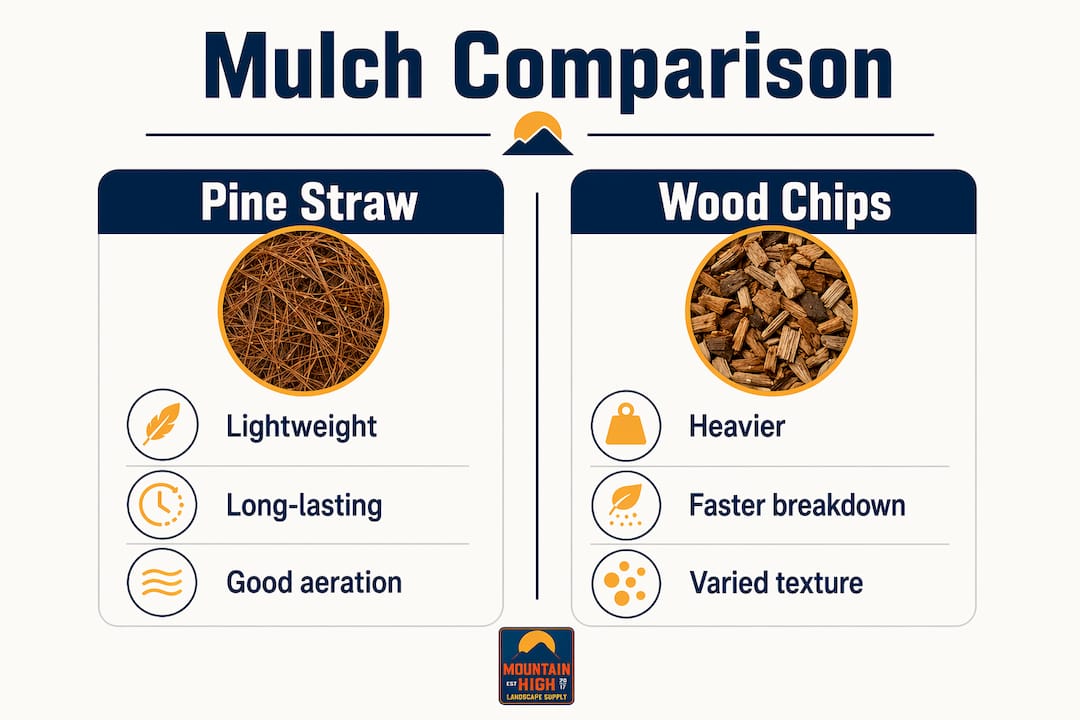
Pine straw’s resin content slows its breakdown, which is why it outlasts many wood mulches in terms of functional performance. Wood chips may provide a denser weed barrier, but they are heavier and can compact into a layer that restricts water flow. For slopes, sloped beds, or areas where erosion is a concern, pine straw is the stronger choice. For flat, high-traffic beds where maximum weed suppression is the priority, wood bark can be a reasonable alternative.
Pro Tip: If you want to explore other sustainable mulch options alongside pine straw, comparing materials by application zone and plant type gives you the clearest picture.
Applying pine straw correctly takes less effort than most homeowners expect. Follow these steps for the best results:
Pine straw works especially well in planting beds, shrub borders, slopes, and around tree foundations. Its lightweight bale form means spreading pine straw causes far less back strain than hauling bags of wood chips. For professional-grade results in larger areas, you can find detailed pine straw installation guidance tailored to Georgia landscapes.
Pro Tip: Pine straw’s color fades faster than its function declines. A thin top-up layer in spring restores appearance without the cost of a full reapplication.
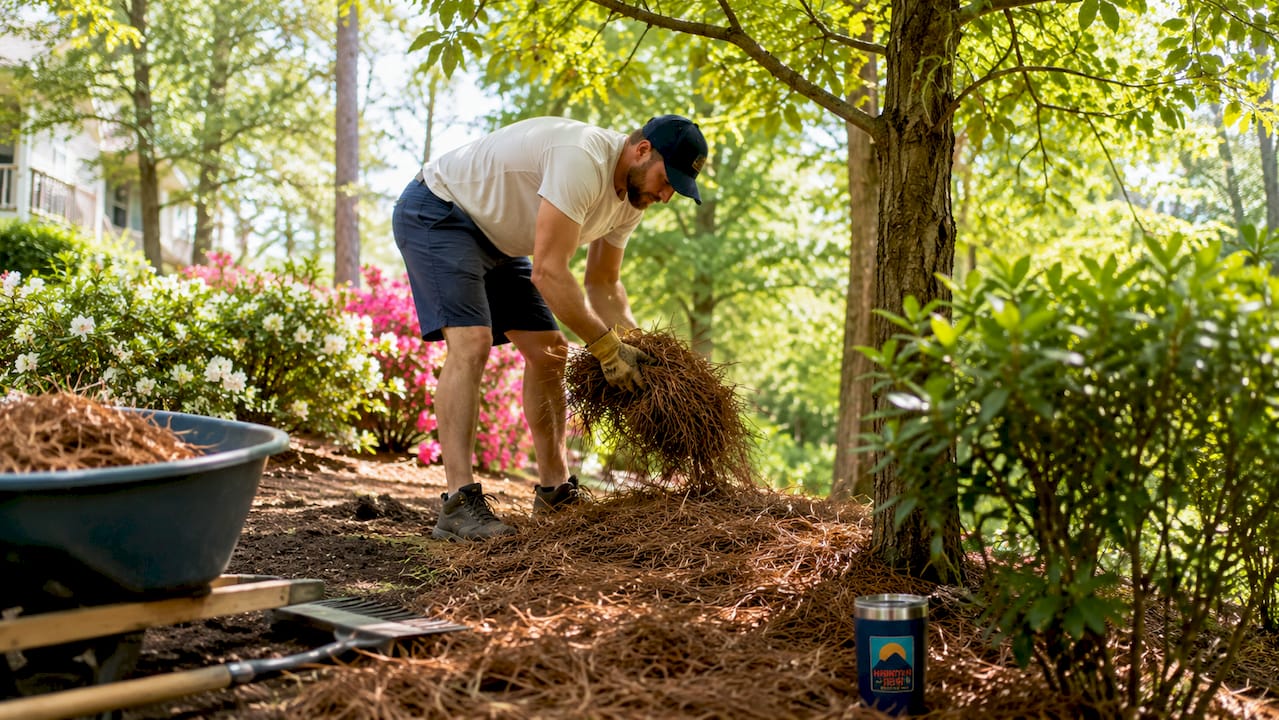
Pine straw mulch is the most practical organic mulch for homeowners who want long-lasting soil protection, easy application, and reliable erosion control without heavy lifting.
| Point | Details |
|---|---|
| Definition and origin | Pine straw is dried pine needles, collected and baled as a natural, renewable mulch material. |
| Acidity myth | Pine straw does not significantly raise soil pH; decomposition stabilizes needles to near-neutral. |
| Slope and erosion control | Interlocking needles anchor pine straw on slopes better than wood chips or bark. |
| Application depth | Apply a 2 to 3-inch layer for optimal weed suppression, moisture retention, and root insulation. |
| Maintenance frequency | Only bare spots need refreshing annually; full replacement is rarely required after year one. |
After years of working with homeowners across Georgia, I have seen the same pattern repeat itself. Gardeners spend more money and effort on heavy wood mulch, then struggle to reapply it every season. Pine straw changes that equation completely.
The first time I spread pine straw on a sloped bed in late fall, I was struck by how quickly it locked into place. No raking it back after rain. No compaction by spring. The soil underneath stayed loose and dark, full of earthworm activity by the following year. That kind of long-term soil health improvement is hard to see in a bag of wood chips.
The acidity concern is the one I address most often. Homeowners read something online and assume pine straw will kill their vegetables or ornamentals. The science says otherwise, and I have seen blueberry beds and mixed flower borders thrive under pine straw for multiple seasons without any pH problems. Trust the decomposition process. It does the buffering for you.
My honest recommendation: start with pine straw on any sloped or irregular bed, and use it as your default for shrub borders and tree rings. You will spend less time reapplying and more time enjoying the results.
— Eric
Mountainhighmulch supplies premium pine straw mulch to homeowners and gardeners across Atlanta, Marietta, Smyrna, and the surrounding metro area. Whether you need a few bales for a small garden bed or a full delivery for a large landscape project, our team is ready to help you get the right amount at the right time.

We also carry a full range of complementary landscape materials, including products that support mulch and moisture retention across every season. Pick up from our Marietta or Smyrna locations, or schedule delivery straight to your property. Our expert staff can walk you through application rates, coverage estimates, and the best materials for your specific beds and slopes. Contact Mountainhighmulch today to get started.
Pine straw mulch is made from the dried, shed needles of pine trees, collected and baled for use as a lightweight organic mulch. It is a natural byproduct of pine trees, similar in origin to fallen leaves.
Pine straw does not significantly increase soil acidity. Fresh needles have a low pH, but decomposition stabilizes them to near-neutral, making pine straw safe for most garden plants.
Apply pine straw in a 2 to 3-inch layer for best results. This depth suppresses weeds, retains moisture, and regulates soil temperature without blocking airflow to roots.
Pine straw typically lasts 1–2 years before needing replenishment. After the first application, only thin or bare spots require a top-up each year.
Pine straw outperforms wood chips on slopes because its interlocking needle structure resists washing away during heavy rain. Wood chips and bark are more likely to shift or erode on uneven ground.