Picking the right mulch sounds simple until you’re standing in front of a dozen options at the supply yard, wondering which one actually works for Atlanta’s heavy clay soil, humid summers, and the azaleas your neighbor keeps bragging about. The wrong choice can compact your soil, invite pests, or leave your beds looking tired by midsummer. The right choice, though, cuts your watering time, smothers weeds, and feeds your soil season after season. This guide walks you through the key criteria, the most popular mulch types, and the practical decisions that separate thriving Atlanta landscapes from frustrating ones.
| Point | Details |
|---|---|
| Mulch depth matters | Spread 2-3 inches for most mulch and up to 6 inches for compost for best results. |
| Choose mulch by site needs | Match mulch type to your garden’s plants, soil, and how you’ll use each area. |
| Proper installation prevents problems | Keep mulch away from trunks and avoid piling it too deep to prevent rot and pests. |
| Organic mulch boosts soil health | Organic options improve soil structure, suppress weeds, and save on watering. |
Before you buy a single cubic yard, you need a clear set of criteria. Not all mulch performs the same way, and Atlanta’s climate adds specific demands that generic gardening advice often ignores.
Here are the core factors to evaluate:
Atlanta’s clay soils are a real challenge. They drain slowly, compact under foot traffic, and can suffocate roots when mulch is applied incorrectly. Organic mulches like wood chips and compost break down and improve clay structure over time, which is one of the benefits of mulching that pays off year after year.
Depth matters more than most people realize. According to UGA Extension mulch guidance, you should apply mulch in 2-3 inch layers for optimal weed suppression and moisture retention. Compost mulch can go up to 6 inches. Going deeper than that risks suffocating roots and creating anaerobic conditions in the soil.
Always keep mulch pulled back 2 to 6 inches from tree trunks. Piling it against the bark traps moisture and creates an entry point for rot and insects.
Pro Tip: Test your soil pH before choosing mulch, especially if you’re planting acid-loving shrubs. A simple test kit from a garden center costs under $15 and can save you from a costly mistake. You can also explore the range of shredded mulch types to find the best fit for your specific beds.
With the core criteria in mind, let’s break down the main mulch options for Atlanta gardens.
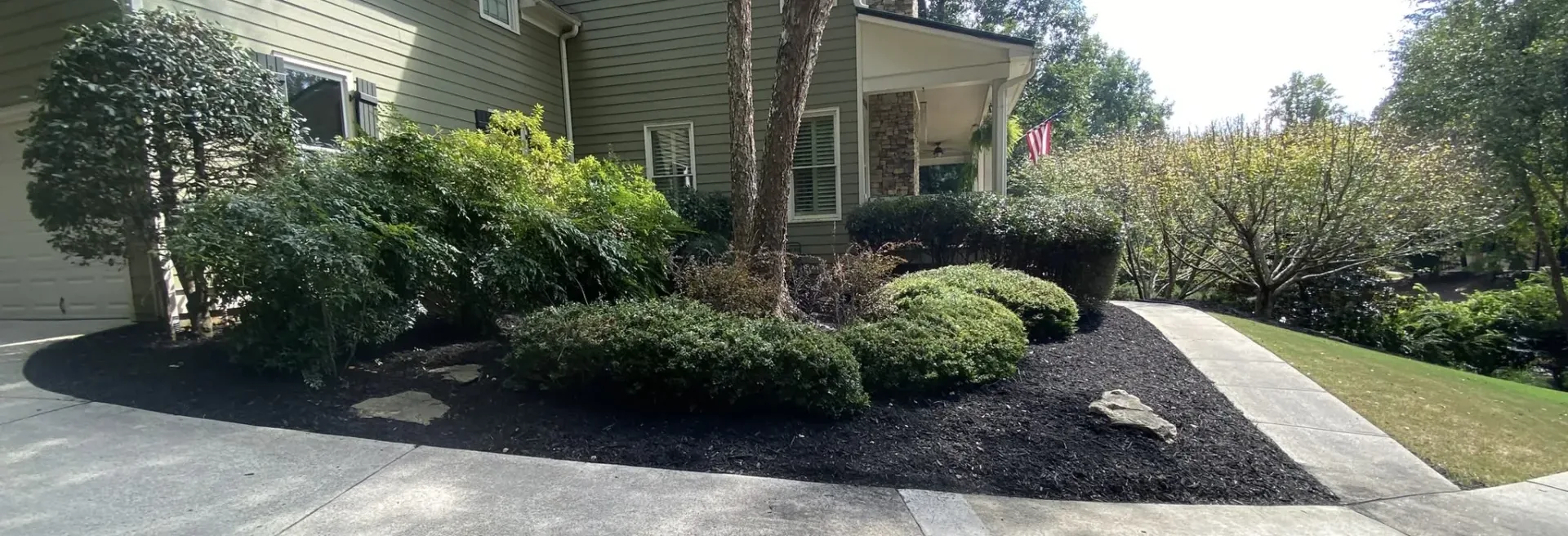
Wood mulch is the most widely used option in the metro area. It’s available in several textures, holds moisture well, and works in almost any bed type. It breaks down over one to three years, adding organic matter to your soil as it does.
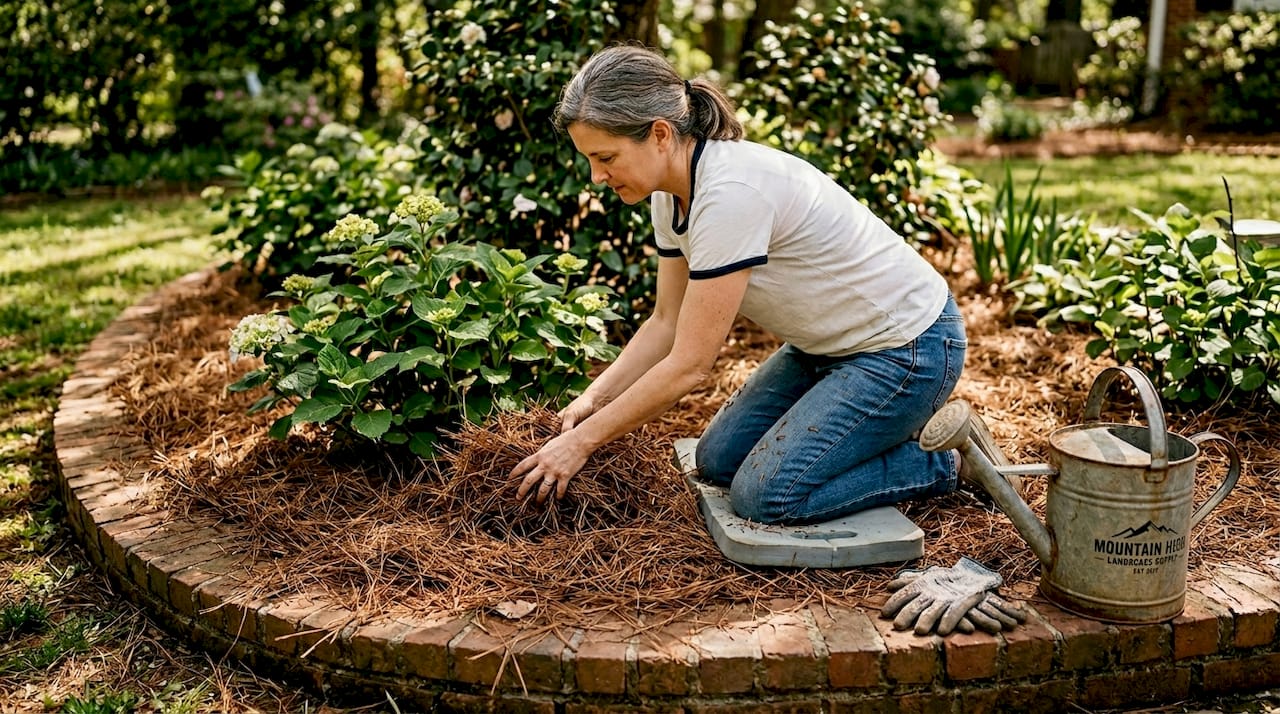
Pine straw is a Southern staple and for good reason. It’s lightweight, easy to spread, and naturally acidifies soil as it decomposes. It’s an excellent choice for azaleas, camellias, blueberries, and gardenias. Be cautious using it around plants that prefer neutral or alkaline soil.
Compost mulch is the top performer for vegetable beds and perennial gardens. It feeds the soil directly, improves drainage in clay, and supports beneficial microbial activity. The tradeoff is that it breaks down faster and needs more frequent replenishment.
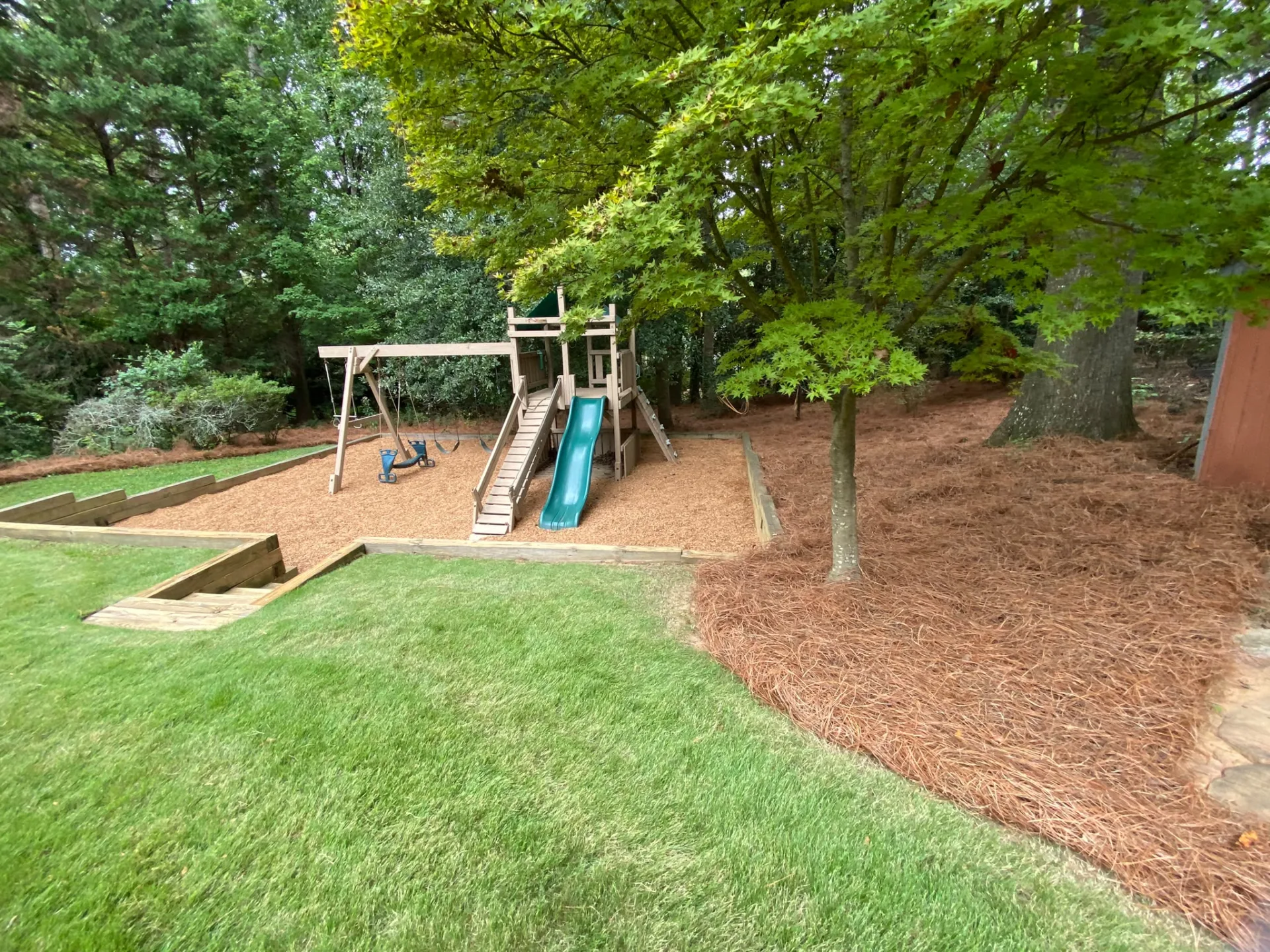
Rubber mulch is made from recycled tires and lasts for many years without breaking down. It works well for play areas and paths where durability matters more than soil improvement. It does not add nutrients or improve soil structure.
Stone and gravel are permanent options that work well in drainage areas, around foundations, or in low-maintenance decorative beds. They do not decompose, so they offer no soil benefit, and they can raise soil temperature significantly in Atlanta’s summer heat.
Organic mulches deliver measurable results. Organic mulches reduce evaporation by 25 to 50 percent and suppress weeds by up to 95 percent. That’s a significant performance advantage over inorganic options for most residential landscapes.
| Mulch type | Soil benefit | Weed suppression | Lifespan |
|---|---|---|---|
| Wood chips | High | High | 12-18 months |
| Pine straw | Moderate | Moderate | 6 – 8 months |
| Compost | Very high | Moderate | 6-12 months |
| Rubber | None | High | 10+ years |
| Stone/gravel | None | Moderate | Permanent |
Pro Tip: For most Atlanta homeowners, shredded hardwood or pine bark is the best all-around starting point. See our guide on choosing the right mulch for a deeper breakdown by plant type and location. You can also browse Georgia mulch varieties to compare textures and colors.
Now that you know the options, see how they stack up against each other based on the most important factors.
The table below gives you a side-by-side view of how each mulch type performs across the criteria that matter most to Atlanta homeowners and landscape designers.
| Factor | Wood chips | Pine straw | Compost | Rubber | Stone |
|---|---|---|---|---|---|
| Cost per yard | Moderate | Low | Moderate | High | High |
| Breakdown rate | Slow | Moderate | Fast | None | None |
| Moisture retention | High | Moderate | High | Low | Low |
| Weed suppression | High | Moderate | Moderate | High | Moderate |
| Soil improvement | Yes | Yes | Yes | No | No |
| pH effect | Neutral | Acidifying | Neutral | None | Varies |
| Eco-friendly | Yes | Yes | Yes | Recycled | Varies |
One often-overlooked benefit of organic mulch is its role in reducing landscape waste. Mulching can cut watering needs by half and keeps as much as 20 percent of landscape waste out of landfills. That’s a meaningful environmental benefit alongside the practical garden advantages.
Here’s a quick scenario guide to help you decide:
If you’re new to ordering in bulk, it helps to understand mulch supply terms before you place an order. Knowing the difference between a cubic yard and a bag, or how coverage is calculated, prevents surprises at delivery. For a broader look at how mulch fits into a successful landscape plan, see why mulch importance in landscaping is central to long-term results.
Choosing the right mulch is just the start. Proper installation ensures it does its job and looks great.
The most common mistakes we see in Atlanta yards are surprisingly easy to avoid once you know what to look for. Follow these steps for a clean, effective application:
The most damaging mistake is the so-called mulch volcano. This is when mulch is piled high against a tree trunk, sometimes a foot or more deep. According to UGA mulch application guidance, you should avoid mulch volcanoes around trees and keep mulch 2 to 6 inches from trunks to prevent rot and pests. We see this error constantly in Atlanta neighborhoods, and it causes long-term tree damage that’s expensive to reverse.
A properly mulched tree has a flat, donut-shaped ring of mulch, not a cone. The center, right at the trunk, should be clear.
Pro Tip: If you’re unsure how much to order, our team can help you calculate based on your bed dimensions. Check our mulch delivery advice for tips on timing and placement, or review our mulch installation steps for a full walkthrough.
Finally, let’s match each Atlanta landscape challenge with the optimal mulch solution.
Atlanta’s landscapes are not uniform. You might have dense shade in the backyard, heavy clay in the front, and a raised vegetable bed on the side. Each situation calls for a different approach.
Pro Tip: If you’re working on a larger project across multiple zones, our mulch experts in Sandy Springs can help you plan quantities and types for each area without overcomplicating the order.
We’ve worked with thousands of Atlanta homeowners and landscape designers, and the pattern we see most often is not choosing the wrong mulch. It’s applying the right mulch the wrong way.
National gardening content is written for a broad audience. It doesn’t account for Atlanta’s specific combination of heavy clay, high summer humidity, and the particular pest pressures that come with our region. Homeowners follow that generic advice and then wonder why their beds still struggle.
The other common trap is overapplication. More mulch does not mean better results. A 6-inch pile of wood chips in a shrub bed is not twice as effective as 3 inches. It’s actually harmful. It blocks oxygen, traps excess moisture, and creates conditions where fungal disease thrives.
Our honest recommendation: start with premium mulch for Atlanta conditions, follow local UGA Extension guidance rather than national sources, and treat mulch as a long-term soil investment rather than a cosmetic finish. The landscapes that look best in Atlanta are the ones where the mulch is working quietly beneath the surface, improving soil year after year.
You now have a clear framework for choosing, comparing, and applying mulch in Atlanta’s unique landscape conditions. The next step is putting it into practice with quality materials you can trust.

At Mountain High Landscape Supply, we carry a full range of options to match every project and budget. Whether you need red mulch for landscapes that adds bold color to your curb appeal, or natural mulch options that blend seamlessly into your garden, we have you covered. Not sure how much to order? Our team can walk you through the math. If you’re new to bulk ordering, our guide on mulch supply terminology is a great starting point. Pick up from our Marietta or Smyrna locations, or schedule delivery across the Atlanta metro area.
For most beds, apply 2-3 inch layers of standard mulch, and up to 6 inches for composted mulch. Spread evenly to avoid compressing roots or creating dry pockets.
Organic mulches improve clay soil structure most effectively. Wood chips and compost are the top choices for loosening Atlanta’s dense clay over time.
Keep mulch 2 to 6 inches away from the base of tree trunks. Piling mulch against bark traps moisture and creates conditions for rot and pests.
Yes. Pine straw gradually acidifies soil pH as it breaks down, which benefits azaleas, blueberries, and camellias but may require pH testing for other plants.
Organic mulches reduce evaporation by 25-50%, which means you water less often and your plants stay hydrated longer between rain events.