TL;DR:
- Successful Atlanta landscaping requires site-specific assessment and native plant selection.
- Using quality regional materials and proper soil preparation ensures long-lasting, thriving gardens.
- Correct planning, design, and maintenance are key to maximizing investment and curb appeal.
You’ve spent real money on plants, mulch, and sod, only to watch them struggle through Atlanta’s brutal summers and unpredictable winters. It’s one of the most common frustrations we hear from homeowners across the metro area. The problem usually isn’t effort. It’s that most landscaping advice ignores Atlanta’s specific conditions, including the clay-heavy soil, the intense heat, and the fact that Atlanta sits in USDA Zone 7b-8a where native species like oakleaf hydrangea, yaupon holly, coneflower, and muhly grass dramatically outperform non-native alternatives. This guide gives you a structured, practical approach from assessment through final maintenance so your yard actually thrives.
| Point | Details |
|---|---|
| Plan with local insight | Assess your Atlanta yard’s light, soil, and layout before any landscaping begins. |
| Choose native plants | Native Georgia species like hydrangea and muhly grass thrive with less water and care. |
| Invest in quality materials | Using premium mulch, topsoil, and sod ensures better results and fewer headaches. |
| Follow a step-by-step method | Tackle design, installation, and finishing in order for lasting, beautiful results. |
| Avoid common mistakes | Skipping soil prep or ignoring plant zones can undermine your entire landscaping project. |
To get transformative results, you need to start with a clear plan based on what your yard can support in Atlanta’s climate. Skipping this step is the single biggest reason DIY landscaping projects fall short.
Begin by walking your yard at different times of day and noting where sunlight falls. Shade patterns shift dramatically in Atlanta between winter and summer. A bed that gets six hours of full sun in March might be partially shaded by a mature tree canopy in July. Document both conditions.
Next, evaluate your soil. Atlanta’s Piedmont region is known for dense red clay. Clay soil drains poorly, compacts easily, and suffocates roots when unAmended. A basic soil test from your local UGA Extension office reveals your pH, nutrient levels, and organic matter content. Most Atlanta soils benefit from added organic material and adjusted pH before planting anything.
Check your yard’s grading and drainage patterns too. Pooling water after rain signals poor drainage, which can rot roots and turn a beautiful bed into a muddy mess. Note any slopes, low spots, and existing hardscape like driveways and walkways.
Key questions to ask yourself before designing:
Atlanta is in USDA Zone 7b-8a, which means plant hardiness, heat tolerance, and drought resistance all matter enormously when selecting species. Pairing climate knowledge with your site conditions is the core of a successful design.
Once you’ve assessed the site, sketch a simple layout. You don’t need professional software. Graph paper works fine. For homeowners who want a more visual preview, a garden render guide can help you visualize plant placement and bed shapes before you break ground. Checking out the latest Atlanta landscaping trends is also a smart way to align your design with what works well locally right now.
| Site factor | What to look for | Why it matters |
|---|---|---|
| Sunlight | Full sun, part shade, deep shade | Determines plant selection |
| Soil type | Clay, loam, sandy | Affects drainage and fertility |
| Drainage | Standing water, slopes | Prevents root rot and erosion |
| Existing features | Trees, structures, utilities | Shapes layout and bed placement |
| Microclimates | Hot west-facing walls, shaded areas | Influences watering and plant health |
Pro Tip: Photograph your yard in every season over a full year before finalizing any design. Those photos reveal seasonal gaps in color, problem drainage spots after rain, and where the yard looks dull in winter.
Once you know what you want from your yard, it’s time to gather the right tools and materials for a smooth installation. Buying the wrong stuff, or skimping on quality, creates expensive problems down the road.
Essential tools for your project:
The tools matter, but the materials matter even more. Premium topsoil rich in organic matter gives roots a strong start. River sand blended into clay-heavy Atlanta beds improves drainage without creating a concrete-like hardpan that cheap sand can produce. Quality mulch insulates soil temperature, retains moisture during Atlanta’s dry spells, and breaks down slowly to feed the soil over time.
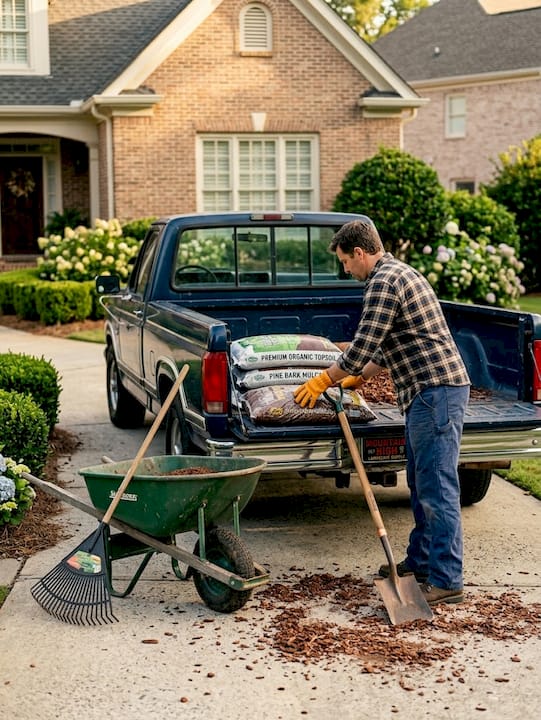
Smart material choices protect your investment. Landscape improvements yield up to 217% ROI, but only when the right regional products support them. Local native materials also cut water use significantly in the Georgia Piedmont, which means lower water bills and a landscape that survives summer heat without constant intervention.
| Material | Basic option | Premium option | Why upgrade matters |
|---|---|---|---|
| Mulch | Dyed wood chips | Double-ground hardwood or pine straw | Better moisture retention, healthier soil |
| Topsoil | Generic fill dirt | Screened, organic-rich topsoil | Stronger root development |
| Sand | Play sand | Washed river sand | Consistent drainage, no chemical risk |
| Sod | Big box store rolls | Fresh-cut regional varieties | Better root establishment in Atlanta soil |
For a detailed breakdown of which materials fit which project type, the Atlanta residential supply guide is an excellent reference. If you’re including stone or gravel features, consult a hardscaping materials list tailored to Georgia projects.
Pro Tip: Invest in ergonomic-handled tools. A good ergonomic shovel or pruner reduces fatigue by as much as 30 percent on large projects. When you’re not tired, you work more accurately and finish faster.
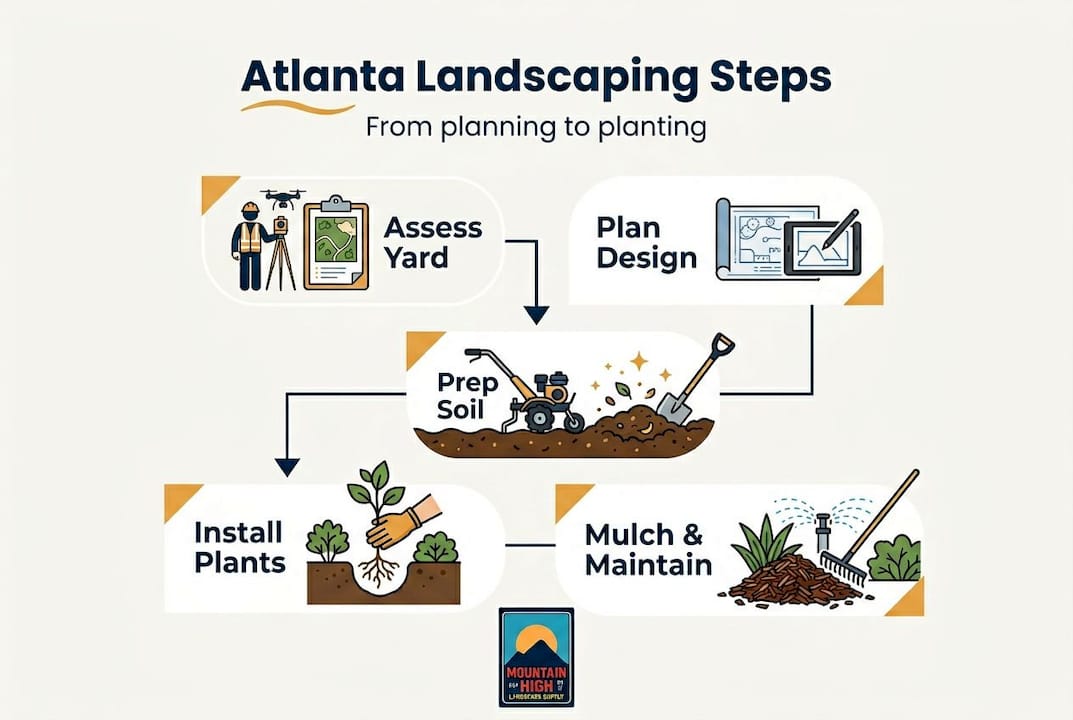
With supplies in hand, you’re ready for the most satisfying part: breaking ground and transforming your landscape, one step at a time.
Clear the site. Remove weeds, dead plants, and debris. Pull roots when possible rather than cutting them, since left-in roots encourage regrowth. Mark bed edges with spray paint or a garden hose to visualize the layout before you dig.
Test and amend your soil. Based on your soil test results, add lime to raise pH or sulfur to lower it. Work 3 to 4 inches of organic topsoil into existing clay using a tiller or a heavy fork. Good soil preparation is the foundation for everything.
Install hardscape elements first. Lay stepping stone paths, build retaining walls, or set patio pavers before planting. Installing hardscape after plants are in place damages roots and undoes all your careful planting work.
Build your planting beds. Mound amended soil 4 to 6 inches above grade in planting areas. This slight elevation improves drainage and creates a visual definition between lawn and garden beds.
Select and install your plants. For Atlanta yards, native species like oakleaf hydrangea, yaupon holly, coneflower, and muhly grass deliver low-maintenance performance and strong visual impact across all four seasons. Place taller plants toward the back of beds, shorter ones at the front for layered visual depth.
Apply mulch. Spread 2 to 3 inches of premium mulch around plants, keeping it pulled back 2 inches from stems to prevent rot. Mulch regulates soil temperature, reduces watering needs, and gives beds a polished, finished look. For specific guidance, our mulch installation tips walk you through technique. You can also see what professional mulch installation looks like on real Atlanta projects.
Install sod in lawn areas. Lay sod pieces in a staggered brick pattern to avoid visible seams. Press edges firmly together and tamp lightly. Water immediately and deeply.
Finish edges and clean up. Use an edging tool to cut a clean line between beds and lawn. Remove all debris, rinse hard surfaces, and do a final visual walkthrough.
Safety reminder: Always lift with your legs, not your back, when moving bags of soil, stone, or mulch. Use knee pads when planting at ground level. Wear safety glasses when operating any power tools or cutting equipment. Proper body mechanics prevent injuries that can sideline your project entirely.
Pro Tip: Water deeply right after installation, delivering at least 1 inch of water to settle roots and eliminate air pockets. Timing matters too. Early morning and evening watering reduces evaporation. Midday watering in Atlanta’s summer heat loses a significant portion of water before it even reaches roots.
If you want to build momentum before the heat arrives, reviewing seasonal landscape projects designed for Georgia’s cooler months gives you a realistic timeline to follow.
Even with a solid plan and great materials, common pitfalls can trip up even experienced DIYers. Here’s how to keep your project on track and sustainable in Atlanta’s climate.
Mistakes that derail Atlanta yard projects most often:
“Most mistakes trace back to not matching materials and plants to Atlanta’s specific climate. A beautiful-looking yard on Pinterest may be growing in Zone 5 conditions with entirely different soil. What works in the Pacific Northwest or the Midwest usually doesn’t transfer to metro Atlanta without significant adjustment.”
Native plant choices save on water and thrive in the challenging Georgia climate, which is precisely why they’re our top recommendation for any Atlanta yard. And given that smart landscape improvements yield up to 217% in home value gains, avoiding these mistakes protects a significant financial return.
Quick checkpoints after each major phase:
With your transformation complete, a final checklist and simple upkeep steps make all the difference in keeping your new landscape lush and stress-free year after year.
Final punch list before calling it done:
| Landscaping phase | Initial completion | Monthly check | Seasonal refresh |
|---|---|---|---|
| Soil and beds | At installation | Inspect for compaction | Add compost in spring |
| Mulch layer | 2-3 inches at install | Top up if below 1.5 inches | Full refresh each spring |
| Plants and sod | After installation | Water and monitor health | Prune, divide, fertilize |
| Hardscape | After installation | Check for shifting or settling | Resand joints, recheck level |
| Edges | Clean at completion | Re-edge as needed | Define before each growing season |
Consistent maintenance protects your investment. Native plant choices reduce watering needs significantly once established, typically after the first full growing season. That means less time with the hose and more time enjoying the yard.
For a lower-maintenance alternative to bark mulch in ornamental beds, pine straw installation is a tried-and-true Georgia solution that locks into place, resists washing, and breaks down slowly.
Signs your new Atlanta yard is thriving:
We’ve seen a clear pattern across hundreds of Atlanta yard projects. Well-intentioned homeowners invest real time and money, and still end up with landscapes that look tired within a single season. The core issue is almost never effort. It’s source material.
Most DIYers plan their yards based on what they see on social media or in national home improvement stores. Those sources cater to a national audience. The plants are often cold-hardy Zone 4 or Zone 5 selections that look beautiful in packaging but burn out in a Georgia August. The soils and mulches are generic. The results are predictably frustrating.
Cheaper soils compact faster in Atlanta’s clay environment. Bargain mulch disappears in two months. Non-native plants require constant supplemental watering, frequent fertilization, and still underperform compared to species that evolved to handle Georgia’s heat and humidity cycles. Committing to regionally sourced, premium materials isn’t a luxury choice. It’s the practical one.
Soil preparation is the step most DIYers rush through or skip entirely. Everything you plant lives or dies based on what’s below the surface. We’ve seen gorgeous native plants fail simply because they were dropped into unprepared clay without amendment. Spend time on the soil before you spend a dollar on plants.
The most lasting results we’ve seen on Georgia landscape projects come from homeowners who let Atlanta’s seasonal rhythms guide their decisions, choose plants that belong here, and use quality materials sourced from suppliers who understand the region. True curb appeal in Atlanta is built on substance, not trends.
Now that you understand how to landscape your Atlanta yard step by step, the next move is turning that knowledge into real results with materials you can trust.

At Mountain High Mulch, we supply the premium materials Atlanta homeowners need to execute projects that last. Whether you’re starting with the top landscape materials for your beds and lawn, working through our detailed supply guide for homeowners, or learning exactly how to install mulch like a pro, we’ve got the resources and the products to back you up. Pick up from our Marietta or Smyrna locations, schedule delivery across the metro area, or ask about our professional installation services. Our team is ready to help you build something that lasts.
Oakleaf hydrangea, yaupon holly, coneflower, and muhly grass thrive due to their drought tolerance and hardiness in Atlanta’s climate. These USDA Zone 7b-8a selections require less water and maintenance than most non-native alternatives.
Landscaping can boost home value with up to 217% ROI when improvements are made with quality materials and smart plant choices. The key is using regionally appropriate plants and professional-grade materials.
Choose native plants adapted to the region, as they require far less water and maintenance than exotic species once established after their first growing season.
Start by carefully assessing your yard’s soil, light, drainage, and layout to plan a design that fits your site and Atlanta’s Zone 7b-8a climate conditions before purchasing any materials.