Most gardeners assume mulch is primarily decorative or weed control. The real story is more useful: the role of mulch in moisture retention is one of the most practical and measurable benefits you can bring to your garden. Mulch reduces evaporation by acting as a barrier against sun and wind, keeping water in the soil where your plants actually need it. Whether you’re growing vegetables in Marietta or maintaining a landscaped bed in Atlanta, understanding how mulch works for moisture will change how you manage your garden water.
| Point | Details |
|---|---|
| Mulch reduces evaporation significantly | Mulching can cut evaporation by up to 50%, directly reducing how often you need to water. |
| Thickness matters more than type | Applying mulch at the correct depth is more critical for moisture retention than which material you choose. |
| Organic mulch builds soil over time | Organic options like wood chips and straw improve soil structure and water-holding capacity as they break down. |
| Over-mulching creates new problems | Layers that are too thick can block water and air from reaching roots, reversing the moisture benefit. |
| Proper spacing protects plant health | Keeping mulch a few inches away from stems and trunks prevents rot and allows water to reach root zones. |
Mulch works as a physical cover over bare soil. Without it, the sun heats the soil surface and wind pulls moisture upward through evaporation at a rapid rate. A layer of mulch interrupts that process by shading the soil and reducing air movement across it.
Here is what happens at the soil level:
One thing many homeowners miss: soil under a fresh layer of mulch may already be dry by the time you apply it. Probing beneath new mulch is the only reliable way to check actual moisture levels in the root zone. If the soil feels dry under new mulch, supplemental watering is needed to rehydrate the root zone before the mulch can do its protective job.
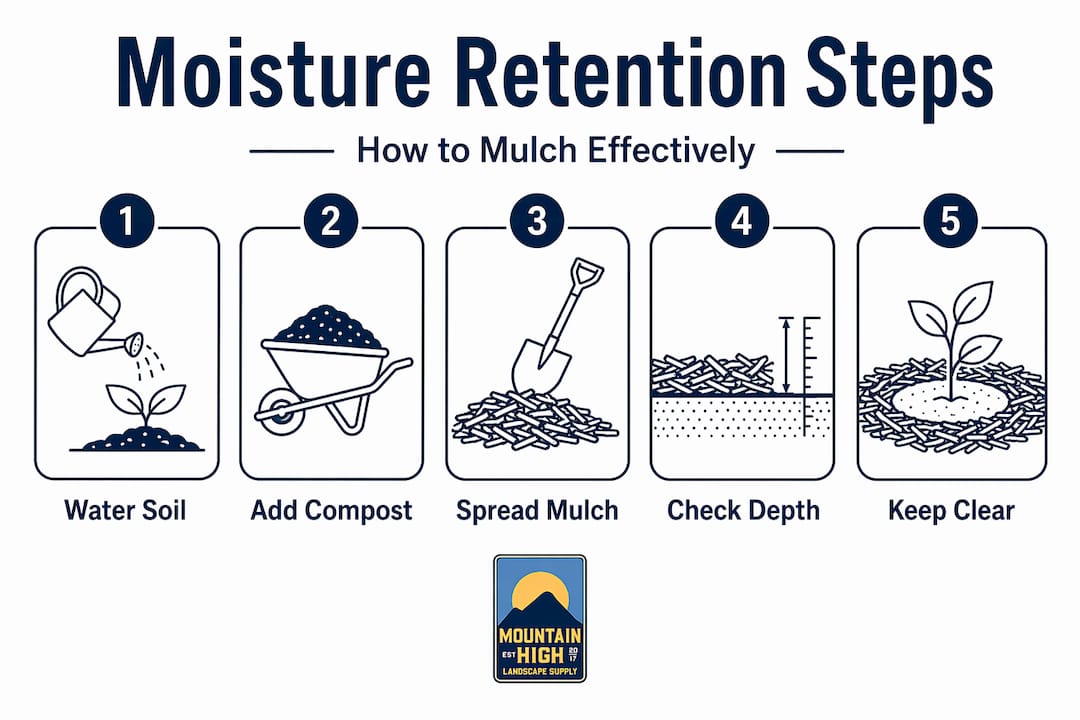
Pro Tip: Water your garden beds thoroughly before applying mulch. This locks existing moisture into the soil from the start, giving the mulch something to work with immediately.
Not all mulches perform equally when it comes to water retention. The two broad categories are organic and inorganic, and they work differently.
| Mulch Type | Moisture Benefit | Soil Health Benefit | Best Use |
|---|---|---|---|
| Wood chips | High | High (improves over time) | Trees, shrubs, garden beds |
| Straw | High | Moderate | Vegetable gardens |
| Shredded leaves | High | High | Flower beds, borders |
| Gravel or stone | Moderate | None | Paths, desert plantings |
| Rubber mulch | Moderate | None | Decorative areas |
Plastic mulch reduces evaporation more aggressively than organic options in the short term, but organic mulches consistently outperform it for long-term soil health and water-holding capacity. For most home gardens, organic material is the stronger choice.
Depth is where most homeowners get it wrong. The recommended mulch depth is 1 to 3 inches for fine-textured materials like compost or shredded leaves, and 3 to 6 inches for coarser materials like wood chips. Apply fine mulch too thick and it compacts, blocking both water and air. Apply coarse mulch too thin and you lose most of the moisture benefit.
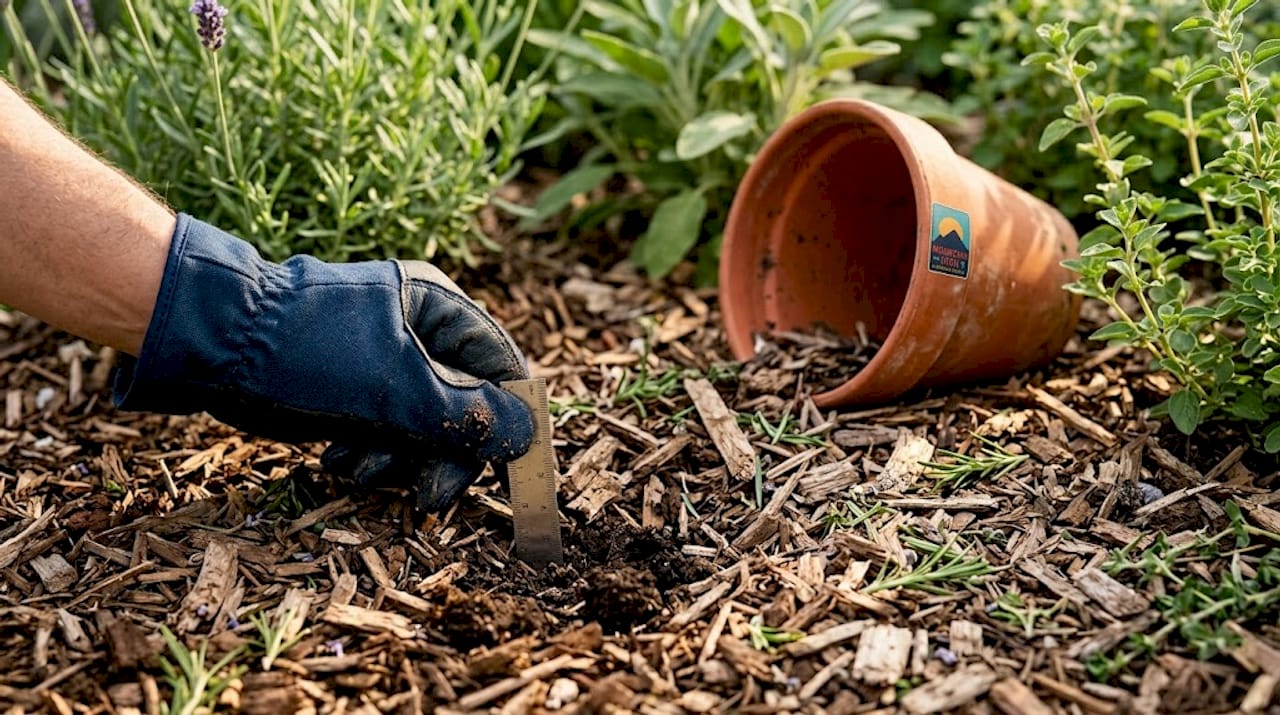
For smart mulch selection in Georgia gardens specifically, wood chip mulch tends to perform well year-round given the region’s heat and sporadic rainfall patterns.
Pro Tip: Avoid piling mulch in a cone shape against tree trunks or plant stems. That trapped moisture causes rot at the base. Instead, leave a gap of 2 to 3 inches around stems and apply mulch in a flat, even layer outward.
Getting the application right is just as important as choosing the right material. Here is a straightforward process that works:
Timing your application also matters. Applying mulch in early spring traps soil moisture before summer heat sets in. A fall application insulates roots and preserves soil moisture through cooler months. Both timing windows work together as part of a broader moisture conservation strategy for your garden.
Pro Tip: Mix a layer of compost into your soil before mulching. The compost improves the soil’s water-holding capacity directly, and the mulch on top slows evaporation. Together, they reduce how often you need to water by more than either does alone.
The impact of mulch on plants extends well beyond direct water retention. Several of its other benefits work together to support soil moisture over the long term.
These benefits reinforce each other. Less weed competition, cooler soil temperatures, and better soil structure all compound to make your garden more water-efficient year after year.
I have worked with gardeners across the Atlanta area who come in frustrated that their soil dries out even after mulching. Almost every time, the issue is under-application. Homeowners spread a thin layer thinking it looks right, when in reality thickness is what drives moisture retention. One inch of wood chip mulch does very little. Three to four inches makes a noticeable difference within days.
The other mistake I see constantly is mulch piled against plant trunks. It looks full and intentional, but it traps moisture at the base of the stem and invites rot and disease. Spread mulch wide and flat instead of deep and close. You will see healthier plants and actually better moisture retention across the full root zone.
One last thing I have come to believe firmly: refreshing mulch is not optional if you want the moisture benefits to hold up. Decomposed mulch can actually repel water rather than retain it. Check your mulch every spring. Top it up before the heat arrives. That one habit will save you significant watering time all summer.
— Eric
At Mountainhighmulch, we supply Georgia homeowners and contractors with quality mulch materials built for real performance in Atlanta’s climate. Whether you need bulk wood chips for large beds or a specific texture for vegetable rows, our team at our Marietta and Smyrna locations can help you choose the right product and depth for your soil type.

Our best landscape materials selection includes mulch options suited for moisture retention, weed control, and long-term soil health. We also carry topsoil and organic amendments that work alongside mulch to improve your soil’s water-holding capacity from the ground up. Need help with installation? Our step-by-step mulch installation guide walks you through every stage of a proper application. Pick up at either of our supply yards or take advantage of our delivery service throughout the metro Atlanta area.
Mulch can reduce evaporation by up to 50%, cutting down significantly on how often you need to water your garden beds.
Thickness matters more. The RHS advises proper depth as the primary driver of moisture retention, with coarse materials needing 3 to 6 inches and fine materials needing 1 to 3 inches.
Yes, if applied too thick or piled against plant stems. Over-mulching hinders water flow and can cause rot at plant bases. Maintain proper depth and leave a gap around stems.
Check mulch depth each spring. Decomposed or compacted mulch loses effectiveness and should be topped up to restore moisture retention performance.
Absolutely. Mulch insulates the soil against heat, slows evaporation, and gives rainfall more time to absorb. It is one of the most effective moisture conservation techniques available to home gardeners in a hot, humid climate like Atlanta’s.