Stone in Atlanta gardens is widely misunderstood. Many homeowners assume it is purely decorative, something you add after the real landscaping work is done. In reality, stone serves as a structural, functional, and environmental material that shapes how water drains, how soil behaves, how weeds grow, and how roots perform through Georgia’s intense summers. This guide covers what stone actually does in your landscape, which types suit Atlanta conditions best, how to install it correctly, and what mistakes to avoid so your garden remains beautiful and manageable for years to come.
| Point | Details |
|---|---|
| Versatility | Stone brings both curb appeal and functional performance to Atlanta gardens. |
| Choose wisely | Each stone type suits different applications, so match material to your landscape goals. |
| Smart installation | Proper prep and cautious use of fabric under stone help avoid soil and maintenance issues. |
| Maintenance challenges | Stone mulch needs upkeep and can be difficult to remove if mixed with soil or debris. |
| Expert advice matters | Local insight ensures your stone choices support both garden beauty and long-term health. |
With an understanding that stone’s value extends well beyond looks, let’s clarify exactly what makes stone a sought-after material in Atlanta gardens.
Stone offers some of the most versatile performance of any landscape material available. Visually, natural stone brings rich texture, earthy color variation, and a permanence that synthetic materials simply cannot replicate. Whether you choose warm-toned river rock along a garden bed or cool gray flagstone for a walkway, stone adds an authentic character that enhances curb appeal immediately.
Beyond appearance, stone functions as an effective inorganic mulch. Unlike wood mulch, it does not break down over time, which means no annual replenishment and no color fade after one season. Stone also suppresses weeds by blocking light at the soil surface and helps moderate soil temperature in shaded beds. According to research on inorganic mulch benefits, stone used as inorganic mulch offers genuine weed suppression and moisture retention, but it can create significant maintenance headaches if the wrong type or depth is applied.
Common uses for stone in Atlanta landscapes include:
Stone does not perform equally in every context. One of the most important things we tell Atlanta customers is that stone can become very difficult to remove or maintain if it is not placed with purpose. Explore low-maintenance landscaping ideas before committing to any single material approach.
Knowing the benefits is just part of the story. Choosing the right stone for your project is the next crucial step.
Atlanta’s climate brings hot, humid summers and periodic heavy rain events. The stone type you choose needs to handle heat without causing root stress, allow adequate drainage, and stay in place through heavy downpours. Here is a breakdown of the most useful options for Atlanta gardens.
Gravel is one of the most practical choices for drainage and general ground cover. It is affordable, easy to spread, and allows water to percolate freely through the surface. Use it in French drains, alongside foundations, or in low-traffic areas between raised beds.
River rock offers rounded, smooth stones in natural earth tones. It works beautifully in water features, dry creek beds, and around pond edges. Its smooth surface means it does not hold heat as aggressively as darker crushed stone.
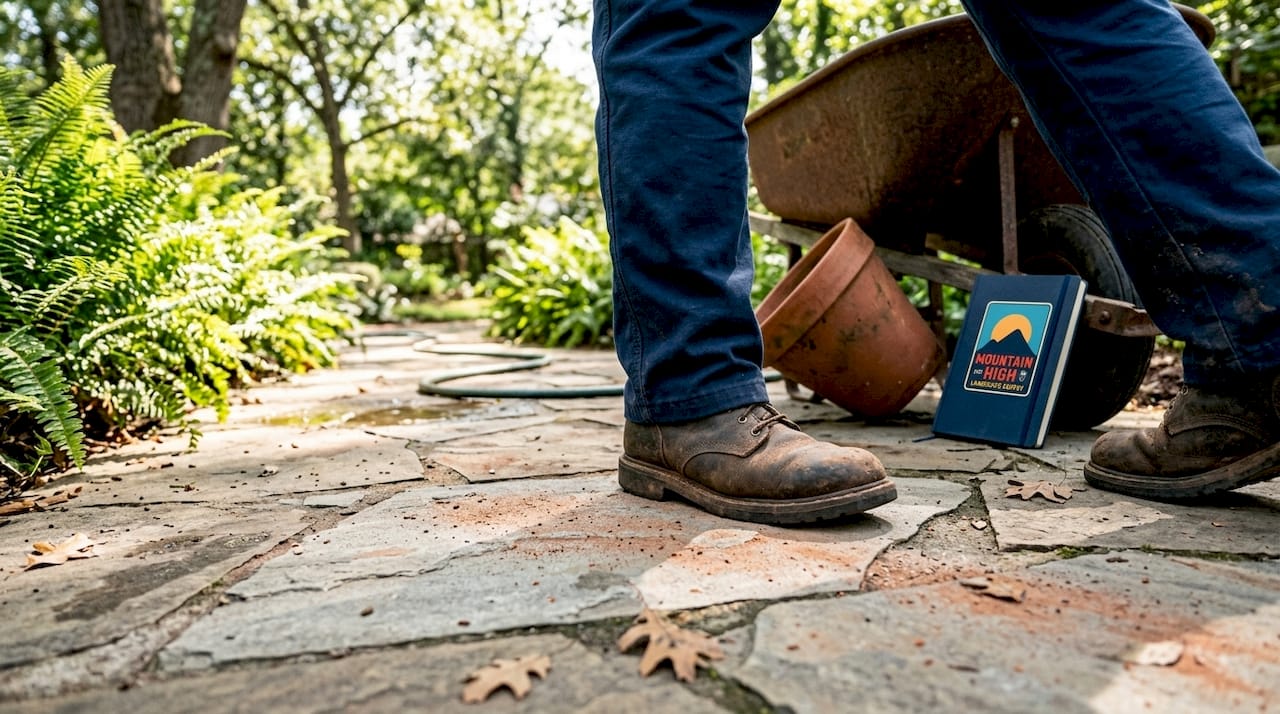
Flagstone is the go-to material for patios, paths, and stepping areas. Its flat, wide profile provides stable footing and a refined look. Atlanta homeowners often pair it with ground cover plants between joints for a softer, naturalistic appearance.
Crushed granite is durable and lends a warm gold-to-gray tone to garden beds. It compacts somewhat, which is beneficial for paths but worth considering when used near root zones. Check out the best stone types for Atlanta for a deeper look at performance differences.
Decorative specialty stones such as lava rock, white marble chips, or black polished stones add visual contrast and are often used as focal accents. The best decorative rocks available locally can dramatically change the visual weight and mood of a planting bed.
According to guidance on stone depth and installation, the correct depth and application method vary significantly based on stone type and intended use.
| Stone type | Best use | Drainage | Heat effect | Maintenance level |
|---|---|---|---|---|
| Gravel | Drainage, pathways | Excellent | Low | Low |
| River rock | Dry creek beds, water features | Good | Low to moderate | Low |
| Flagstone | Patios, stepping paths | Moderate | Moderate | Low to medium |
| Crushed granite | Paths, ground cover | Good | Moderate | Low |
| Lava rock | Decorative beds | Good | Low | Medium |
| White marble chips | Accent areas | Moderate | High (reflects) | Medium |
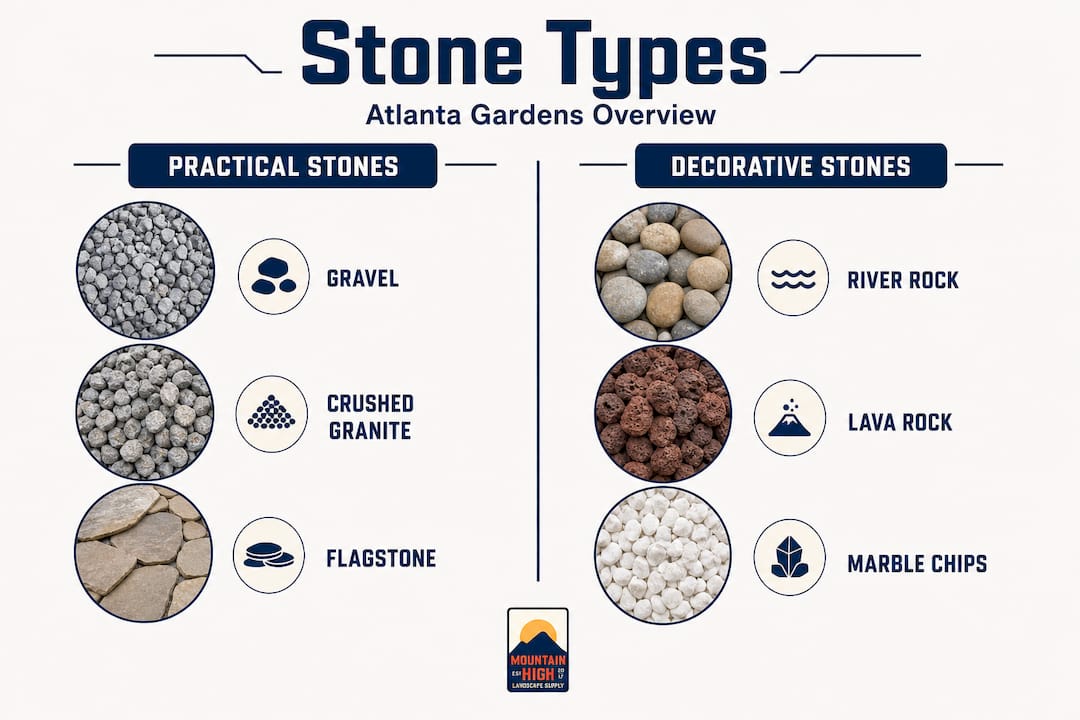
Pro Tip: Match stone type to function first, then consider appearance. A beautiful white marble chip may look stunning but can reflect significant heat onto nearby plants in an Atlanta summer.
What garden stone actually is surprises many first-time buyers. Understanding the categories before you purchase saves both money and frustration.
Once you select the best stone for your garden, the way you install it can make or break your project’s success and longevity.
Proper installation is where many Atlanta gardens either perform well long-term or begin accumulating problems within a few seasons. Follow these steps for reliable results.
Pro Tip: Avoid fully sealed landscape fabrics under stone. They trap water, restrict air movement, and ultimately harm soil health. A quality woven geotextile is a better option where fabric is truly needed.
Comparing mulch vs. rock can also help you decide when stone is the right call and when organic mulch actually serves the plant better. Review a solid mulch installation guide alongside these stone tips for a complete picture, and consider mulch selection tips if you’re blending stone and organic materials in the same landscape.
Understanding possible pitfalls arms you to proactively avoid or fix them. Here is how savvy Atlanta landscapers tackle the top challenges.
Stone is durable, but it is not without problems. The following issues come up regularly in Atlanta gardens, and each has a practical solution.
“Once rocks and sediment have mixed, removal is nearly impossible.” This reality means prevention is far more effective than trying to fix the problem later.
Stone mulch rarely removes easily once mixed with soil and debris. Periodic blowing or rinsing of the surface can slow sediment accumulation and extend the usable life of your stone installation. See how making garden maintenance easier begins with proper preparation from day one. You can also find additional benefits and pro tips for mulching that apply equally when you are blending stone and organic materials.
Pro Tip: Leave a clear buffer zone free of stone around the base of all trees and shrubs. This single habit prevents most bark damage, root suffocation, and moisture issues we see in Atlanta gardens using stone ground cover.
Having covered the practical how-to, it is worth stepping back for a candid look at the bigger picture every Atlanta homeowner and professional landscaper should consider.
We see the same pattern repeatedly. A homeowner or contractor sees a stone-covered bed in a magazine or a neighboring yard and decides to replicate it everywhere. The result often looks good for the first season and then starts creating problems. Heat stress, weed penetration, drainage issues, and maintenance costs all escalate because stone was applied as a trend choice rather than a functional one.
The best-performing Atlanta gardens we have worked with use stone strategically, not broadly. Stone excels as border edging, in drainage channels, on paths, and as accent features. It is often not the best choice for blanket mulching around sensitive plants, particularly in full-sun zones where dark stone significantly raises soil temperature.
Sometimes using less stone is the smarter long-term decision. Alternating stone sections with organic mulch in plant-heavy beds gives roots the breathing room and nutritional support they need. The guide to using garden stone reinforces this approach clearly. Stone and organic mulch are not competing materials. They each have a role, and knowing which role belongs to which material is what separates a landscape that performs well from one that looks great in photos and struggles in real life.
When you’re ready to elevate your Atlanta garden, local expertise and premium material choices make all the difference.
At Mountain High Mulch, we carry a full range of stone, gravel, and mulch products selected specifically for Atlanta-area landscapes. From premium pea gravel for Atlanta gardens to a curated selection of rock and gravel options, we stock what your project actually needs.

Our team serves homeowners and professional contractors across Atlanta, Marietta, Smyrna, and the wider metro area. You can pick up materials directly from our clean, organized supply yards in Marietta and Smyrna, or we offer reliable delivery across the region. We also provide professional installation for customers who want the job done right the first time. Browse our top landscape materials and reach out to our expert team for project guidance tailored to your garden’s specific needs.
Apply stone mulch at 2 to 3 inches deep for ground cover, following recommended inorganic mulch depth guidelines, and always leave clear space around woody plant bases.
No. Stone mulch does not contribute organic matter or nutrients to the soil the way organic mulch does over time.
Use woven geotextile with caution, as landscape fabric can block water and air movement, harming root health and increasing surface runoff.
Yes. Particularly dark or reflective stones can raise soil temperature significantly, and stone mulch affects temperature in ways that may stress plant roots during Georgia’s hot summers.
No. Removal of stone mulch becomes very difficult once rock mixes with soil and organic debris, so plan your stone placement carefully before installation.