Choosing shredded mulch seems simple until you realize the options vary dramatically in durability, cost, and garden performance. Many Georgia homeowners and landscapers assume all shredded mulches deliver identical results, but the reality is far more nuanced. Different mulch types affect soil moisture retention, weed suppression, decomposition rates, and even your landscape’s visual appeal. This guide explores the most popular shredded mulch varieties available in Georgia, from hardwood to pine bark to sustainable compost options, and reveals how selecting the right type transforms your outdoor spaces while supporting eco-friendly gardening practices.
| Point | Details |
|---|---|
| Mulch types differ significantly | Shredded bark, hardwood, and pine bark mulches vary in durability, decomposition speed, and weed control effectiveness. |
| Bark mulch minimizes replacement | Pine bark mulch lasts up to 4 years, reducing the frequency and cost of reapplication compared to faster-decomposing options. |
| Hardwood mulch offers value | This affordable option enhances soil moisture retention and decomposes at a moderate pace, making it cost-effective for large areas. |
| Sustainable choices reduce waste | Recycling yard waste into mulch diverts up to 20% of landfill material while improving soil health and garden aesthetics. |
| Application method matters | Proper mulch thickness and placement prevent pest issues and maximize benefits for Georgia’s climate and soil conditions. |
Shredded mulch consists of finely ground bark, wood chips, or organic plant material processed into small, irregular pieces. Unlike chunk mulches or nuggets, shredded varieties interlock to create a dense mat that resists washing away during Georgia’s heavy spring rains. This interlocking quality makes shredded mulch particularly valuable for sloped landscapes where erosion control is essential.
Georgia gardeners commonly encounter four main shredded mulch types, each with distinct characteristics suited to different landscaping goals. Understanding these differences helps you match mulch to your specific soil conditions, aesthetic preferences, and maintenance capacity.
Common shredded mulch varieties for Georgia landscapes:
Shredded bark mulch suppresses weed growth effectively and performs exceptionally well on slopes where its interlocking texture prevents erosion. The decomposition rate varies significantly by wood type, with softer woods breaking down faster and harder barks maintaining structure for multiple seasons. Color retention also differs, as pine bark holds its reddish hue longer than hardwood mulch, which fades to gray within months.
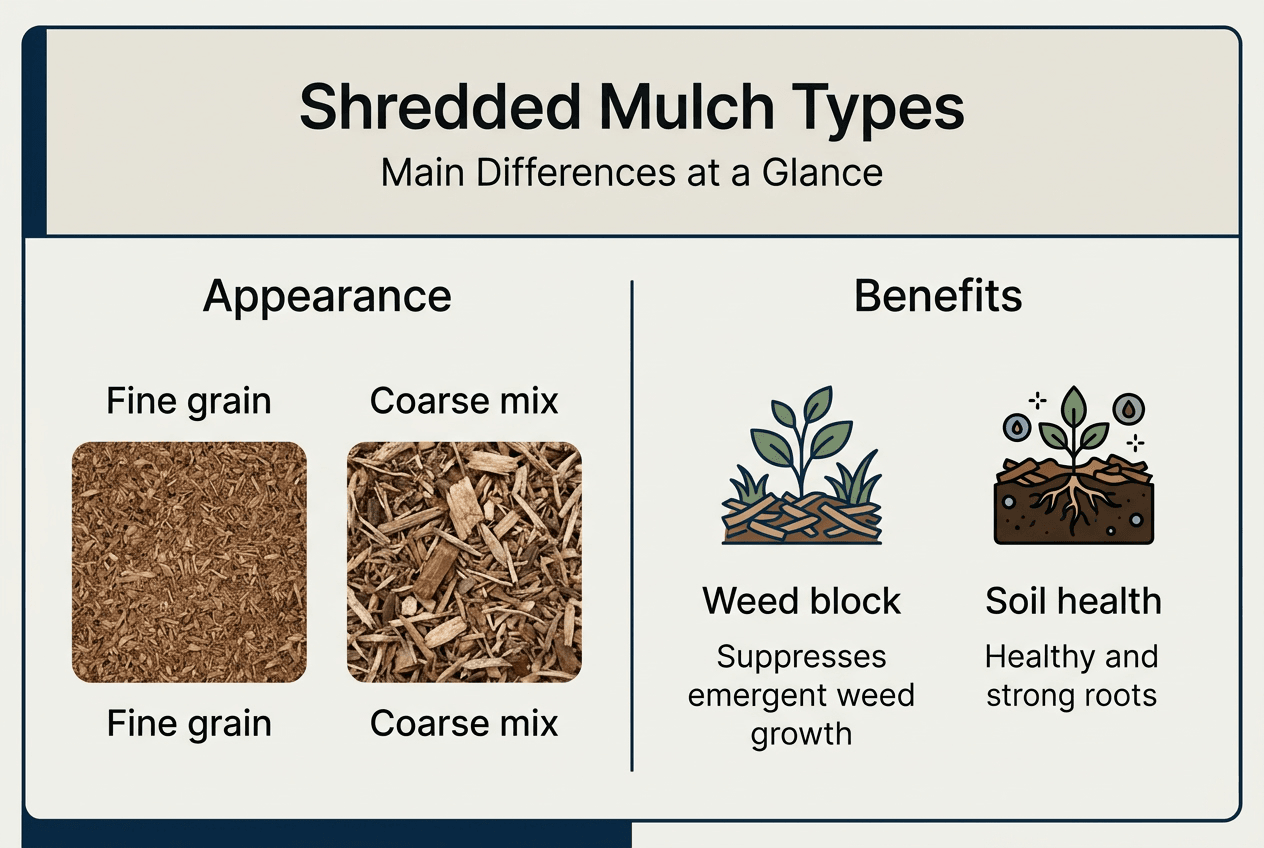
Texture influences both function and aesthetics. Finely shredded mulch creates a uniform, manicured appearance suitable for formal gardens, while coarser shreds offer a more natural, woodland feel. Georgia’s humid climate accelerates decomposition for all organic mulches, so choosing the right mulch involves balancing longevity against soil enrichment goals.
Pro Tip: Test mulch moisture retention by squeezing a handful after watering; quality shredded mulch should feel damp but not soggy, indicating proper water-holding capacity for Georgia’s summer heat.
Decomposition speed directly impacts how often you’ll need to refresh your mulch layer and how much organic matter enters your soil. Hardwood mulch typically lasts 2-3 years while pine bark mulch extends up to 4 years before requiring replacement. Cypress mulch falls between these extremes at roughly 3 years, and compost mulch breaks down within a single growing season.
Cost considerations significantly influence mulch selection for large-scale projects. Hardwood mulch is 20-30% cheaper than pine bark mulch, making it attractive for budget-conscious homeowners covering extensive garden beds. However, pine bark’s extended lifespan often balances the higher initial investment through reduced reapplication frequency. Calculate your total cost over a three-year period rather than focusing solely on per-bag pricing.
Mulch performance comparison:
| Mulch Type | Lifespan | Cost Level | Weed Control | Soil Benefits |
|---|---|---|---|---|
| Hardwood | 2-3 years | Low | Moderate | Moderate nutrient release |
| Pine Bark | 3-4 years | Medium-High | Excellent | Slow nutrient release |
| Cypress | 3 years | Medium | Good | Minimal nutrient impact |
| Compost | 1 year | Low | Poor | Rapid nutrient boost |
Weed suppression effectiveness varies based on mulch density and particle size. Pine bark’s uniform texture creates a tight barrier that blocks sunlight from reaching weed seeds, while coarser hardwood mulch may allow light penetration between larger pieces. A 3-inch layer of any shredded mulch provides adequate weed control, but pine bark achieves this with slightly less depth.
Soil health implications deserve careful consideration. As bark mulch decomposes, microorganisms consume nitrogen during the breakdown process, potentially creating temporary nitrogen deficiency in underlying soil. This effect is most pronounced with fresh wood chips but occurs to some degree with all wood-based mulches. Compost mulch avoids this issue entirely and actually adds nitrogen, making it ideal for vegetable gardens and annual beds requiring frequent nutrient replenishment.
Pro Tip: Apply a balanced fertilizer containing nitrogen before laying bark mulch to counteract potential nutrient depletion, especially around nitrogen-hungry plants like roses and vegetables.
Moisture retention capabilities influence irrigation needs and plant health during Georgia’s dry summer periods. Shredded hardwood mulch excels at absorbing and holding water, reducing evaporation from soil surfaces by up to 50%. Pine bark also retains moisture effectively while providing better air circulation than denser materials. Consider your landscape’s drainage patterns when selecting mulch; well-drained areas benefit from moisture-retentive hardwood, while poorly drained spots require the improved aeration that pine bark nuggets provide.
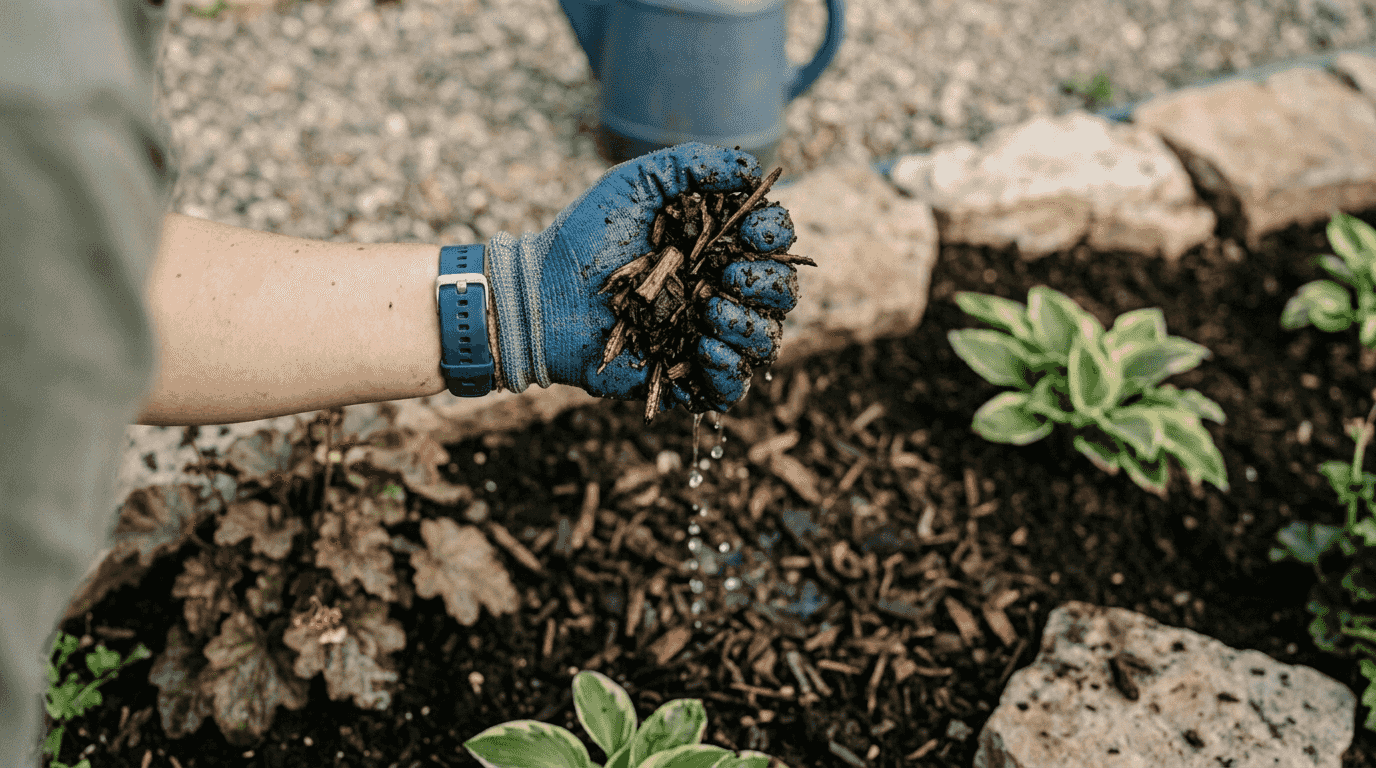
Landscape refuse accounts for up to 20% of landfill waste in Georgia communities, representing a massive opportunity for environmental improvement through mulch recycling programs. Converting yard trimmings, fallen leaves, and pruned branches into shredded mulch diverts thousands of tons from waste streams annually while creating valuable landscaping material. This circular approach transforms potential waste into a resource that enhances soil quality and reduces the need for synthetic fertilizers.
Recycling organic yard waste into mulch reduces landfill burden by approximately 20% while simultaneously improving garden soil structure, moisture retention, and nutrient availability for healthier plant growth across Georgia landscapes.
Shredded mulch improves soil structure through gradual organic matter incorporation as it decomposes. This process increases soil porosity, allowing better root penetration and water infiltration. Clay-heavy Georgia soils particularly benefit from this amendment, as organic matter breaks up compacted layers and creates air pockets essential for healthy root development. Over several seasons, consistent mulch application can transform poor soil into rich, friable growing medium.
Locally sourced mulch offers distinct advantages for Georgia gardeners beyond reduced transportation emissions. Materials harvested from regional trees are pre-adapted to local climate conditions and harbor beneficial microorganisms native to Georgia ecosystems. These microbes establish quickly in your garden beds, accelerating decomposition and nutrient cycling compared to mulch shipped from distant regions. Supporting local mulch producers also strengthens community economies and ensures fresher product with higher moisture content and less degradation.
How to create sustainable mulch from yard waste:
Water conservation becomes increasingly critical as Georgia experiences periodic drought conditions and water restrictions. Mulch layers act as insulating blankets that moderate soil temperature fluctuations and dramatically reduce evaporation. A properly maintained 3-inch mulch layer can decrease irrigation needs by 30-40% during summer months, translating to substantial water bill savings for homeowners and reduced strain on municipal water systems.
Recycling wood into mulch promotes environmental sustainability by extending the useful life of organic materials and reducing demand for virgin resources. This practice aligns perfectly with Georgia’s growing emphasis on green infrastructure and low-impact development principles. Choosing sustainable mulch choices demonstrates environmental stewardship while delivering practical benefits for your landscape’s health and appearance.
Assessing your landscape needs begins with understanding your soil type and drainage patterns. Sandy soils common in coastal Georgia drain rapidly and benefit from moisture-retentive hardwood mulch, while clay soils in the Piedmont region require mulch that improves aeration without adding excessive moisture retention. Observe how water behaves after heavy rain; standing water indicates poor drainage requiring lighter mulch applications, while rapid drying suggests the need for thicker, more absorbent layers.
Plant selection influences optimal mulch choice. Acid-loving plants like azaleas, camellias, and blueberries thrive under pine bark mulch, which gradually lowers soil pH as it decomposes. Conversely, vegetables and annual flowers perform better with neutral hardwood mulch or compost that won’t alter pH significantly. Match mulch to your predominant plantings rather than mixing types within a single landscape for consistent results.
Best practices for shredded mulch application:
Pest prevention requires thoughtful mulch placement and thickness management. Bark mulch can attract bugs when applied excessively thick near home foundations, creating damp habitats for termites, carpenter ants, and other wood-boring insects. Maintain a 12-inch mulch-free zone around building perimeters and avoid piling mulch against wooden siding or trim. This simple precaution eliminates moisture traps while preserving the aesthetic and functional benefits of mulched beds.
Pro Tip: Edge your mulched beds with a 4-inch deep trench or install metal edging to prevent mulch migration onto lawns and walkways, maintaining clean borders and reducing maintenance time.
Timing matters for mulch application in Georgia’s climate. Spring installation before temperatures rise provides maximum moisture conservation during the growing season, while fall applications protect plant roots through winter and decompose slowly during cooler months. Avoid mulching frozen ground or applying fresh mulch during extreme heat, as both conditions reduce effectiveness and can stress plants.
Color considerations extend beyond pure aesthetics to influence soil temperature and plant performance. Dark hardwood mulch absorbs heat and can raise soil temperatures by several degrees, beneficial for early spring warmth but potentially problematic during Georgia’s scorching summers. Lighter-colored pine bark reflects more sunlight and maintains cooler root zones, making it preferable for heat-sensitive plants and south-facing beds. Review your mulch application guide to understand how color choices impact your specific landscape conditions and plant requirements throughout the year.
Finding premium shredded mulch suited to Georgia’s unique climate and soil conditions becomes effortless when you partner with a trusted local supplier. Mountain High Landscape Supply offers an extensive selection of shredded mulch types, from classic hardwood to long-lasting pine bark, all sourced from quality materials and processed to optimal consistency. Whether you’re covering residential flower beds or managing commercial landscape installations, our inventory meets professional standards while remaining accessible to homeowners.

Our premium pine bark nuggets deliver exceptional longevity and weed control for low-maintenance landscapes throughout the Atlanta metro area. Complement your mulch selection with natural mulch options that blend seamlessly into woodland gardens and native plant installations. For complete bed preparation, pair shredded mulch with our organic topsoil delivery service to establish the ideal growing foundation. Visit our convenient Marietta or Smyrna locations for expert guidance and same-day pickup, or schedule delivery across the metro area.
Shredded mulch consists of finely ground bark or wood processed into small, irregular pieces that interlock to form a protective ground cover. It suppresses weeds, retains soil moisture, regulates temperature, and gradually enriches soil as it decomposes, making it essential for healthy Georgia landscapes.
Shredded mulch creates a denser mat that resists erosion better than pine straw and decomposes faster than large nuggets, providing more rapid soil improvement. Pine straw works well on slopes but offers less weed control, while nuggets last longer but release nutrients more slowly.
Hardwood mulch typically requires replacement every 2-3 years, while pine bark mulch lasts 3-4 years before breaking down completely. Refresh high-visibility areas annually with a thin top layer to maintain color and appearance without excessive depth.
Properly applied shredded mulch benefits plants, but excessive depth or direct contact with stems promotes fungal diseases and rot. Keep mulch 3-6 inches from plant bases and maintain 2-3 inch depth to avoid creating pest habitats while maximizing benefits.
Pine bark mulch gradually lowers soil pH as it decomposes, benefiting acid-loving plants like azaleas and blueberries. Hardwood mulch has minimal pH impact, making it suitable for vegetables and plants preferring neutral soil conditions.
Mountain High Landscape Supply provides premium shredded mulch varieties at locations in Marietta and Smyrna, with delivery available throughout metro Atlanta. Our locally sourced materials ensure freshness and climate compatibility for optimal Georgia landscape performance.