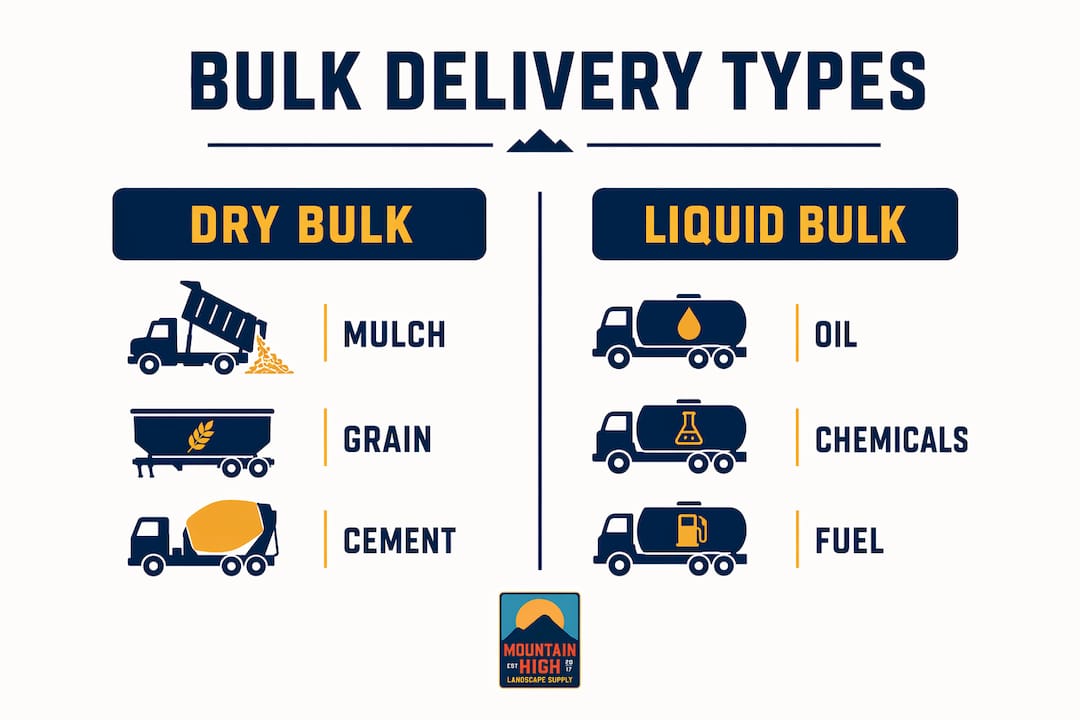
Bulk delivery is defined as the transportation of large volumes of unpackaged, loose goods loaded directly into a vehicle or vessel without individual packaging. Dry bulk and liquid bulk are the two primary categories, covering everything from mulch and grain to oils and chemicals. Measurement units like cubic yards for landscape materials and Deadweight Tonnage (DWT) for ocean freight set the standard for pricing and capacity. Understanding how bulk delivery works saves you money, reduces waste, and keeps your project on schedule.
Bulk delivery moves unpackaged goods such as soil, mulch, grain, and minerals loaded directly into transport vehicles. The industry divides these shipments into two main categories: dry bulk and liquid bulk. Each category requires different equipment, handling procedures, and transport vehicles.
Dry bulk covers solid materials that are poured, shoveled, or conveyed loose. Common examples include:
Liquid bulk covers pourable liquids transported in tankers or specialized vessels. Common examples include:
| Category | Common Commodities | Typical Transport |
|---|---|---|
| Dry bulk | Mulch, soil, grain, cement, minerals | Tipper trucks, bulk carriers |
| Liquid bulk | Oils, chemicals, food liquids | Tankers, liquid bulk vessels |
The handling requirements differ significantly between the two. Dry bulk materials can be dumped, conveyed, or blown into place. Liquid bulk requires sealed tankers, pumping systems, and strict contamination controls.
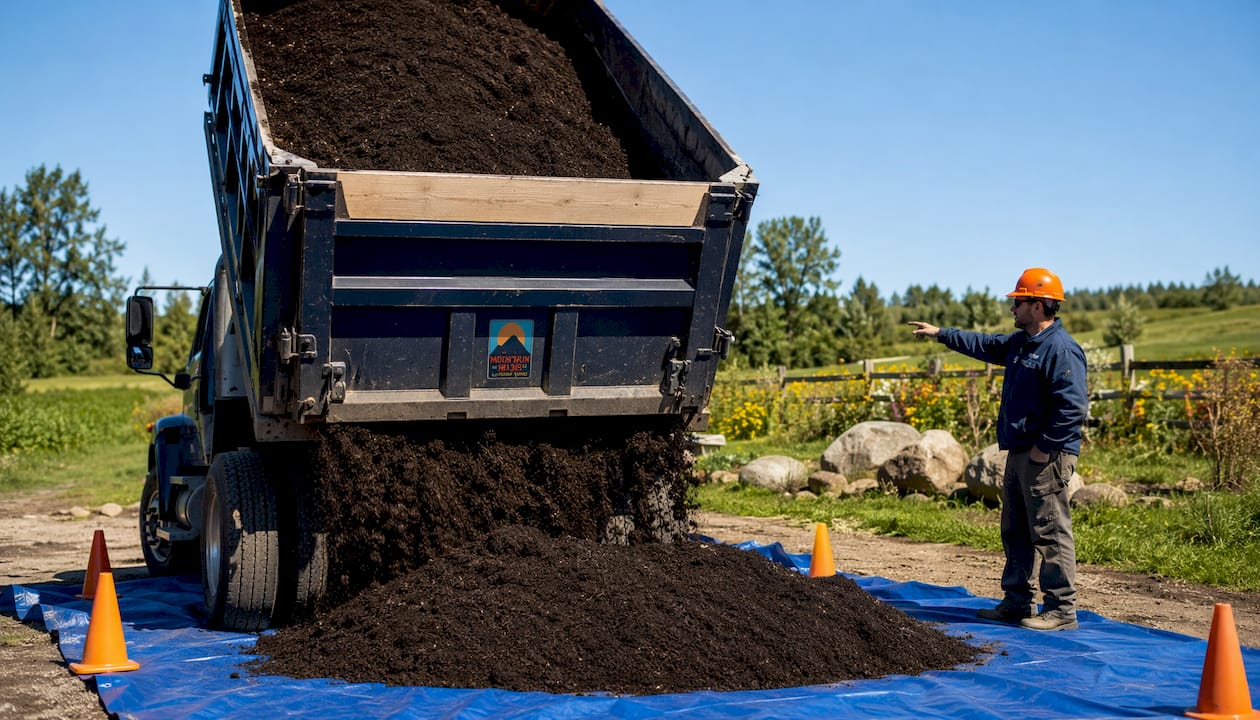
The standard bulk delivery sequence follows five steps: arrival, positioning, stabilization, hydraulic dumping, and departure. Most residential and commercial landscape deliveries complete this entire process in a single visit. Knowing each step helps you prepare your site and avoid costly delays.
Pro Tip: Mark your drop zone clearly before the driver arrives. Use spray paint, cones, or a tarp to show exactly where you want the material. This prevents miscommunication and avoids a second trip.
Site preparation is the single biggest factor in a smooth delivery. Low branches, overhead power lines, and soft ground are the most common causes of aborted deliveries. Check your access route for height and width restrictions before booking.
Bulk freight costs less per unit than containerized freight because it eliminates packaging and maximizes vehicle or vessel capacity. Standard dry bulk ocean carriers range from 37,000 to over 200,000 DWT. That capacity advantage translates directly into lower per-ton shipping costs for high-volume buyers.
For local landscape deliveries, pricing depends on material type, volume in cubic yards, distance, and access difficulty. Repeat or scheduled deliveries often qualify for reduced rates because drivers can plan efficient routes. Commodity type also matters: dense materials like gravel cost more to haul per yard than lighter materials like wood chip mulch.
| Transport Method | Best Use Case | Key Cost Factor |
|---|---|---|
| Tipper truck | Open outdoor sites, stable ground | Distance and volume |
| Walking floor trailer | Indoor sites, unstable ground | Equipment availability |
| Liquid tanker | Oils, chemicals, food liquids | Commodity type and cleaning |
| Ocean bulk carrier | High-volume international freight | DWT capacity and port fees |
In commercial bulk shipping, laytime and demurrage are two cost factors that catch buyers off guard. Laytime is the agreed time for loading or unloading a vessel. Demurrage is the penalty charge when that window is exceeded. Clarifying these terms with your port or carrier before shipment prevents unexpected fees.
Pro Tip: For commercial bulk shipments, confirm berth availability and loading speed limits with the port before finalizing your schedule. Port-specific constraints are the leading cause of demurrage charges.
Bulk haulage reduces packaging waste and cuts material handling time. This efficiency benefit applies across construction, agriculture, and manufacturing, making bulk delivery the preferred method wherever volume justifies it.
Choosing the right bulk delivery option depends on four factors: volume, commodity state, site accessibility, and unloading area safety. Walking floor trailers are preferred over tipper trucks when unloading indoors or on unstable ground. Tipper trucks work well for open outdoor sites with firm, level ground.
For businesses managing high-volume or seasonal shipments, Big Bag solutions offer a practical middle ground. A standard Big Bag holds approximately 1 tonne of material. Big Bags reduce product loss during transfer and give you more control over placement compared to a full loose dump.
Key factors to evaluate before booking:
For bulk soil delivery in Atlanta, planning your drop zone and access route in advance makes the difference between a 20-minute delivery and a rescheduled one. Seasonal projects benefit from scheduling deliveries early in the week to avoid weekend access conflicts.
Bulk delivery is the most cost-efficient method for moving large volumes of unpackaged goods, and proper site preparation is the single most important factor in a successful delivery.
| Point | Details |
|---|---|
| Two main categories | Dry bulk covers solids like mulch and grain; liquid bulk covers oils and chemicals. |
| Five-step delivery process | Arrival, positioning, stabilization, hydraulic dumping, and departure complete most deliveries in one visit. |
| Cost efficiency advantage | Eliminating packaging and maximizing vehicle capacity lowers per-unit cost versus containerized freight. |
| Equipment choice matters | Walking floor trailers suit unstable or indoor sites; tipper trucks work best on firm, open ground. |
| Site prep prevents delays | Clear access routes, marked drop zones, and firm ground prevent aborted deliveries and extra charges. |
The most preventable bulk delivery problems share one cause: poor communication before the truck arrives. I’ve seen drivers turn around at the gate because a homeowner assumed a standard pickup truck driveway could handle a loaded tipper. It cannot. The weight alone can crack concrete and sink into soft soil.
The second most common mistake is underestimating overhead clearance. A raised truck bed can reach 14 feet or higher. One low-hanging branch or a power line at 12 feet ends the delivery immediately. Walk your access route the day before and measure anything that looks close.
For commercial clients using ocean freight, the same principle applies at a larger scale. Skipping the conversation about laytime and berth availability is how a routine shipment turns into a demurrage bill. The fix is simple: confirm every timing detail in writing before the vessel departs.
Bulk delivery works well when both sides prepare. The supplier loads correctly, the driver arrives informed, and the customer has a clear, accessible drop zone. When those three things align, bulk delivery is genuinely the most efficient way to move material. When they don’t, it becomes expensive fast.
— Eric
Mountainhighmulch serves Atlanta, Marietta, Smyrna, and surrounding communities with premium bulk landscape materials and reliable delivery. Whether you need mulch, topsoil, sand, gravel, or sod, we deliver directly to your site with clear pricing by the cubic yard.

Our team guides you through site preparation, drop zone planning, and material selection before your delivery date. Explore our full range of top-rated landscape materials and get your project moving with a single order. For details on delivery areas, scheduling, and logistics, visit our Atlanta delivery information page. Mountainhighmulch makes bulk delivery straightforward, from first call to final dump.
Bulk delivery is the movement of large volumes of unpackaged goods loaded directly into a transport vehicle or vessel without individual packaging. Common examples include mulch, soil, grain, and industrial minerals.
Landscape bulk delivery is priced by the cubic yard, with total cost depending on material type, volume, distance, and site accessibility. Scheduled or repeat deliveries often reduce the per-yard rate.
Dry bulk covers solid materials like mulch, grain, and cement transported in tipper trucks or bulk carriers. Liquid bulk covers oils, chemicals, and food liquids transported in sealed tankers with pumping systems.
Low branches, overhead power lines, soft ground, and blocked access routes are the most common causes of aborted deliveries. Preparing your site and confirming access dimensions before the driver arrives prevents most cancellations.
Big Bag solutions work best when you need precise placement, have a site with limited space, or want to reduce product loss during transfer. Standard Big Bags hold approximately 1 tonne and offer more control than a full loose dump.