Fieldstone is defined as naturally occurring, unquarried rock gathered from the surface or shallow subsurface of fields, riverbeds, or mountainsides and used directly in construction or landscaping without major modification. Unlike quarried stone, fieldstone arrives with weathered edges, varied colors, and an organic texture that no manufactured product can fully replicate. Common rock types include granite, limestone, sandstone, and basalt, depending on the local geology. Homeowners and DIY enthusiasts across the country use it for everything from garden walls to fireplaces, making it one of the most versatile natural building materials available.
Fieldstone is naturally occurring rock collected from the land rather than cut from a quarry. That distinction matters because fieldstone retains its original weathered surface, irregular shape, and natural color variation. Quarried stone is cut to uniform dimensions, which makes it easier to stack but removes the character that makes fieldstone so appealing. The result is a material that looks like it belongs in the ground because it literally came from there.
Fieldstone’s natural sourcing connects each stone’s character to the local landscape and heritage of the region where it was gathered. A Pennsylvania fieldstone wall looks different from a Georgia granite fieldstone wall, and that regional identity is part of the appeal. No two fieldstone projects look exactly alike, which is a genuine advantage for homeowners who want a yard that stands out.
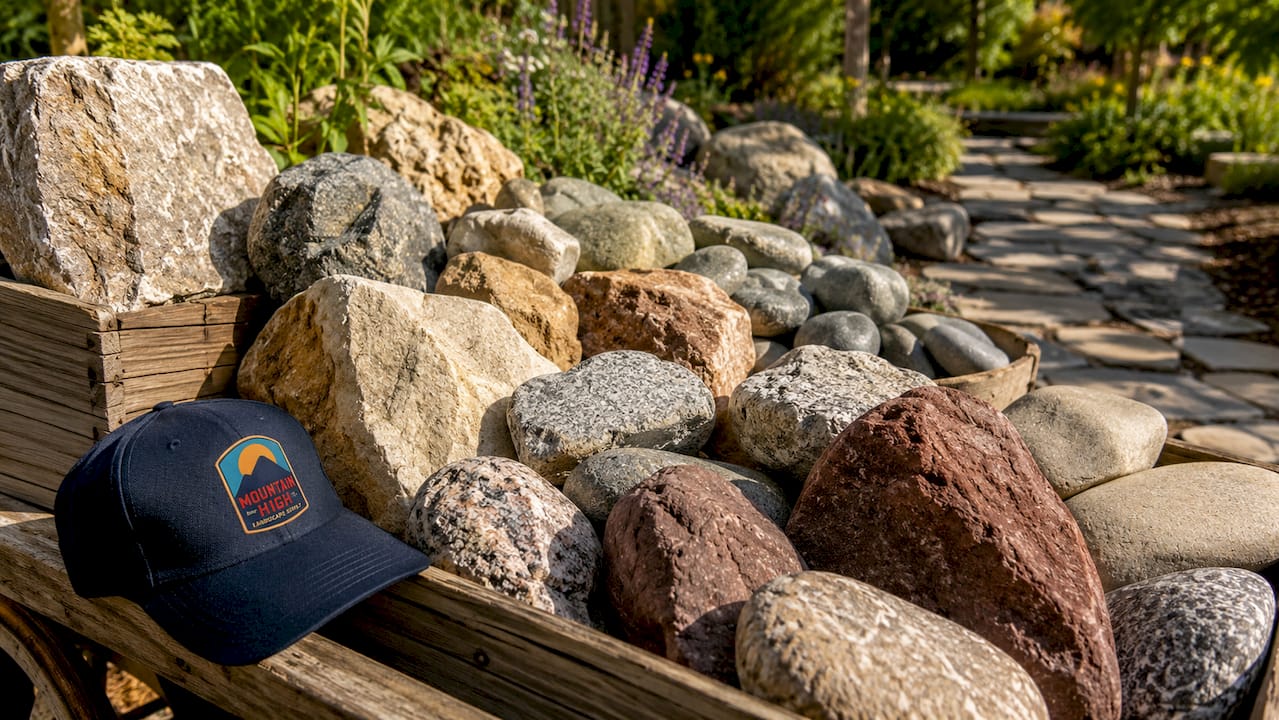
Fieldstone characteristics vary by rock type and region, but the durability numbers are impressive across the board. Tennessee Quartzite fieldstone achieves a compressive strength of at least 12,000 psi, water absorption below 1.53%, and a density over 160 pounds per cubic foot. Those figures place it firmly in the category of exterior-grade building materials that hold up through freeze-thaw cycles and heavy rain. The chemical composition is primarily silica at 94.93%, with minor amounts of alumina and iron oxide.
Water absorption below 1.53% is particularly significant for outdoor use. Low absorption means less moisture penetrates the stone, which reduces the risk of cracking during winter freezes. Granite and quartzite fieldstones tend to perform best in wet climates for this reason. Limestone and sandstone fieldstones are softer and more porous, making them better suited to dry climates or decorative applications where structural load is minimal.
Weathering also affects surface texture and color. Stones gathered from riverbeds tend to be smoother and rounder, while field-cleared stones carry a rougher, more angular profile. Both types work well in landscaping, but angular stones stack more securely in walls.
Pro Tip: Before purchasing fieldstone, ask your supplier for the rock type and region of origin. That information tells you the likely compressive strength and water absorption rate, which directly affects how the stone will perform in your specific climate.
| Property | Typical Value (Tennessee Quartzite) |
|---|---|
| Compressive strength | At least 12,000 psi |
| Water absorption | Below 1.53% |
| Density | Over 160 lbs per cubic foot |
| Primary chemical component | Silica (94.93%) |
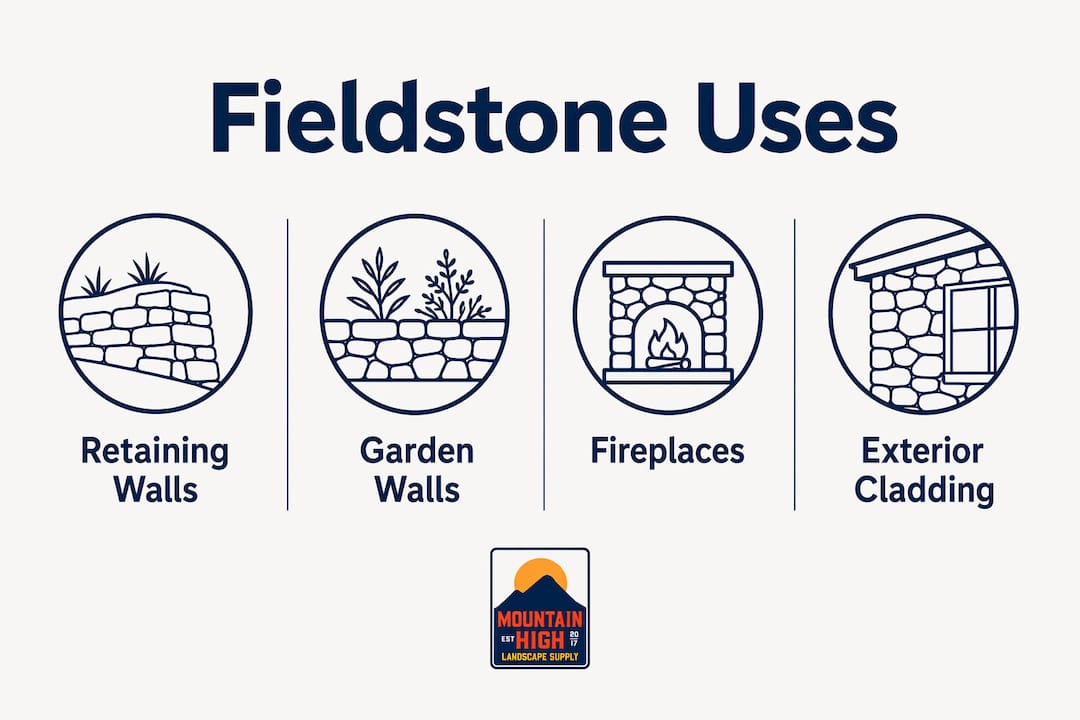
Fieldstone is used for retaining walls, garden walls, foundation piers, fireplaces, and exterior cladding. The two main construction methods are dry-stack and mortar-bound. Each suits different project types and skill levels.
Dry-stack walls rely on gravity and mechanical interlock. No mortar is used, which means the wall breathes naturally and drains freely. This makes dry-stack ideal for garden borders and low retaining walls where drainage matters. Mortar-bound construction adds strength and stability, making it the right choice for fireplaces, foundation work, and taller retaining walls.
Common fieldstone applications for homeowners include:
The retaining wall applications in particular suit Georgia’s hilly terrain well, where sloped yards are common and erosion control is a real concern. Fieldstone walls handle that job while looking like they have been there for generations.
Fieldstone’s natural irregularity creates real challenges for DIYers. Sorting, fitting, and achieving tight masonry takes extra time and skill compared to working with uniform cut stone. Most experienced masons say that sorting stones takes longer than actually laying them.
Here is a practical sequence for managing a fieldstone wall project:
Pro Tip: For masonry projects using mortar, mix to a stiff consistency rather than a wet one. Stiff mortar holds irregular stones in position while it cures and reduces the chance of stones shifting before the mortar sets.
Quality fieldstone shows specific visual and physical signs that separate durable material from stone that will crack or crumble within a few seasons. Knowing what to look for saves money and frustration.
Key selection criteria:
Sourcing locally also matters. Using local stone for landscaping reduces transport costs and ensures the stone is already adapted to your regional climate. Mountainhighmulch carries multiple fieldstone varieties suited to Georgia’s climate and soil conditions, making it straightforward to find the right material for your specific project.
Fieldstone is a durable, naturally sourced building material that suits both structural and decorative landscaping applications when selected and installed correctly.
| Point | Details |
|---|---|
| Definition and origin | Fieldstone is unquarried rock gathered from fields or riverbeds and used without major modification. |
| Durability benchmark | Quality fieldstone like Tennessee Quartzite reaches 12,000 psi compressive strength and absorbs less than 1.53% water. |
| Construction methods | Dry-stack suits garden walls and drainage; mortar-bound suits fireplaces, foundations, and taller retaining walls. |
| Critical DIY technique | Install through-stones every 6–8 square feet and maintain proper batter angle to prevent wall failure. |
| Selection priority | Match rock type to your climate and check for low water absorption before purchasing. |
Working with fieldstone for the first time is humbling. I have watched homeowners underestimate the sorting phase by a factor of three, then rush the fitting because they are already tired. That is where most fieldstone walls fail, not from bad stone, but from impatience during the build.
The honest truth is that a well-built fieldstone wall takes longer than a block wall of the same size. But it also outlasts it. I have seen properly maintained fieldstone structures standing solid after decades with nothing more than occasional mortar touch-ups. The key is catching small problems early. A hairline crack in the mortar is a five-minute fix. A bowing wall section is a weekend project. A collapsed wall is a full rebuild.
For homeowners considering their first fieldstone project, my advice is simple: budget twice the time you think you need for sorting, build a small test section before committing to the full wall, and inspect the structure every spring. The outdoor hardscape checklist from Mountainhighmulch is a practical starting point for that annual review. Fieldstone is one of the most satisfying materials you can work with. Give it the time it deserves.
— Eric
Mountainhighmulch stocks a full range of fieldstone options suited to Georgia homeowners and DIY projects of every scale.

From medium stack fieldstone for garden walls to stackable fieldstone boulders for creative landscaping features, we carry the material you need at our Marietta and Smyrna supply yards. We also stock masonry sand for mortar work and complementary landscape supplies to support your complete project. Our team is ready to help you select the right stone type for your climate, project size, and budget. Visit our landscape supply page or call ahead to check current stock and arrange delivery across the metro Atlanta area.
Fieldstone is naturally occurring rock, typically granite, limestone, sandstone, or basalt, gathered from fields, riverbeds, or mountainsides without quarrying or major cutting.
Yes. Fieldstone works well for retaining walls, garden borders, raised beds, pathways, and exterior cladding. Dry-stack construction requires no mortar and suits most basic landscaping applications.
Look for a natural cleft finish, low water absorption, and no visible cracks or flaking. Granite and quartzite varieties offer the highest compressive strength for structural use.
Granite is a specific rock type, while fieldstone is a category of naturally gathered, unquarried stone. Fieldstone can be granite, but it can also be limestone, sandstone, or basalt depending on the local geology.
Mountainhighmulch carries multiple fieldstone varieties at its Marietta and Smyrna, Georgia supply yards, with delivery available throughout the metro Atlanta area.