Flagstone is not a single rock type. It’s a category of flat stones that split naturally along internal bedding planes into thin, workable slabs. That splitting ability is what defines it, not the mineral composition. The result is a material that arrives at your project site already shaped for paving, with a naturally flat surface and an organic texture no manufactured product can replicate.
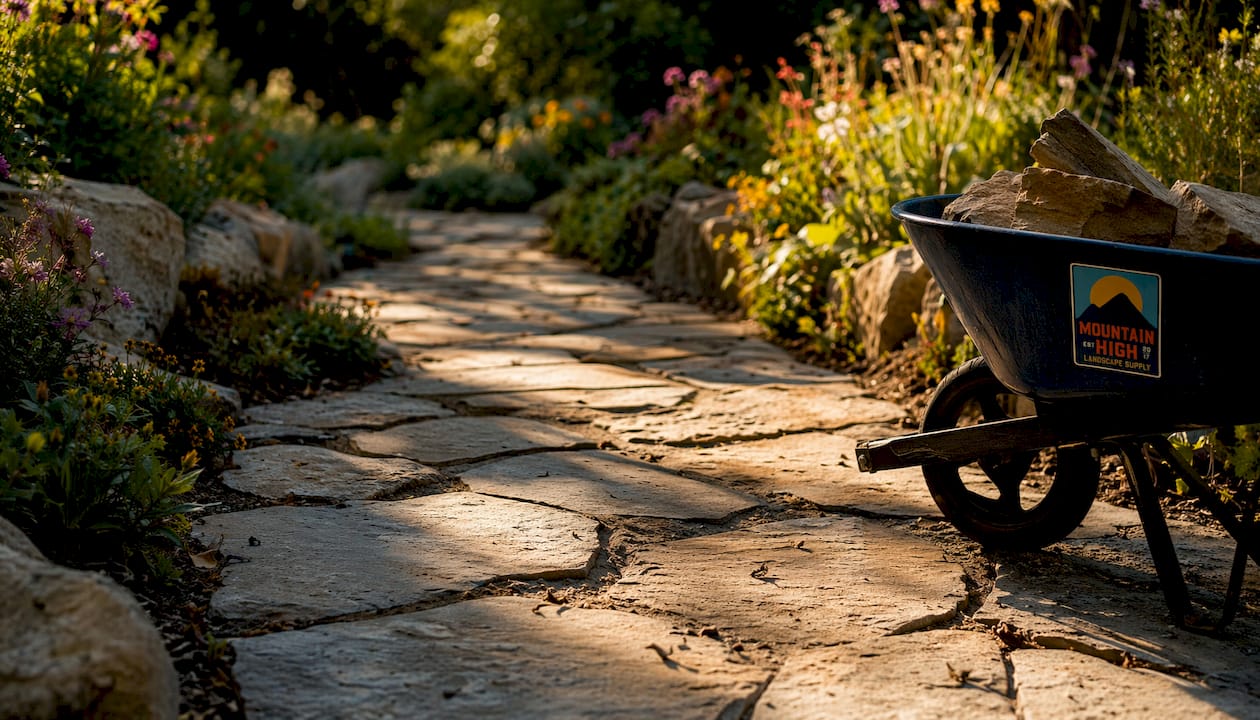
The word itself traces back to Middle English flagge, meaning turf, and likely connects to the Old Norse flaga, meaning “slab” or “chip.” That etymology tells you something practical: people have been splitting and laying these stones for centuries because the material practically invites it.
Key characteristics that define flagstone:
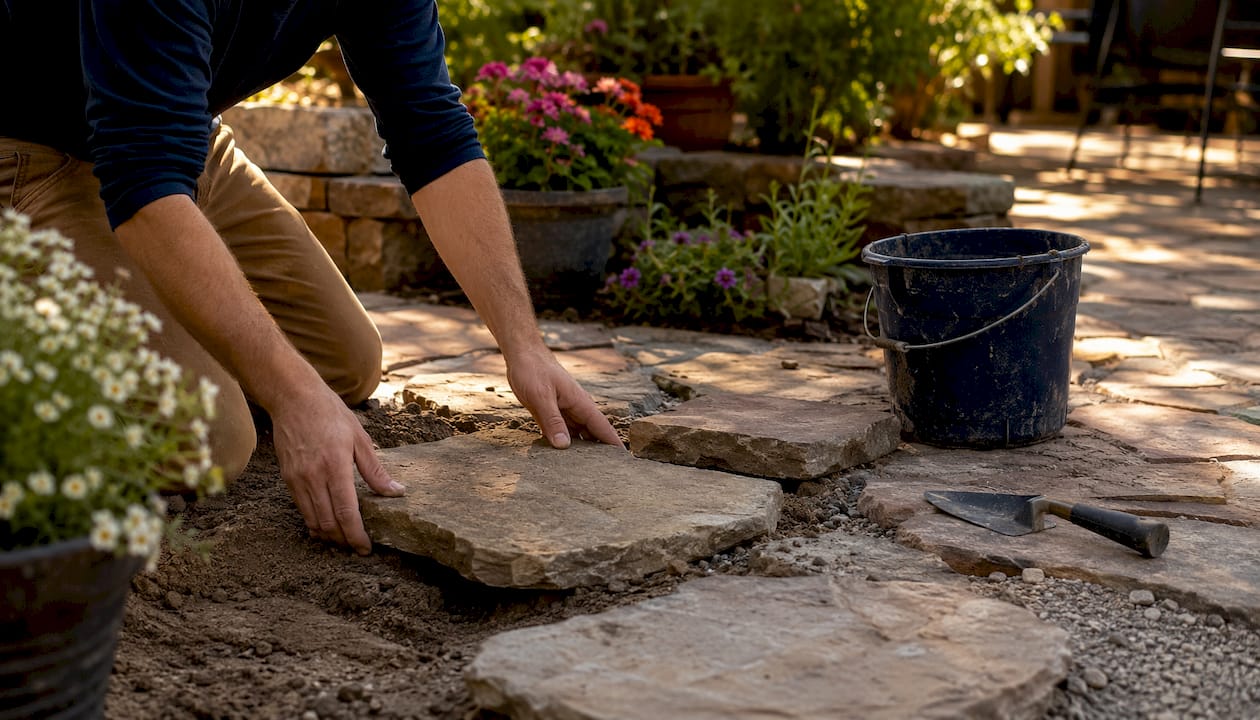
Flagstone’s flat profile and natural durability make it one of the most versatile paving materials available for residential projects. You’ll find it in nearly every outdoor application where a hard, attractive surface is needed.
Common flagstone uses include:
Flagstone’s weather resistance is a key reason homeowners choose it over manufactured alternatives. Properly installed, it handles freeze-thaw cycles, heavy rain, and direct sun without warping, fading, or degrading the way composite or concrete materials can over time.
The rock types composing flagstone fall into two geological categories: sedimentary and metamorphic. Each behaves differently underfoot, in wet conditions, and over decades of use.
Color comes directly from the binding material. Silica-bound stones tend toward buff and gray; iron oxide produces the warm reds and oranges common in Southwestern sandstone; calcite yields the cooler blues and grays seen in Tennessee and bluestone varieties. For a broader look at landscaping stone types and how they compare, that context helps when you’re narrowing down your material.
Bluestone is technically a type of flagstone, specifically a dense sandstone or limestone with a distinctive blue-gray color quarried primarily in Pennsylvania and New York. The term “bluestone” describes a color and regional origin, while “flagstone” describes the broader category. All bluestone is flagstone, but not all flagstone is bluestone.
Slate differs from most flagstone in that it’s purely metamorphic, with a very fine grain and a tendency to split into thinner, more uniform layers. It’s excellent for interior flooring but can be brittle outdoors in climates with hard freezes.
The flagstone vs pavers comparison comes down to three things:
For homeowners who want a surface that looks like it grew from the ground rather than was manufactured in a plant, flagstone wins on aesthetics. For budget-focused projects with tight timelines, concrete pavers offer predictability.
Maintenance needs vary significantly by stone type, and the biggest variable is porosity. Sandstone and limestone absorb water readily, which means stains set faster and freeze-thaw damage is more likely. Quartzite and slate are far less porous and require less intervention.
Practical maintenance steps:
Installation method also affects long-term care. Dry-set flagstone allows natural drainage and flexes with ground movement, making it more forgiving in freeze-thaw climates. Mortar-set creates a rigid surface that’s easier to clean but can crack when the ground shifts. For Atlanta-area homeowners, dry-set is often the better long-term choice given Georgia’s clay soils and occasional hard winters.
Pro Tip: Apply a penetrating sealer to sandstone or limestone flagstone within the first month of installation, before any staining occurs. It’s far easier to protect the stone upfront than to remove set-in stains later.
Start with your climate and intended use, then work backward to stone type. In freeze-thaw climates, metamorphic stones like quartzite outperform softer sandstones because their low porosity prevents water from penetrating and expanding inside the stone. In mild climates like Georgia’s, sandstone and limestone are perfectly viable and often more affordable.
Key selection factors:
For landscape design context, rendering landscape architecture resources can help you visualize how different stone colors and textures will read in a finished outdoor space before you commit to a material.
For homeowners in Georgia and the surrounding Southeast, local sourcing makes both practical and financial sense. Tennessee flagstone is one of the most widely available and well-suited options for the region, offering warm buff and gray tones that complement both traditional and contemporary home styles.
Mountainhighmulch carries large Tennessee flagstone slabs sold by the ton, with pickup available at our Marietta and Smyrna, GA locations and delivery throughout the Atlanta metro area. Our team can help you calculate how much material you need, advise on stone type for your specific application, and arrange professional installation if you’d rather not tackle the hand-fitting work yourself.
Buying local also reduces transportation costs and the environmental impact of shipping heavy stone long distances. Reclaimed flagstone is another option worth considering: it arrives pre-weathered, with a character that new-cut stone takes years to develop, and it keeps usable material out of the waste stream.

Ready to start your flagstone project? Mountainhighmulch also carries organic screened topsoil and other landscape materials to complete your outdoor space from the ground up. Visit us in Marietta or Smyrna, or reach out to our team for a material estimate.
Flagstone is a category of naturally flat stone that splits along bedding planes, making it ideal for outdoor paving, patios, and walkways across a wide range of climates and budgets.
| Point | Details |
|---|---|
| Flagstone definition | A category of sedimentary or metamorphic rock that splits into flat slabs along natural bedding planes. |
| Best stone for cold climates | Quartzite resists freeze-thaw damage better than sandstone due to its low porosity. |
| Sold by weight | Flagstone is priced by the ton, so calculate coverage area and add a buffer for cuts and waste. |
| Cost vs. concrete pavers | Flagstone costs more than concrete pavers because of quarrying, transportation weight, and hand-fitting labor. |
| Maintenance varies by type | Porous stones like sandstone need periodic sealing; dense stones like quartzite require far less upkeep. |
Flagstone costs more than concrete pavers because of quarrying, heavy transport, and the labor required to hand-fit irregular pieces. Porous types like sandstone also need periodic sealing to prevent staining and water damage.
The name comes from the Middle English word flagge, meaning turf, likely connected to the Old Norse flaga, meaning “slab” or “chip,” which describes how the stone naturally splits into flat pieces.
Yes. Flagstone is generally more expensive than concrete pavers because quarrying, transportation weight, and skilled hand-laying labor all add to the total cost.
Concrete pavers are manufactured to uniform shapes and sizes, making installation faster and more predictable. Flagstone is a natural material with irregular shapes that requires more skill to fit and lay, but delivers a look that manufactured pavers cannot replicate.