Garden sand is a coarse, angular sand used in gardening and landscaping to improve soil drainage, increase aeration, and support healthy root development. Unlike play sand or beach sand, it is made from crushed quartz, sandstone, or granite, giving it the jagged particle shape that creates pore space in dense or compacted soil. If your plants are struggling with waterlogged roots or your clay-heavy Georgia soil drains poorly, garden sand is the amendment most likely to make a measurable difference. Choosing the right type, however, matters as much as choosing to use it at all.
Garden sand is defined by its grain shape and size, not just its source. Coarse, angular particles interlock loosely when mixed into soil, creating pore space that holds oxygen and allows excess water to drain away from the root zone. Fine, rounded grains do the opposite. They pack tightly together, reducing drainage and suffocating roots over time.
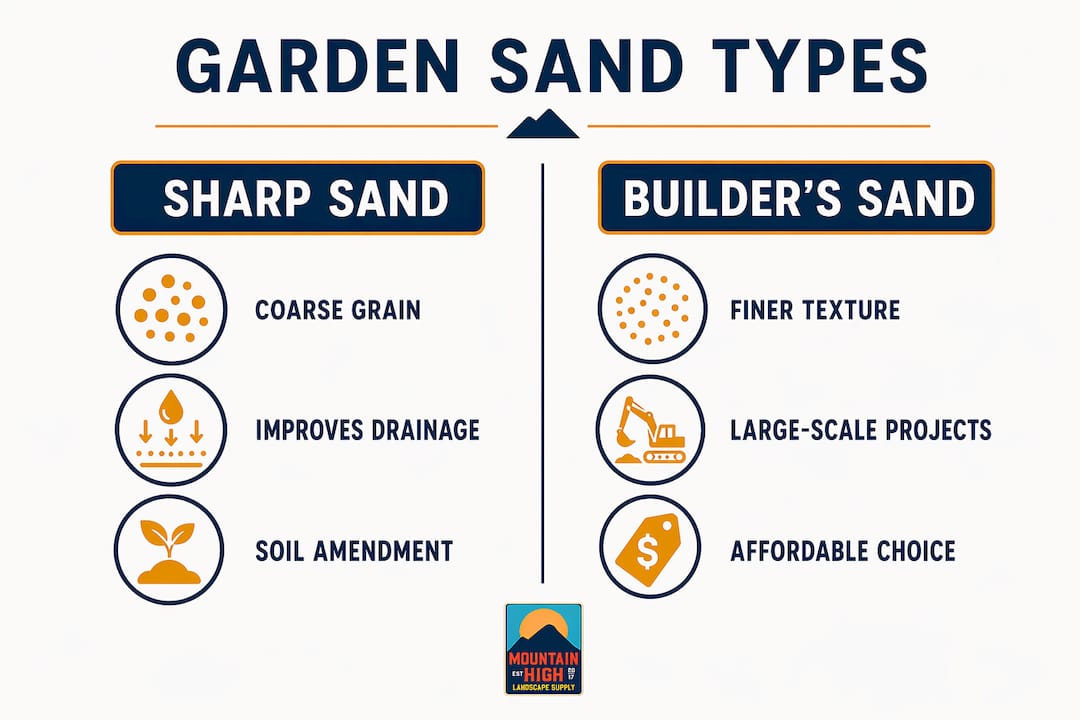
The industry term you will see most often on product labels is sharp sand, sometimes called horticultural sand. Both refer to the same category of coarse, angular material. Sharp sand is made from crushed quartz, sandstone, or granite, and its jagged edges are what make it effective. The grain shape is not cosmetic. It is the functional core of why this material works in soil.
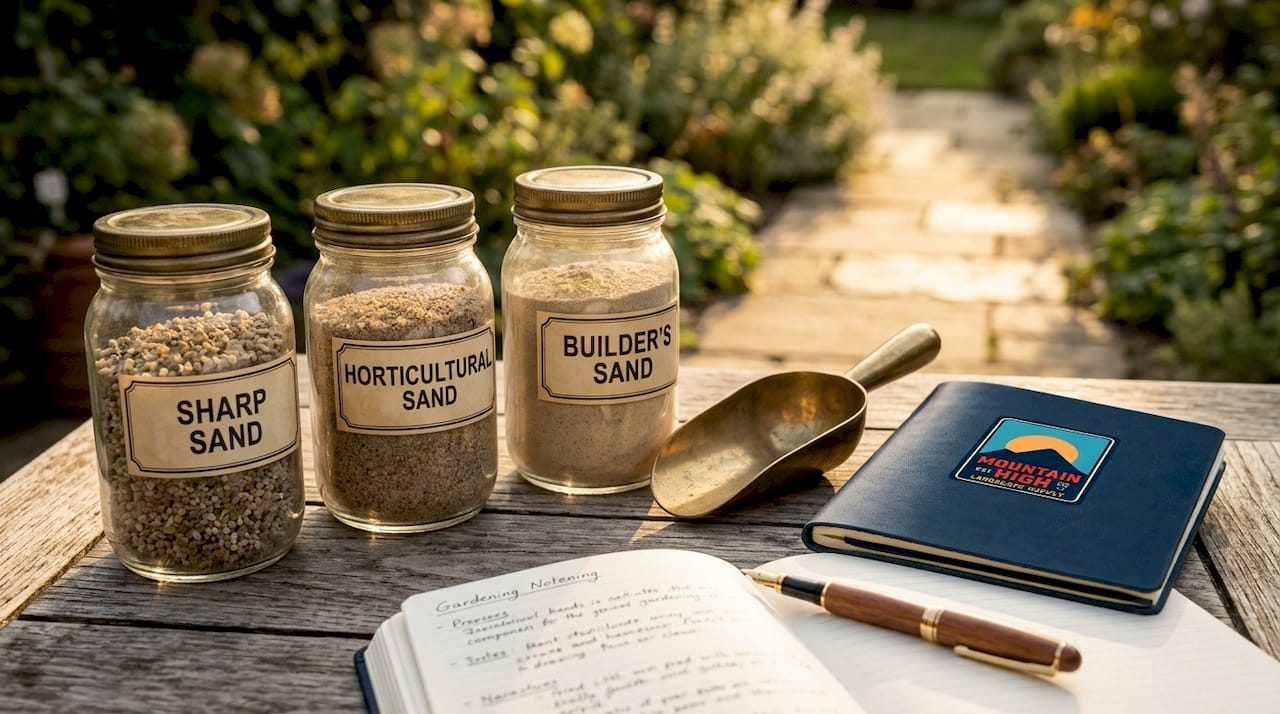
Pro Tip: When you pick up a handful of garden sand, it should feel gritty and slightly scratchy against your palm. If it feels smooth or silky, it is too fine for soil amendment work.
Not all sand sold at garden centers or landscape supply yards is the same. Knowing the differences saves you from buying the wrong product for your project.
| Sand type | Texture and particle size | Best use in gardening |
|---|---|---|
| Sharp sand (horticultural sand) | Coarse, angular, 0.5–2mm | Soil amendment, propagation mixes, seed starting |
| Builder’s sand | Variable, less uniform | Large landscaping projects, paver bedding |
| Play sand | Fine, rounded, under 0.5mm | Not suitable for soil amendment |
| Beach sand | Fine, rounded, salt-contaminated | Not suitable for any garden use |
Sharp sand is the gold standard for soil work. Horticultural sand does not alter soil pH or fertility, which means you can add it to beds without worrying about changing the growing conditions for your plants. Horticulturalist Tammy Sons notes its particular value in clay soils and rooting mixes, where drainage improvement is needed without chemical disruption.
Horticultural sand is functionally identical to sharp sand and is the term used most often in seed-starting and propagation contexts. Garden sand blended with compost or peat creates a propagation medium that balances moisture retention with the aeration delicate roots need.
Builder’s sand is less uniform than horticultural sand but more affordable and practical for large-scale projects where exact particle consistency is less critical. It works for paver bedding and general landscaping fill, but it is not the best choice for amending planting beds.
Pro Tip: For seed starting, mix one part sharp sand with two parts compost. The sand keeps the mix from compacting around fragile seedling roots while the compost supplies nutrients.
Garden sand benefits homeowners in several distinct ways, from improving planting beds to stabilizing hardscape surfaces. Here are the primary applications:
Soil drainage improvement. Mixing garden sand into heavy clay soil opens up the structure and allows water to move through rather than pool. This is the most common use for homeowners dealing with soggy beds or standing water after rain.
Preventing root rot. Waterlogged soil deprives roots of oxygen. Angular particles create pore space that keeps the root zone aerated even after heavy rainfall, reducing the risk of fungal root diseases.
Seed starting and propagation. Sharp sand is a standard ingredient in professional propagation mixes. It prevents the medium from compacting around new roots and supports even moisture distribution.
Lawn top dressing. A thin layer of sharp sand brushed into a lawn after aeration fills the holes left by the aerator and improves drainage in the turf root zone over time.
Paver joint filling. Brushing sand into patio joints prevents weed growth by creating dry, nutrient-poor conditions between stones. Specialist jointing sands outperform regular builder’s sand here because they are formulated to stay permeable and resist weed germination. For more on paver materials, the paver stone guide from SurfacesGalore covers joint-filling options in detail.
Pro Tip: For paver joints, use a dedicated polymeric or jointing sand rather than standard builder’s sand. The specialist product locks in place when wet and resists weed seeds far more effectively.
Play sand and beach sand are two of the most common substitutions homeowners attempt, and both cause more problems than they solve.
Play sand has fine, rounded grains that compact easily when mixed into soil. Instead of creating drainage channels, the fine particles fill the existing pore space in your soil, making drainage worse. The result is a denser, harder growing medium that restricts root growth and holds water longer than the original soil.
Beach sand carries an additional problem: salt. Salt accumulates in soil over time and draws moisture away from plant roots through osmosis, effectively dehydrating plants even when the soil appears moist. Fine beach sand also compacts like play sand, combining two damaging effects in one material.
| Property | Garden sand (sharp) | Play sand | Beach sand |
|---|---|---|---|
| Grain shape | Angular, jagged | Rounded, smooth | Rounded, smooth |
| Drainage effect | Improves drainage | Worsens drainage | Worsens drainage |
| Salt content | None | None | High |
| Suitable for soil amendment | Yes | No | No |
Play sand is also treated and processed for child safety, which means it may contain additives that are not appropriate for garden soil. The processing that makes it safe for sandboxes makes it unsuitable for planting beds.
Choosing the right sand starts with understanding what your soil and project actually need. Follow these steps before you buy:
Test your drainage first. Dig a hole about 12 inches deep, fill it with water, and time how long it takes to drain. If it takes more than an hour, your soil has a drainage problem that garden sand can help address. For more on diagnosing drainage issues, the Mountainhighmulch guide on Atlanta yard drainage covers the full range of solutions.
Match sand type to project. Use sharp sand or horticultural sand for planting beds, propagation mixes, and lawn top dressing. Use builder’s sand for paver bedding and large fill projects. Use specialist jointing sand for patio and paver joints.
Use the right ratio for clay soil. Adding sand to clay soil in small amounts can actually worsen compaction. Significant volume, around 50% sand by volume, is needed to genuinely change the texture of clay soil. For most homeowners, combining sand with compost and organic matter is more practical than adding sand alone.
Source quality material. Purchase garden sand from reputable landscape supply yards, garden centers, or nurseries. Bulk purchasing from a local supplier like Mountainhighmulch gives you consistent particle size and quality that bagged products from big-box stores often cannot match.
Apply evenly and work it in. For bed amendment, spread a 2 to 3 inch layer of sharp sand over the bed and work it into the top 8 to 10 inches of soil with a fork or tiller. For gravel and sand selection across different project types, the Mountainhighmulch resource covers the full decision process.
Garden sand works because its coarse, angular grain shape creates pore space in soil that improves drainage, supports root oxygen access, and prevents compaction.
| Point | Details |
|---|---|
| Definition matters | Garden sand is sharp, angular, and coarse. Fine or rounded sand worsens soil drainage. |
| Sharp sand is the standard | Sharp sand and horticultural sand are the same material and the best choice for soil amendment. |
| Volume is critical | Adding small amounts of sand to clay soil can increase compaction. Aim for around 50% sand by volume for real texture change. |
| Play sand causes harm | Fine, rounded grains compact soil and reduce drainage, making plant conditions worse. |
| Match sand to project | Use sharp sand for planting, builder’s sand for fill, and specialist jointing sand for pavers. |
The most common mistake I see is the “a little sand will help” approach. A homeowner digs a planting hole, tosses in a cup of sand, and wonders why their drainage has not improved six months later. The science is clear: small additions of sand to clay soil can actually create a concrete-like layer where the two materials meet. Real improvement requires real volume, and most homeowners are not prepared for how much that means.
The second mistake is treating all sand as interchangeable. I have seen play sand sold at big-box stores end up in raised beds because it was cheap and available. The plants in those beds consistently underperform compared to beds amended with proper horticultural sand. The difference in grain shape is invisible to the eye but significant to the root system.
My honest advice: combine sharp sand with quality compost rather than relying on sand alone. The compost adds organic matter that improves soil biology, while the sand handles the structural drainage work. Neither material does the full job on its own. Soil improvement also takes time. Do not expect one season of amendments to transform compacted Georgia clay. Work it consistently, and the results will come.
— Eric

Mountainhighmulch supplies premium sharp sand, builder’s sand, and specialty jointing sands to homeowners and contractors across Atlanta, Marietta, Smyrna, and the surrounding metro area. Whether you are amending a planting bed, top dressing a lawn, or filling paver joints on a new patio, our team can help you select the right material in the right quantity. We also carry complementary products including topsoil, compost, mulch, and gravel for complete soil health projects. Learn how mulch supports moisture retention alongside your sand amendments for a healthier garden overall. Pick up from our Marietta or Smyrna locations, or use our reliable delivery service throughout the metro area.
Garden sand is coarse and angular, designed to improve soil drainage and aeration. Play sand has fine, rounded grains that compact easily and reduce drainage, making it unsuitable for soil amendment.
Horticultural sand is used in seed-starting mixes, propagation composts, and soil amendment for clay-heavy beds. It improves drainage and aeration without altering soil pH or nutrient levels.
Around 50% sand by volume is needed to genuinely improve clay soil texture. Adding small amounts can worsen compaction rather than improve it.
Beach sand is not suitable for garden use. It contains salt that harms plants and has fine, rounded grains that compact soil and reduce drainage.
Mountainhighmulch supplies garden sand and related landscape materials from locations in Marietta and Smyrna, GA, with delivery available throughout the Atlanta metro area.