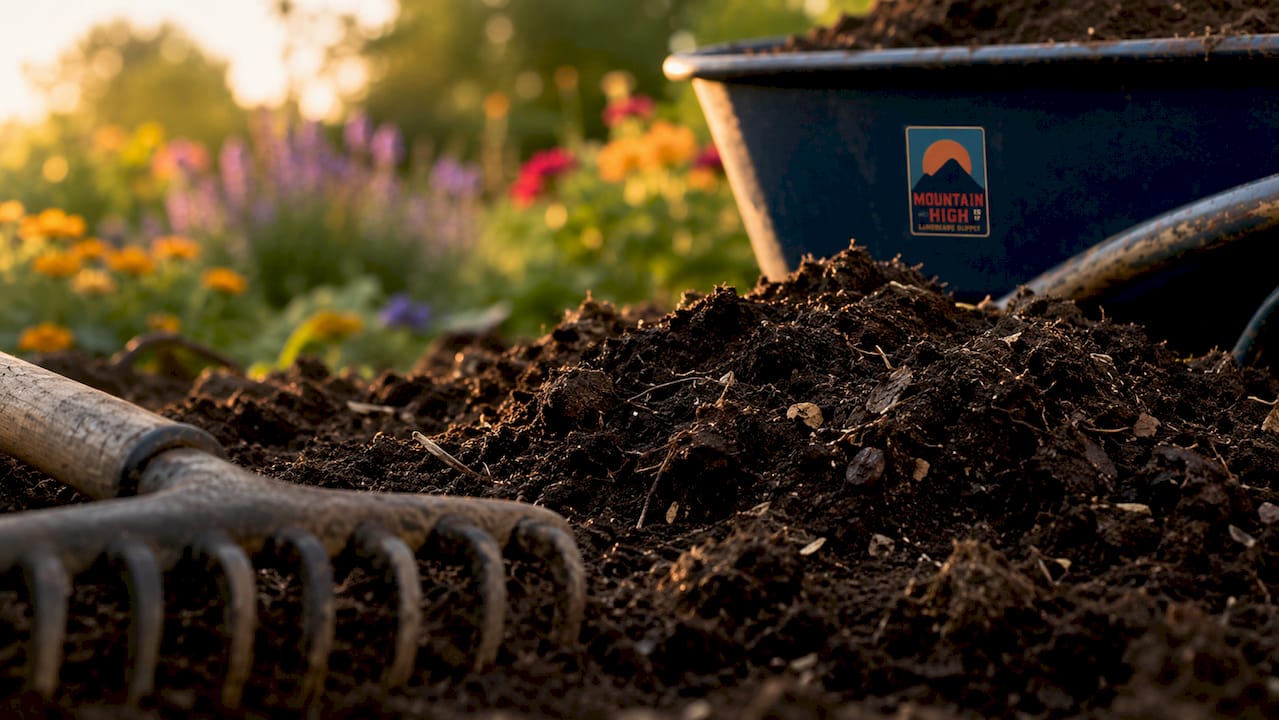
Garden soil is defined as a blend of mineral particles, organic matter, air spaces, and moisture specifically formulated to support active plant growth. Unlike raw earth dug from the ground, quality garden soil provides the structure, nutrients, and drainage balance that plant roots need to thrive. The Royal Horticultural Society recognizes loamy soil as the closest natural equivalent to an ideal growing medium, combining sand, silt, and clay in balanced proportions. At Mountainhighmulch, we work with homeowners across Atlanta, Marietta, and Smyrna every day to match the right soil products to the right gardens.
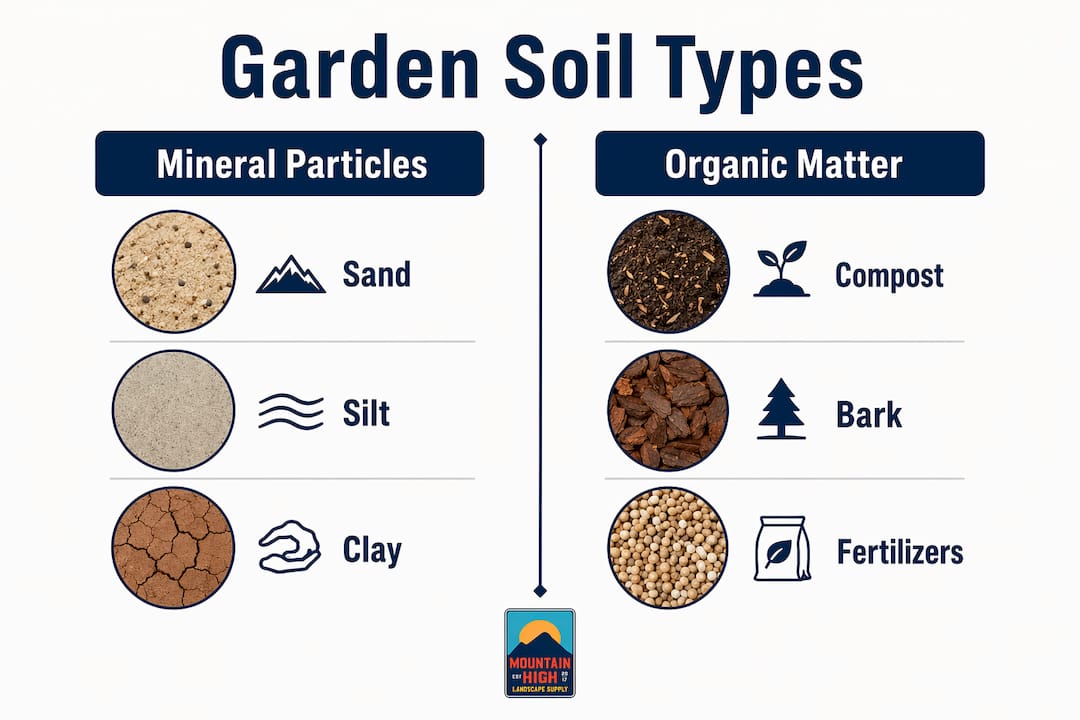
Garden soil is a mixture of mineral particles and organic matter, and the ratio between them determines how well your plants grow. The mineral component gives soil its physical structure. The organic component, typically compost, bark, or decomposed plant material, feeds soil microbes and releases nutrients slowly over time.
The three mineral particle types are sand, silt, and clay. Particle sizes vary widely: clay particles measure less than 0.002mm, silt ranges from 0.002–0.05mm, and sand spans 0.05–2mm. That size difference controls how tightly particles pack together, which directly affects drainage and aeration.
Healthy garden soil also contains air pockets between particles. Those pockets deliver oxygen to roots and prevent waterlogging. Without them, roots suffocate even in nutrient-rich soil.
Six primary soil types exist: clay, sandy, silty, loamy, peaty, and chalky. Each has distinct strengths and weaknesses for gardening.
Soil pH matters as much as texture. Most garden plants perform best when pH stays between 6.0 and 7.0. Outside that range, nutrients become chemically unavailable even when they are physically present in the soil.
Pro Tip: Buy a simple home pH test kit from any garden center. Testing takes five minutes and tells you exactly which amendments your soil needs before you spend money on plants or fertilizer.
Garden soil, topsoil, and potting soil are three different products with three different purposes. Confusing them is one of the most common and costly mistakes homeowners make.
Topsoil is essentially mineral dirt with little to no added organic matter. It works well for filling low spots, grading a yard, or building up base depth. It is not designed to feed plants on its own.
Garden soil contains added compost, bark, or fertilizers that topsoil lacks. It is specifically formulated for active planting areas where roots need both structure and nutrition. Think of it as topsoil with a purpose.
Potting soil is a different category entirely. It contains no actual mineral soil. Potting mixes use peat, perlite, and vermiculite to create a lightweight, sterile medium for containers. Garden soil used in pots compacts heavily and cuts off root oxygen.
For large projects, a layered approach works best. Using bulk topsoil for base depth and applying premium garden soil only to the top 3–5 inches keeps costs manageable while delivering a nutrient-rich root zone where plants actually need it. You can explore quality soil blends to find the right product for your project scale.
Garden soil feeds plants through slow, steady nutrient release from organic matter. This differs fundamentally from chemical fertilizers, which deliver a quick burst and then disappear.
The three primary nutrients are nitrogen, phosphorus, and potassium, commonly called NPK. Nitrogen drives leafy growth. Phosphorus supports root development and flowering. Potassium strengthens cell walls and improves disease resistance. Quality garden soil supplies all three through decomposing organic matter, which microbes break down into plant-available forms over weeks and months.
Organic matter supplies nutrients longer than chemical fertilizer and also acts like a sponge, holding moisture while still allowing excess water to drain. That balance protects plants during both dry spells and heavy rain.
Micronutrients like iron, manganese, and zinc are equally important, even though plants need them in smaller amounts. Healthy garden soil with a balanced pH keeps these micronutrients available. Soil that is too acidic or too alkaline locks them up chemically, causing deficiency symptoms even when the nutrients are physically present.
Improving your garden soil starts with knowing what you have. Test your soil’s pH and texture before buying any amendments. Fighting your native soil without understanding it wastes time and money, as the RHS advises that adapting to native soil character is often more effective than trying to override it completely.
Once you know your soil type, follow these steps:
Pro Tip: Mulching over amended soil slows moisture loss and protects the microbial community you just built. A 2-inch layer of organic mulch after planting makes a measurable difference by midsummer. Learn more about mulch and moisture retention to get the most from your soil work.
Good garden soil is a balanced blend of minerals, organic matter, and air space. Amending it correctly into the root zone, not just the surface, determines whether your plants thrive or struggle.
| Point | Details |
|---|---|
| Garden soil definition | A blend of mineral particles, organic matter, air spaces, and moisture formulated for active plant growth. |
| Loam is the ideal type | Loamy soil balances drainage, moisture retention, and nutrients better than clay, sandy, or silty soil alone. |
| pH range matters | Most plants perform best between pH 6.0 and 7.0; outside this range, nutrients become unavailable. |
| Amend into the root zone | Work amendments into the top 6–8 inches of native soil rather than layering on the surface. |
| Never use garden soil alone in pots | Garden soil compacts in containers; blend it 50/50 with compost or native soil for raised beds. |
Garden soil is best understood as a recipe, not a product. You can buy the finest blend available, but if you dump it on top of compacted clay and call it done, you have wasted your money. The plants will root into the new layer, hit the clay wall beneath, and stop growing. I have seen this exact scenario play out in dozens of Atlanta-area yards.
The fix is always the same: get the amendment into the ground, not just on top of it. A tiller or a good spade, some patience, and a quality compost blend will do more for your garden than any premium bag of soil applied incorrectly. Check out expert landscape supply tips for Georgia-specific guidance on soil and amendments.
The other mistake I see constantly is treating garden soil as a standalone growing medium in raised beds and containers. It compacts. It cuts off oxygen. Roots die quietly and gardeners blame the plants. Blend it, work it in, and let the microbiome stabilize over a full season. Soil health is a process, not a one-time purchase.
— Eric
Mountainhighmulch supplies organic screened topsoil and premium garden soil blends to homeowners and contractors across Atlanta, Marietta, and Smyrna. Our team helps you match the right product to your project, whether you need bulk soil for a large bed renovation or a finishing layer of nutrient-rich mix for a vegetable garden.

We carry bulk compost options that work directly with your native soil to build long-term fertility. Delivery is available throughout the metro area, and our supply yards in Marietta and Smyrna are clean, organized, and staffed by people who know soil. Visit our landscape materials page to see current products and get started on your next project.
Garden soil is used to improve planting beds, vegetable gardens, and landscaped areas by adding nutrients, organic matter, and better drainage to native ground. It is not designed for use in containers or pots.
Yes. Topsoil is basic mineral dirt used for grading and filling. Garden soil contains added compost, bark, or fertilizers and is formulated specifically for active plant growth zones.
Loamy soil with a pH between 6.0 and 7.0 and a high organic matter content produces the best vegetable yields. Amending clay or sandy native soil with compost and a quality garden soil blend achieves similar results.
A home pH test kit gives you pH readings in minutes. For a full nutrient and texture analysis, send a sample to your local cooperative extension office, which provides detailed amendment recommendations for your specific soil.
You can use garden soil in raised beds, but never alone. Blend it 50/50 with compost or native soil to maintain the air pockets roots need. Pure garden soil compacts over time and reduces root oxygen.