Landscape fabric is a permeable textile material installed on the soil surface to suppress weeds, stabilize ground cover, and prevent soil from mixing with mulch or gravel above it. The fabric blocks sunlight to stop weed seeds from germinating while, at least initially, allowing water and air to pass through. Washington State University extension research and industry professionals both recognize it as a common tool in gardening and landscaping, though its effectiveness depends heavily on where and how you use it. Understanding the role of landscape fabric before you buy saves you time, money, and a lot of frustration later.
Landscape fabric is a woven or non-woven geotextile laid directly on prepared soil before a top layer of gravel, stone, or mulch is applied. Its primary job is to block sunlight from reaching weed seeds in the soil below. Without light, most seeds cannot germinate, which reduces the number of weeds you pull by hand each season. The fabric also acts as a physical separator, keeping decorative stone or gravel from sinking into soft soil over time.
The permeability claim is where homeowners often get surprised. Manufacturers advertise that fabric lets water and air pass freely through its pores. In practice, fabric pores clog quickly with silt and organic debris, reducing water and air access for plant roots. That clogging leads to shallow root systems and increased vulnerability to drought and heat stress, especially in Georgia summers.
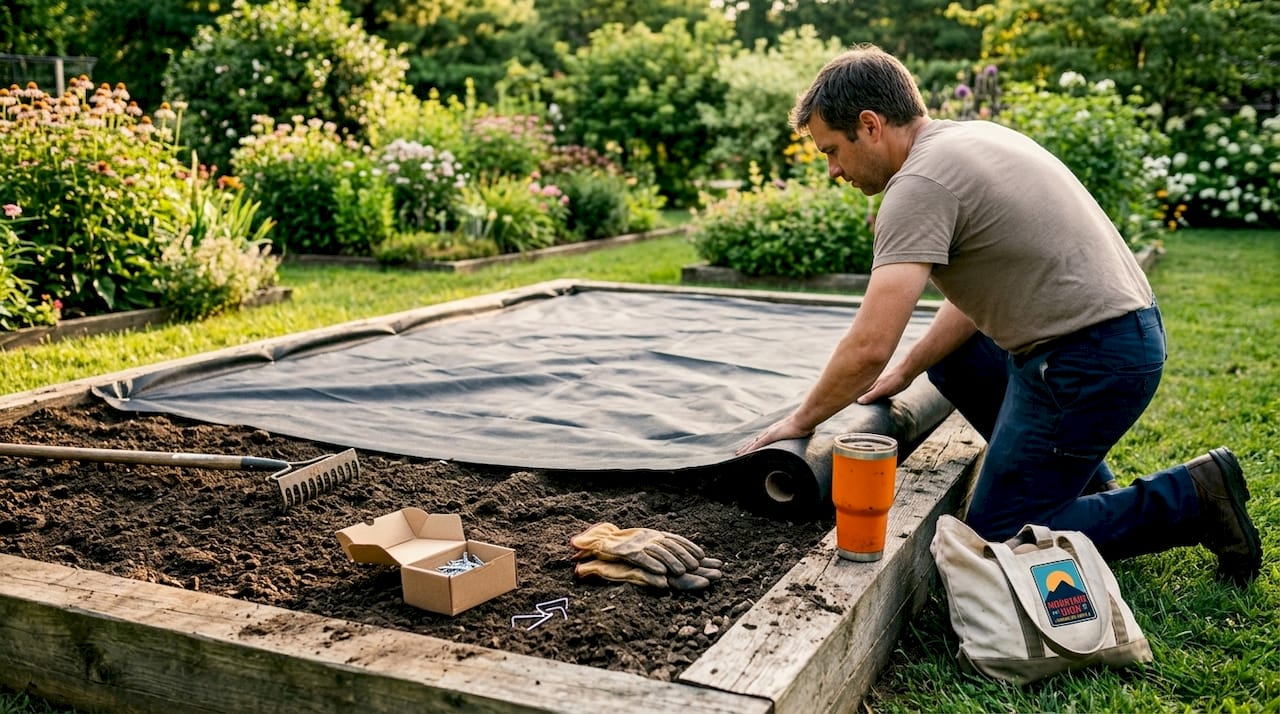
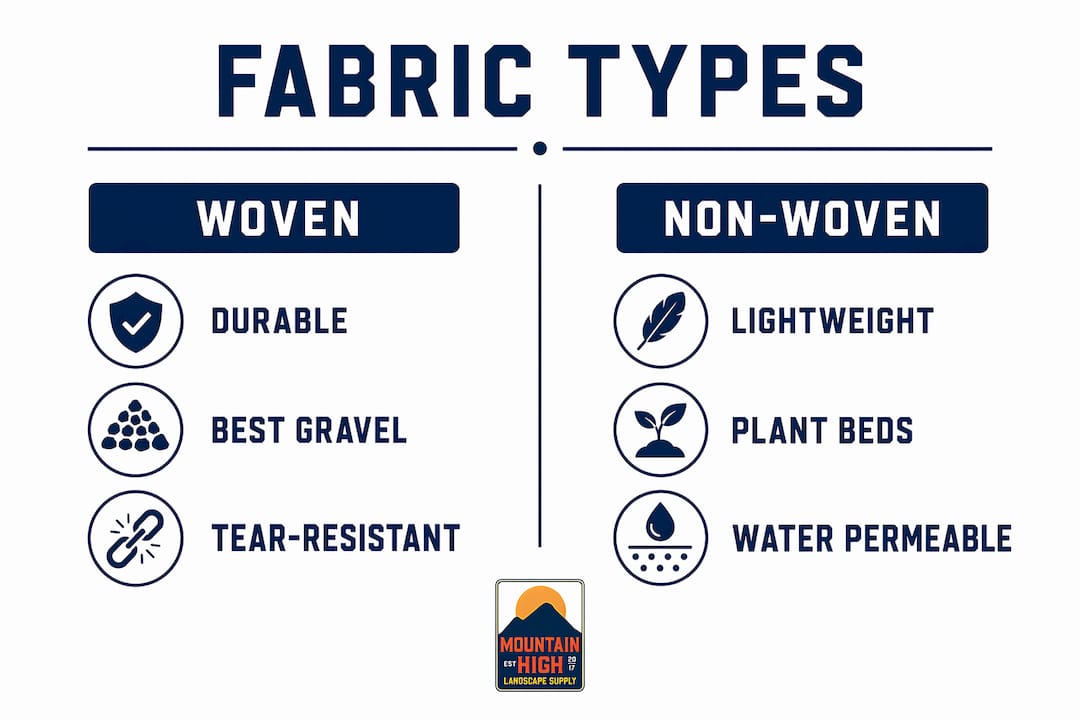
Two main categories exist: woven and non-woven. Each serves a different purpose, and choosing the wrong one is one of the most common mistakes homeowners make.
| Type | Weight | Best Use | Durability |
|---|---|---|---|
| Woven polypropylene | ~5 oz. per sq. yard | Gravel beds, stone paths, hardscape | High, 10+ years |
| Non-woven (spunbond) | 3–4 oz. per sq. yard | Drainage layers, short-term seasonal use | Low to moderate |
| Heavy-duty woven | 6+ oz. per sq. yard | Commercial sites, high-traffic areas | Very high |
Woven fabrics around 5 oz. per square yard are the professional standard for gravel beds because they resist tearing and hold up under the weight of stone. Lighter non-woven fabrics in the 3–4 oz. range work for drainage applications or temporary seasonal projects, but they are not built for long-term weed suppression under heavy cover.
Pro Tip: Match fabric weight to your project. Use a 5 oz. woven fabric under any gravel or stone installation. Reserve lighter non-woven options for drainage projects or raised bed liners where you plan to replace the material within a season or two.
The benefits are real, but they come with a time limit. Knowing both sides helps you set realistic expectations before installation.
The pattern is consistent: landscape fabric performs well in inorganic settings and struggles in living, planted beds.
The best applications for landscape fabric share one trait: no organic matter accumulates on top of the cover material. Gravel paths, stone patios, and commercial low-maintenance sites fit that profile well.
For a detailed walkthrough of pairing fabric with stone, the gravel path installation guide from Mountainhighmulch covers the full process for homeowners in the Atlanta area.
Pro Tip: Never install landscape fabric in an evolving perennial bed or vegetable garden. Those beds change every season, and cutting and re-cutting fabric around new plants destroys its integrity within a year.
Organic mulch is the most practical alternative for planted beds, and the research backs it up clearly.
Washington State University confirms that 3 to 4 inches of wood chip or shredded bark mulch suppresses weeds comparably to fabric in the first two years. After that, organic mulch pulls ahead because it improves soil structure as it breaks down, feeds earthworms, and supports microbial activity that keeps soil loose and fertile.
| Option | Weed Suppression | Soil Health | Lifespan | Best For |
|---|---|---|---|---|
| Landscape fabric | Strong (years 1–3) | Negative long-term | 5–10 years (hardscape) | Gravel beds, stone paths |
| Wood chip mulch | Moderate to strong | Positive | Replenish annually | Ornamental beds, trees |
| Shredded bark | Moderate | Positive | Replenish annually | Garden beds, pathways |
For Georgia homeowners, mulch types suited to local conditions matter because heat and humidity accelerate decomposition, which means you get faster soil improvement but need to replenish mulch more often.
Landscape fabric works well under gravel and stone but causes measurable soil damage in planted beds, making organic mulch the better long-term choice for most home gardens.
| Point | Details |
|---|---|
| Best use is hardscape | Fabric performs reliably under gravel, stone paths, and commercial sites with no organic debris. |
| Effectiveness has a time limit | Weed suppression drops significantly after 3–4 years in ornamental beds as debris builds up. |
| Soil health suffers under fabric | Fabric reduces gas exchange roughly 1,000 times more than wood chip mulch, harming roots and organisms. |
| Fabric weight matters | Use 5 oz. woven fabric for gravel beds; lighter non-woven options suit only drainage or seasonal use. |
| Organic mulch outperforms long-term | Three to four inches of wood chips or shredded bark matches early weed suppression and improves soil over time. |
Landscape fabric gets oversold as a permanent fix, and that misunderstanding costs homeowners real money. I’ve seen beds where fabric was installed with good intentions and then became the problem itself by year five or six. The organic matter that accumulates on top of the fabric creates a perfect growing medium for weeds, and by that point the fabric is so entangled with plant roots that removal is a half-day project.
The research from Washington State University confirms what experienced landscapers already know: fabric belongs under stone, not under perennials. The soil health argument alone should settle the debate for most homeowners. A material that restricts gas exchange by a factor of 1,000 compared to wood chips is not a neutral addition to a living garden bed. It is an active barrier to the biological processes that make soil productive.
My honest recommendation is to use fabric only where you are certain no plants will grow through it and where inorganic cover material will stay clean. For everything else, a consistent layer of quality organic mulch does the job without the long-term costs. The role of mulch in moisture retention is also worth understanding because it adds another layer of value that fabric simply cannot provide.
— Eric
Choosing the right material for your project is easier when you have access to quality products and people who know how to use them.

Mountainhighmulch serves homeowners across Atlanta, Marietta, Smyrna, and the surrounding metro area with premium landscape supplies including organic mulches, gravel, stone, and topsoil. Whether you need cover material for a gravel path or a bulk order of wood chip mulch for your ornamental beds, our team at our Marietta and Smyrna supply yards can help you choose the right product for your specific project. Browse our landscape materials collection or stop by and talk to one of our experts in person. Pickup and delivery are both available throughout the metro area.
Landscape fabric is typically made from woven or non-woven polypropylene fibers. Woven versions are denser and more durable, while non-woven spunbond fabrics are lighter and used for drainage or short-term applications.
Landscape fabric suppresses weeds effectively for the first two to three years, but it is not a permanent solution. Tenacious weeds like bindweed can root through fabric fibers, and debris accumulation on top creates a new growing medium for weeds above the barrier.
Landscape fabric is the recommended choice under gravel and stone paths because it prevents the stone from sinking into the soil and stops weeds from pushing up through the cover material. It performs best in these inorganic, low-debris settings.
In hardscape applications under gravel or stone, quality woven fabric can last 10 or more years. In ornamental planted beds, effectiveness drops significantly after 3–4 years as pores clog and organic debris accumulates on the surface.
Landscape fabric is not recommended for vegetable gardens. It restricts the soil gas exchange that vegetable roots need, blocks nutrient cycling from organic matter, and makes seasonal replanting difficult. A 3 to 4 inch layer of organic mulch is a better fit for food gardens.