
Many people think landscape rock is purely decorative. The truth is more practical. Landscape rock offers functional benefits like weed control, drainage, and long-lasting ground cover. This guide will explain what landscape rock is, its uses, pros and cons, and how to choose the right type for your outdoor projects in Georgia.
| Point | Details |
|---|---|
| Landscape rock reduces weed growth effectively | A 2-4 inch layer blocks sunlight and prevents up to 80% of weed emergence compared to bare soil. |
| It is a durable solution for drainage and long-term landscape stability | River rock lasts 10+ years and improves water flow around foundations. |
| Mulch and rock each have unique benefits suited to different landscaping needs | Mulch enriches soil and retains moisture, while rock provides durability and drainage. |
| Cost and maintenance vary significantly between rocks and mulch | Rock costs more upfront but requires less frequent replacement than organic materials. |
| Proper installation with fabric and drainage slope extends rock effectiveness | Landscape fabric and a 1-inch-per-foot slope away from foundations prevent soil mixing and water damage. |
Landscape rock refers to various natural stones used as ground cover or accents in landscaping. These materials serve both functional and aesthetic purposes in Georgia yards. Understanding the types available helps you match materials to your project needs.
Common types include the following:
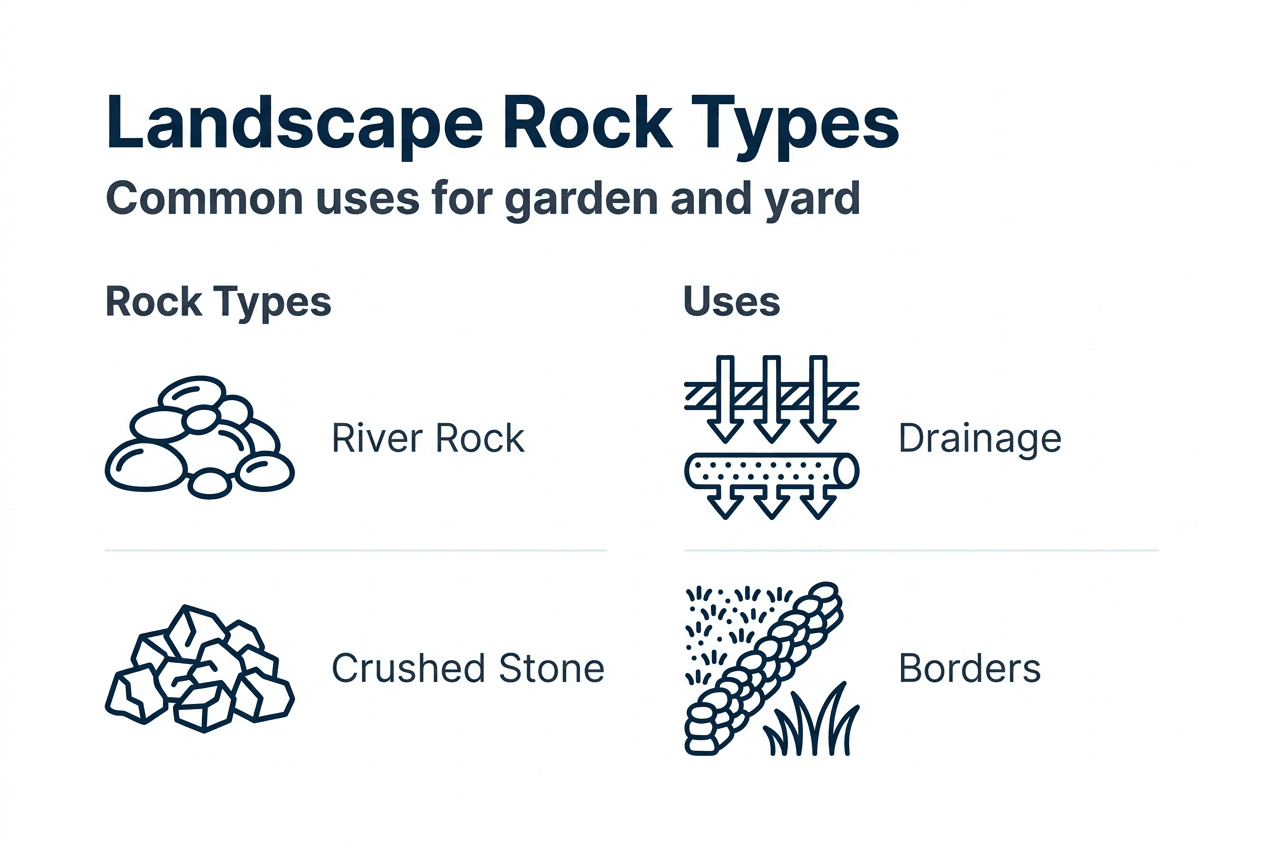
River rock is a long-term surface solution that helps with drainage and doesn’t break down. This durability makes it especially valuable in Georgia’s humid climate where organic materials decompose quickly. Atlanta river rock offers natural beauty and versatility for local landscapes.
Each rock type has specific applications. River rock works well around foundations and in dry creek beds. Crushed stone provides stable surfaces for high-traffic areas. Pea gravel creates comfortable pathways and playground surfaces. Decorative boulders anchor garden beds and define landscape zones.
Pro Tip: Match rock size to your project scale. Smaller rocks work better in tight spaces and around delicate plants, while larger stones make bold statements in open areas.
Landscape rock offers multiple advantages that make it attractive for Georgia homeowners and professionals. These benefits extend beyond aesthetics to practical performance.
Key benefits include:
Research confirms these advantages. A 2-4 inch layer reduces weed growth by up to 80% compared to bare soil. This significant reduction saves time and money on weed control.
The drainage benefits prove especially valuable in Georgia. Rock allows water to flow freely while preventing soil washout during storms. This protects plant roots and foundation integrity. Many homeowners near Atlanta appreciate this feature when managing seasonal rainfall.
“Landscape rock transforms high-maintenance areas into low-maintenance zones without sacrificing beauty. The initial investment pays dividends through reduced upkeep and long-term stability.”
Visit a stone yard near Atlanta to see quality options firsthand. Seeing different rock types helps you visualize how they’ll look in your specific landscape design.
Pro Tip: Use lighter-colored rocks in shaded areas to brighten dark corners, and darker rocks in sunny spots to create visual depth and contrast.
Choosing between landscape rock and mulch depends on your yard’s specific needs. Both materials serve distinct purposes in Georgia landscapes.
The fundamental difference lies in soil interaction. Mulch regulates soil temperature, retains moisture, and adds organic matter over time, nearly doubling root development compared to bare or rocky soil. Rock provides no nutritional value but excels at drainage and durability.
| Feature | Landscape Rock | Mulch |
|---|---|---|
| Soil enrichment | None, purely protective | Adds organic matter as it decomposes |
| Moisture retention | Minimal, promotes drainage | High, reduces watering needs |
| Durability | 10+ years without replacement | 1-2 years before replenishment needed |
| Initial cost | Higher, $140-$300 per ton installed | Lower, $85-$115 per cubic yard installed |
| Maintenance | Occasional rinsing and debris removal | Annual or biannual reapplication |
| Best applications | Drainage areas, walkways, slopes, foundations | Around plants, vegetable gardens, flower beds |
Mulch works better for areas with shallow-root plants or soil needing enrichment. Trees, shrubs, and perennial beds benefit from mulch’s moisture retention and nutrient release. Rock suits high-traffic zones, drainage channels, and decorative borders where soil nutrition isn’t critical.
Common practice combines both materials effectively. Mulch installation benefits plants directly while rocks define edges and pathways. This approach maximizes each material’s strengths.
Consider these factors when deciding:
Learn more about choosing the right mulch for specific landscape needs. The decision isn’t always either/or.
Pro Tip: Create transition zones where mulch gradually meets rock using landscape edging. This prevents materials from mixing and maintains clean, professional-looking borders.
Proper installation determines whether landscape rock delivers its full benefits. Following these steps ensures effective weed control, drainage, and aesthetic appeal.
Installation process:
The 4-inch depth proves critical. Thinner layers allow weeds to penetrate and reduce drainage effectiveness. Thicker layers waste material and money without adding benefits. Proper depth preserves drainage systems during Georgia’s heavy storms.
Maintenance requirements stay minimal but matter for long-term performance. Inspect rock areas quarterly for debris accumulation. Leaves, twigs, and dirt collect over time and reduce visual appeal. A leaf blower clears surface debris quickly.
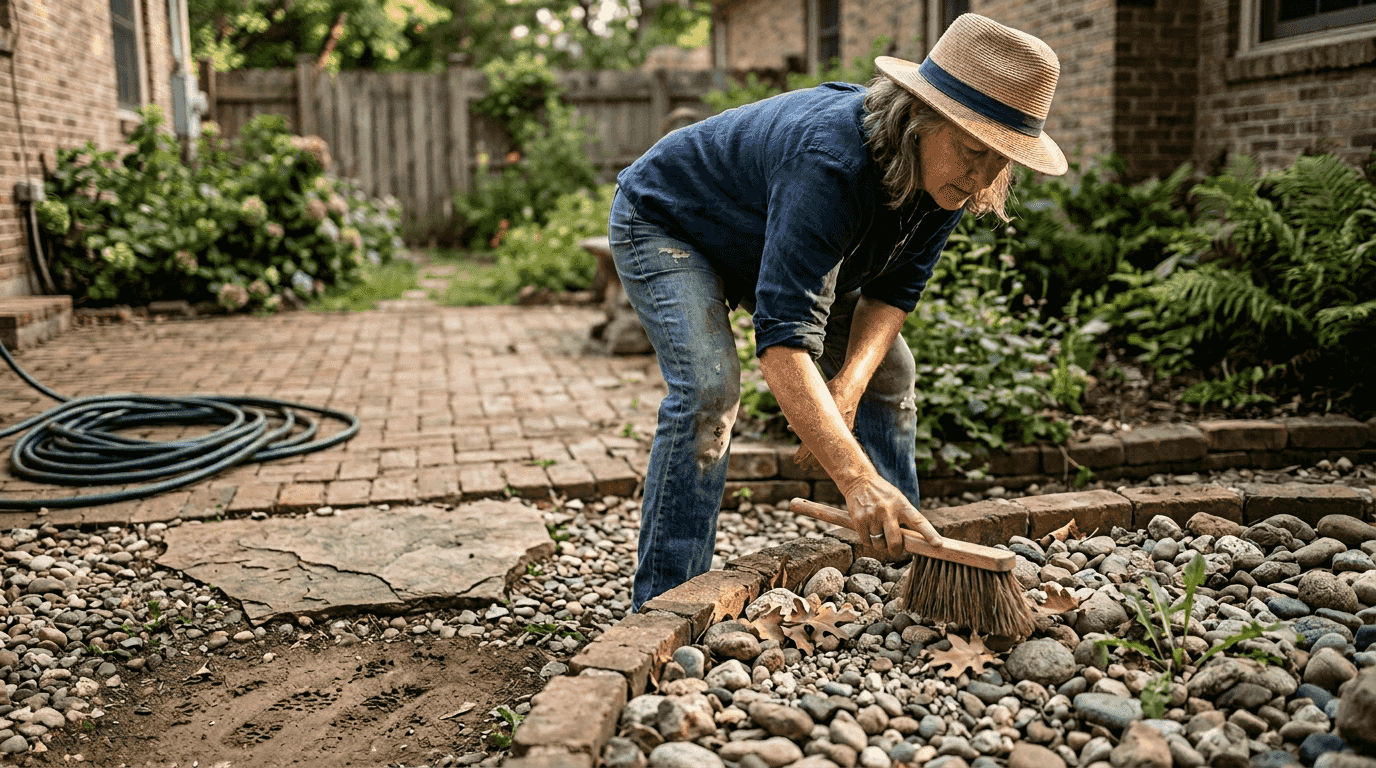
Rinse rocks annually with a garden hose to remove dust and restore color vibrancy. This simple step keeps landscapes looking fresh. Check fabric edges periodically and repair any tears or exposed areas to maintain weed barrier integrity.
Replenish rock layers every few years as settling occurs. Traffic and weather gradually compact rocks, reducing depth. Adding a thin layer restores proper coverage without complete replacement.
Follow this rock installation guide for detailed techniques. Proper installation prevents common problems like soil mixing, weed growth, and drainage issues.
Pro Tip: Edge your rock areas with metal or plastic landscape edging to prevent rocks from migrating into lawn areas during mowing or heavy rain.
Now that you understand how to install and maintain landscape rock effectively, finding quality materials becomes your next step. Mountain High Landscape and Hardscape Supply offers a wide variety of landscape rocks ideal for Georgia yards.

Their expert team provides advice on selecting materials that match your design and budget needs. Whether you need Atlanta river rock for drainage projects, crushed stone for pathways, or decorative boulders for focal points, they stock quality options.
Visit their stone yard near Atlanta locations in Marietta and Smyrna to see materials firsthand. Their clean, organized yards make selection easy. Pick up materials yourself or schedule delivery throughout the metro area. They also offer professional installation for complete project support.
Explore their range of landscape project supplies trusted by homeowners and professional contractors alike.
Landscape rock refers to natural stones used as ground cover, borders, or decorative accents in outdoor spaces. Common types include river rock, crushed stone, pea gravel, and decorative boulders. These materials provide functional benefits like weed control and drainage while enhancing landscape aesthetics.
Landscape rock blocks sunlight and creates a physical barrier that prevents weed growth when applied properly. A 2-4 inch thickness significantly reduces weed emergence by up to 80% compared to bare soil. The combination of rock depth and underlying landscape fabric provides the most effective weed suppression.
Landscape rock has a higher upfront cost, with river rock costing $80-$140 per cubic yard installed while mulch costs around $30-$45 per cubic yard installed. However, rock’s durability reduces replacement frequency. Over a 10-year period, rock may prove more economical despite higher initial investment.
Mixing rocks and mulch is common and creates visual appeal in Georgia landscapes. Homeowners often use stone mulch around walkways and bark mulch around shrubs and flower beds for a balanced look. Use rocks in high-traffic or drainage areas and mulch near plants needing soil enrichment for best results.
Use landscape fabric beneath rock to block soil mixing and promote drainage. Maintain a 1-inch-per-foot slope away from the foundation, and apply a 4-inch depth of rock to prevent water pooling. This installation method preserves drainage system integrity during Georgia’s heavy storms and protects foundation from water damage.