Playground mulch is engineered safety surfacing designed to cushion children’s falls and reduce injury on play equipment. The industry standard term is Engineered Wood Fiber, or EWF, though rubber mulch and other certified materials also qualify. IPEMA-certified EWF meets ASTM F1292 safety standards and protects against falls up to 13 feet when installed at 12 inches depth. Understanding your options means your child plays on a surface that actually performs when it matters most.
Playground mulch is not the same as garden mulch. Garden mulch controls weeds and retains moisture. Playground safety surfacing is tested, certified, and engineered specifically to absorb impact forces during falls. The two most common types are Engineered Wood Fiber and rubber mulch, and they perform very differently.
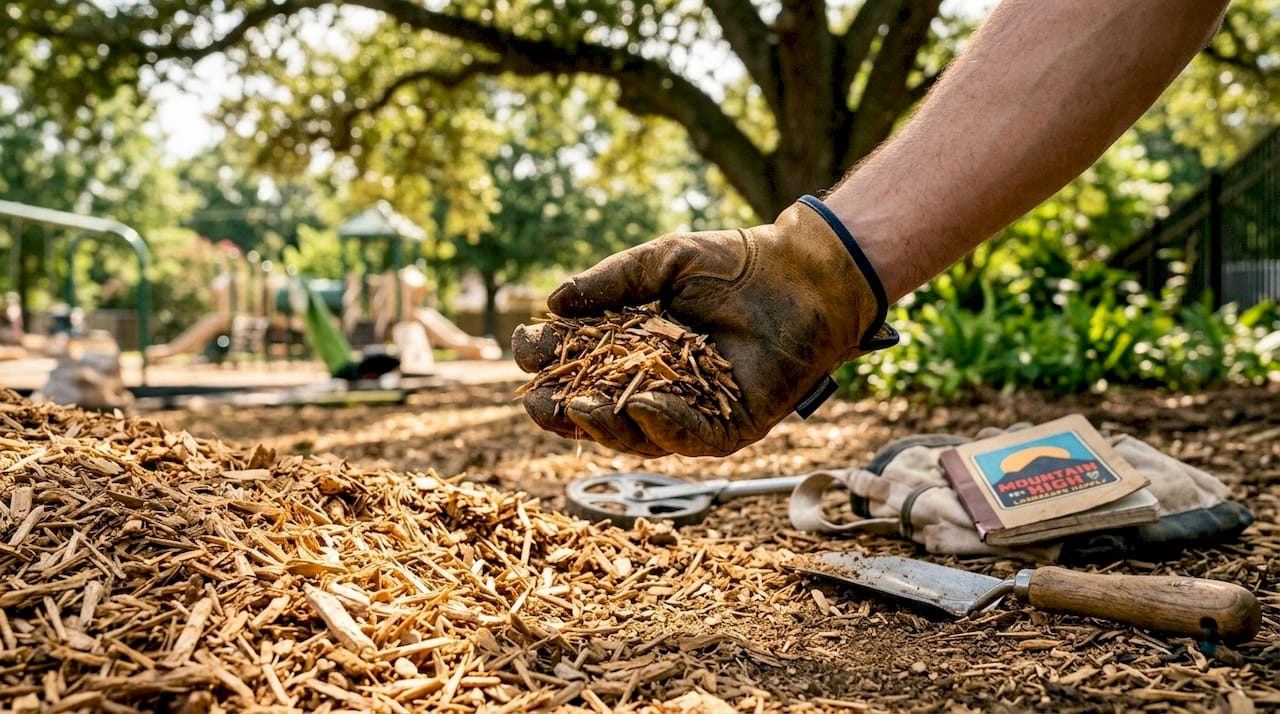
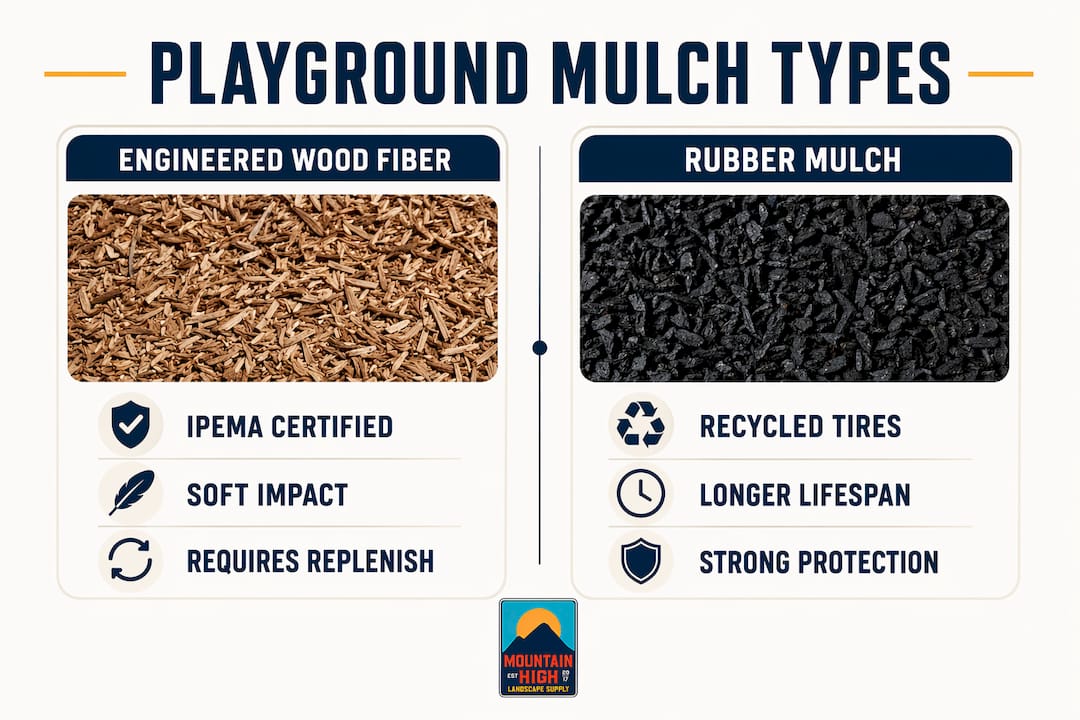
EWF is processed to remove bark, twigs, and debris, producing uniform particles with no sharp edges. That uniformity is what makes it safe. Random wood chips from a tree service contain inconsistent particle sizes, which directly weakens cushioning performance. IPEMA certification confirms the product has passed rigorous third-party testing under ASTM F1292 and ASTM F1951, the latter covering wheelchair accessibility. EWF is the most widely used playground surfacing material in the United States.
Rubber mulch is made from recycled tires and offers strong impact protection with a lifespan of 10–20 years before replacement. It does not compact or decompose like wood-based materials, which keeps maintenance lower over time. The tradeoff is a higher upfront cost and the need for a sturdy containment border since rubber granules migrate easily. Concrete curbs or heavy timber edging are the standard solution.
Pea gravel and bark mulch are sometimes used on playgrounds, but neither meets IPEMA certification standards for consistent shock absorption. Bark mulch decomposes quickly and can harbor insects. Pea gravel shifts underfoot and poses a choking hazard for young children. For any play area where children under 12 are present, certified EWF or rubber mulch is the right call.
| Feature | Engineered Wood Fiber | Rubber Mulch |
|---|---|---|
| Safety Certification | IPEMA / ASTM F1292 | Available, varies by brand |
| Lifespan | 1–3 years before replenishment | 10–20+ years |
| Upfront Cost | Lower | Higher |
| Maintenance | Annual top-off required | Minimal |
| Accessibility | ADA compliant (ASTM F1951) | Varies |
| Environmental Impact | Biodegradable, carbon storing | Recycled origin, microplastic concerns |
Pro Tip: Always ask your supplier for the IPEMA certificate of conformance before purchasing. A supplier who cannot produce it is selling you garden mulch, not playground safety surfacing.
Depth is the single most critical factor in playground mulch safety. A surface that looked compliant on installation day can become dangerous within months if depth is not monitored. Only 4.7% of playgrounds maintain the required mulch depth, and that failure leads to a 44% increase in impact forces during falls. That statistic should concern every parent and facility manager.
The recommended depth standards are:
“Effective depth after installation equals initial installed depth minus compaction and displacement losses. Planning for 14 inches of EWF at installation ensures compliance after settling.” — Replay Surfacing
Pro Tip: Use a simple ruler or depth probe monthly at the highest-traffic spots. If depth drops below 9 inches under any piece of equipment, add material before the next play session, not after.
The environmental profile of your surfacing choice matters, especially for families who prioritize sustainability. EWF and rubber mulch sit at opposite ends of the spectrum.
For families who value eco-friendly material choices, EWF from a certified supplier is the stronger choice. For facilities that prioritize low maintenance and long service life, rubber mulch from a reputable brand with IPEMA certification is a reasonable alternative.
Choosing playground safety surfacing comes down to four factors: safety certification, budget, maintenance capacity, and environmental values. Here is how to weigh them.
Playground mulch price varies by region and material type. EWF typically runs lower per cubic yard than rubber mulch, but delivery, installation, and annual replenishment costs add up. Get quotes that include all three line items, not just the material cost.
The safest playground surfacing is IPEMA-certified Engineered Wood Fiber or rubber mulch installed at the correct depth and inspected regularly.
| Point | Details |
|---|---|
| Certification is required | Only IPEMA-certified materials meet ASTM F1292 safety standards for playground use. |
| Depth determines safety | EWF must be installed at 14 inches initially to maintain a safe 9–12 inch depth after settling. |
| Maintenance prevents injury | Only 4.7% of playgrounds maintain required depth, causing a 44% rise in fall impact forces. |
| Total cost matters | Rubber mulch costs more upfront but lasts 10–20 years; EWF needs annual replenishment. |
| Environment counts | EWF biodegrades and stores carbon; rubber mulch recycles tires but raises microplastic concerns. |
The mistake I see most often is parents or facility managers buying the cheapest wood chip product available and assuming it qualifies as playground safety surfacing. It does not. Wet, non-engineered wood chips can increase impact forces by 30% compared to dry certified material. That is a significant safety gap, and it is entirely preventable.
My honest recommendation is this: start with certified EWF if budget is tight, install it at 14 inches, and commit to an annual top-off. If you manage a school, daycare, or community park with high foot traffic and limited maintenance staff, rubber mulch from a certified supplier is worth the higher upfront investment. The IPEMA certification process exists for a reason. Do not skip it to save a few dollars per cubic yard.
The parents who call us after an injury almost always say the same thing: they did not know there was a difference between playground mulch and regular mulch. Now you do.
— Eric
Mountainhighmulch supplies IPEMA-certified Engineered Wood Fiber and other playground-grade surfacing materials to families, schools, and contractors across Atlanta, Marietta, Smyrna, and the surrounding metro area. Our team can help you calculate the right depth, confirm certification documentation, and arrange delivery or professional installation.

We stock materials specifically tested for playground safety, not general landscaping products relabeled for play areas. If you are ready to install or replenish your playground surface, visit our certified playground mulch page for product details and pricing. You can also review our mulch installation guide for step-by-step depth and coverage guidance. Pick up from our Marietta or Smyrna locations, or schedule delivery today.
Playground mulch, specifically IPEMA-certified Engineered Wood Fiber, is tested to meet ASTM F1292 impact attenuation standards. Regular garden mulch is not certified for fall protection and can increase injury risk.
EWF should be installed at 14 inches initially to maintain a safe working depth of 9–12 inches after compaction. Rubber mulch requires 6–12 inches depending on equipment fall height.
IPEMA-certified rubber mulch provides strong impact protection and does not compact like wood fiber. The main concerns are higher upfront cost, containment requirements, and long-term microplastic migration.
EWF typically needs replenishment every 12–18 months due to decomposition and displacement. Rubber mulch lasts 10–20 years with minimal replacement, making it more cost-effective over time for high-traffic areas.
Look for IPEMA certification and a documented ASTM F1292 test result from the supplier. Ask for the certificate of conformance before purchase, and measure installed depth regularly to confirm it stays within safe ranges.