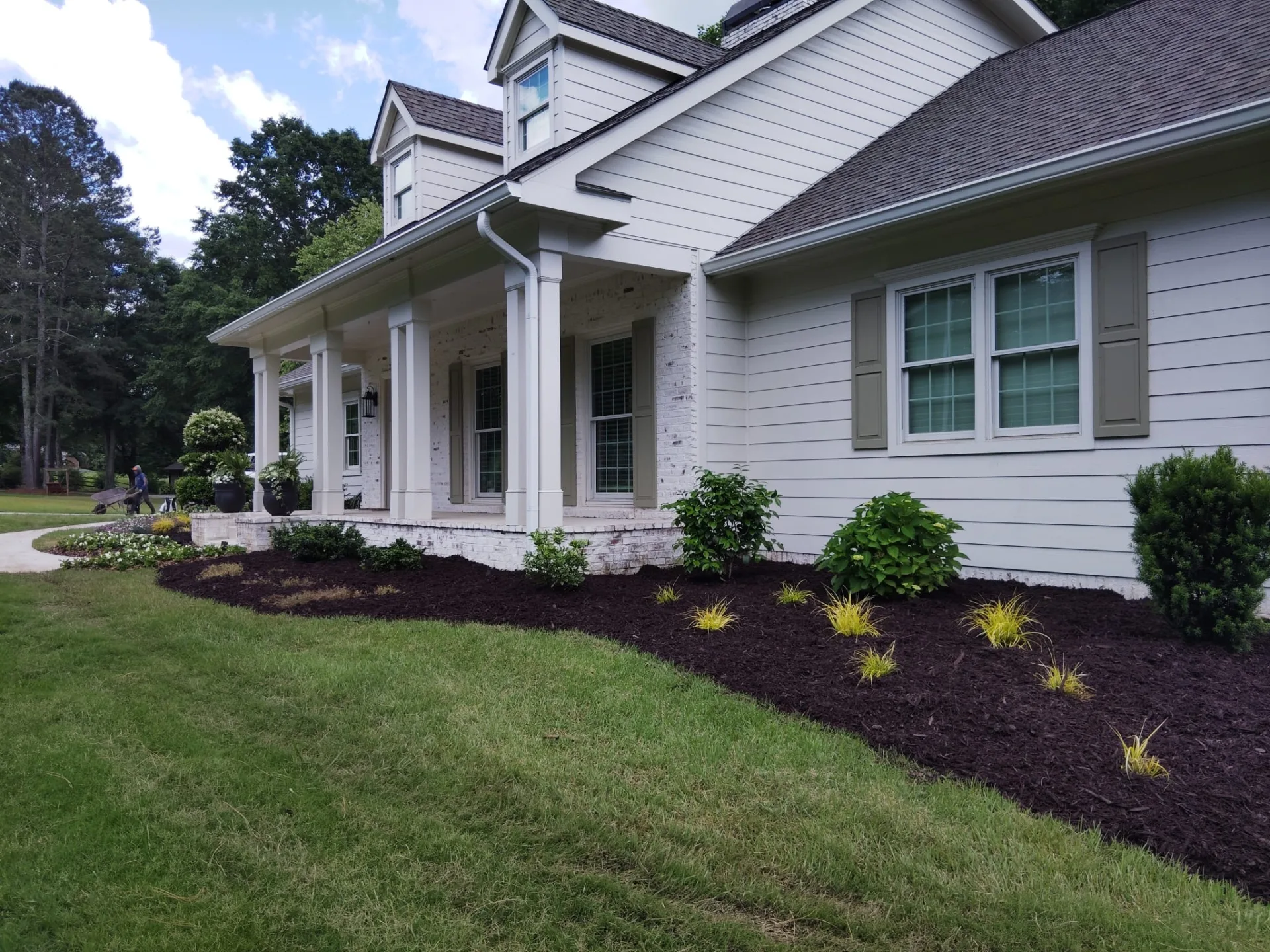
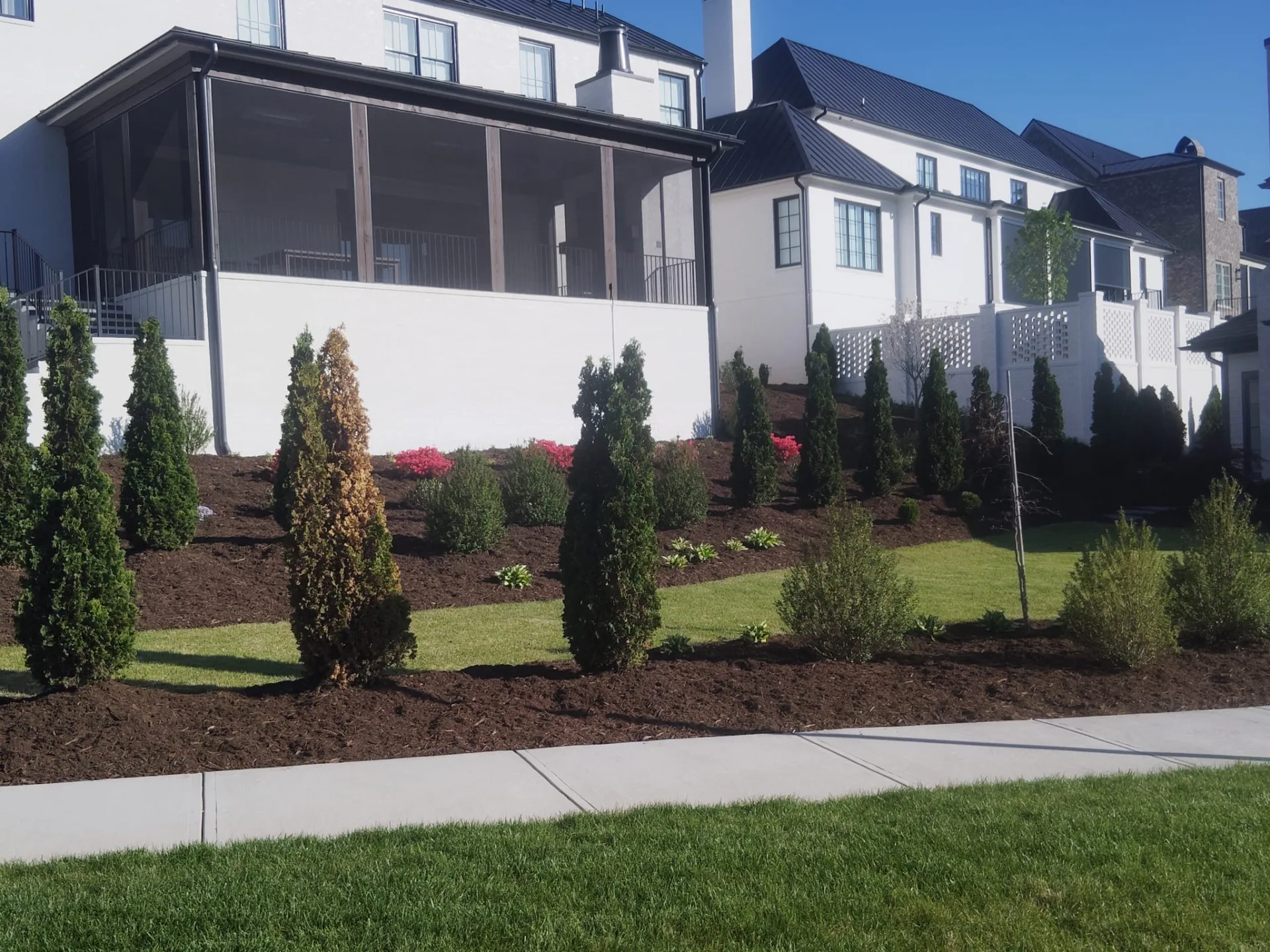
Red mulch is an organic ground cover made from recycled wood chips or hardwood bark that is dyed a vibrant red color, used in landscaping to improve soil health and boost curb appeal. Homeowners across Atlanta, Marietta, and Smyrna rely on it to define planting beds, suppress weeds, and add visual punch to their yards. Understanding what is red mulch, how it is made, and how to apply it correctly will help you get the most from every bag or bulk order. This guide covers everything from materials and safety to design ideas and application depth.
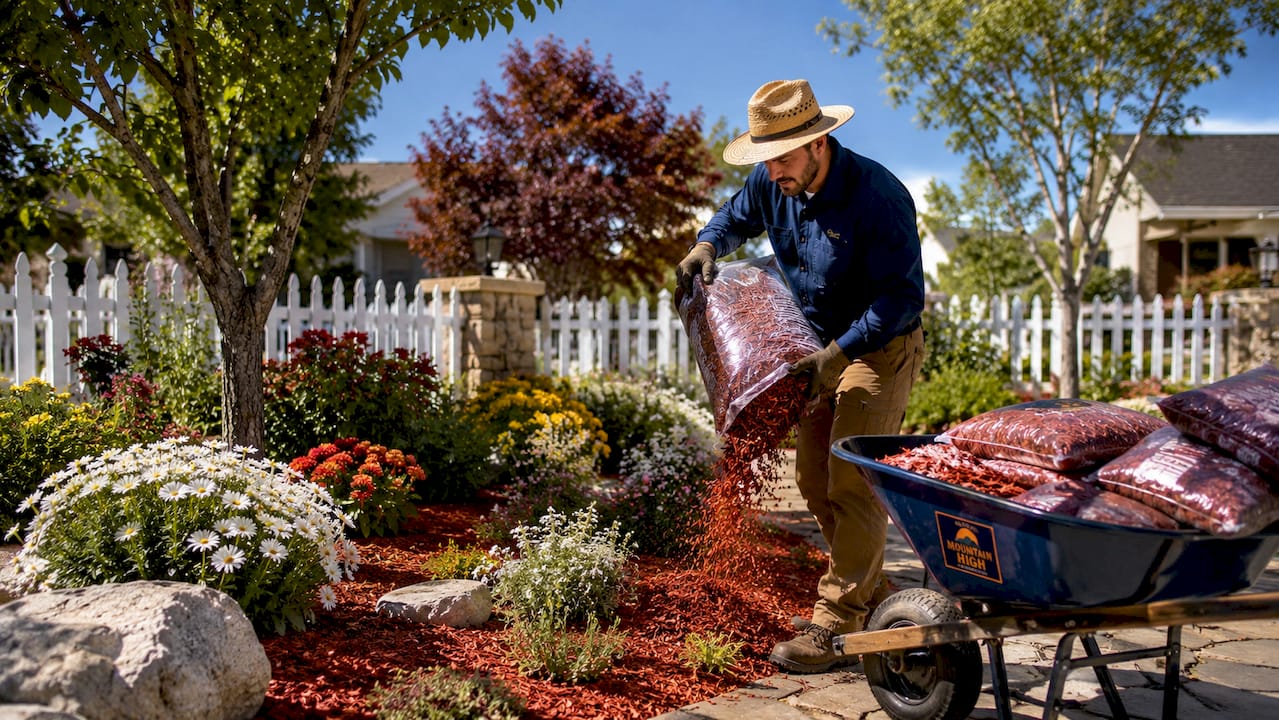
Red mulch is made primarily from recycled wood waste or hardwood bark, including species like oak, maple, and cypress. Manufacturers grind the wood into chips, then infuse the material with non-toxic, vegetable- or water-based dyes that penetrate deeply for long-lasting color. The result is a product that looks polished and performs like standard organic mulch.
The key difference between natural mulch and color-enhanced mulch is the dye. Natural mulch fades to gray or brown within a season. Color-enhanced red mulch holds its vibrancy far longer, though UV exposure will eventually cause fading.
Pro Tip: Always ask your supplier whether the mulch is free from treated wood or construction waste. Quality products from reputable sources like Mountainhighmulch use clean, safe materials that are safe for pets, children, and plants.
Red mulch delivers both functional and visual benefits that make it one of the most popular choices for residential landscaping.
Quality red mulch uses safe, non-toxic dyes and recycled hardwood bases free from treated lumber or hazardous material, making it safe for pets and plants. Sourcing from a reputable supplier is the single most important factor in ensuring that safety.
Despite its durability, the red color fades over time due to UV exposure. Annual top-dressing restores vibrancy and maintains the functional benefits of the mulch layer.

Correct application is what separates a yard that looks great all season from one that looks tired by june.
Pro Tip: Before applying, lay a pre-emergent weed barrier fabric in beds with heavy weed pressure. Red mulch on top of barrier fabric gives you double protection and cuts maintenance time significantly.
Red mulch works best when it is used with intention. Placed in the right spots, it creates a polished, high-contrast look. Overused, it can feel visually heavy.
Using red mulch in defined focal areas like foundation beds, entryways, and planting islands delivers the strongest visual impact. These are the areas visitors see first, so the bold color works in your favor. On large, open properties, red mulch across every bed can feel overpowering. Reserve it for accent zones and use a neutral brown or natural mulch elsewhere.
| Feature | Red mulch | Brown mulch |
|---|---|---|
| Visual impact | Bold, high contrast | Subtle, natural look |
| Best for | Focal beds, entryways, islands | Large areas, woodland gardens |
| Color longevity | Fades with UV, needs annual refresh | Fades to gray, also needs refresh |
| Plant pairing | Evergreens, light-colored foliage | Most plant types |
| Soil benefits | Same as brown mulch | Same as red mulch |
Pairing red mulch with evergreens like boxwood or juniper creates a striking contrast that holds up year-round. Lighter foliage plants, ornamental grasses, and white or yellow flowering perennials also pop against the red background. Avoid pairing red mulch with dark-colored plants or dark stone, as the contrast disappears and the effect is lost.
Clients prefer red mulch for its immediate focal point effect and curb appeal, particularly against light-colored home exteriors. If your home has red brick, consider brown or black mulch instead to avoid a color clash. You can also explore the full range of options in this homeowner’s mulch guide to find the right fit for your property.
Red mulch is a safe, functional, and visually striking ground cover that delivers the most value when applied at the correct depth in defined landscape areas.
| Point | Details |
|---|---|
| Composition | Made from recycled hardwood bark dyed with non-toxic, water-based colorants. |
| Correct depth | Apply at 2–4 inches. Shallower fails to suppress weeds; deeper blocks oxygen. |
| Safety | Buy from reputable suppliers to avoid mulch made from treated or contaminated wood. |
| Best placement | Use in focal areas like entryways and foundation beds, not across entire large properties. |
| Annual maintenance | Top-dress each year to restore color and maintain functional mulch depth. |
Red mulch is one of those products that looks effortless when it is done well and obvious when it is not. The most common mistake I see is homeowners spreading it too thin to cover more ground, then wondering why weeds push through by july. The 2–4 inch rule is not a suggestion. It is the threshold where the product actually works.
The second mistake is using red mulch everywhere. I have seen properties where every single bed is red, and the effect is exhausting rather than attractive. Red mulch earns its keep as an accent. Use it at the front entry, around a focal tree, or in a defined island bed. Let the rest of the yard breathe with a neutral material.
Sourcing matters more than most homeowners realize. Low-cost mulch from unknown suppliers can contain construction debris or treated wood that harms plants and soil over time. When you buy from a trusted local supplier, you know exactly what you are putting in your yard. That peace of mind is worth the extra care in selection.
— Eric
Mountainhighmulch supplies premium red mulch for residential projects across Atlanta, Marietta, and Smyrna. Our red mulch is made from clean recycled hardwood and dyed with non-toxic colorants, so it is safe for your family, pets, and plants from day one.

We carry everything you need for a complete landscape refresh, including organic screened topsoil and sod to complement your mulched beds. Pick up from our Marietta or Smyrna supply yards, or schedule delivery straight to your property. Our team is ready to help you choose the right materials and quantities for your specific project. Visit our Atlanta landscape supply guide to plan your next project with confidence.
Red mulch is made from recycled wood waste or hardwood bark, such as oak, maple, or cypress, that is dyed with non-toxic, water-based or vegetable-based colorants for lasting color.
Quality red mulch made from clean hardwood and non-toxic dyes is safe for pets, children, and plants. Always source from a reputable supplier to avoid mulch containing treated lumber or construction debris.
Apply red mulch at a depth of 2–4 inches. Less than 2 inches fails to suppress weeds or retain moisture, while more than 4 inches blocks oxygen and water from reaching the soil.
Red mulch should be top-dressed or fully replenished once a year. UV exposure fades the color over time, and the organic material breaks down, reducing the functional depth of the layer.
Red mulch pairs best with evergreens, light-colored foliage, and white or yellow flowering plants that create strong contrast. It is less effective visually when paired with dark-colored plants or dark stone.